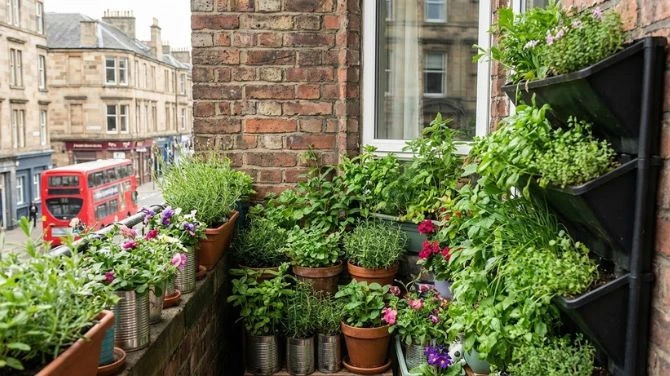
Not every gardener has acres of lawn or sprawling borders to work with. In fact, some of the most beautiful outdoor spaces are the smallest. A balcony, courtyard, narrow front garden or compact terrace can become a rich, layered haven with the right approach.
Micro gardening is all about making every inch count. With thoughtful plant choices, smart structure and a little creativity, even the tiniest UK space can feel abundant and full of life.
What is micro gardening?
Micro gardening is the art of growing plants in small spaces without sacrificing impact. It’s ideal for balconies, patios, terraces and urban gardens where space is limited.
Rather than trying to include everything, the focus is on selecting plants that deliver maximum visual and practical value. That might mean adding height with vertical planting, creating privacy with structure, or using foliage to build a sense of fullness.
Start with structure
A successful small garden begins with structure. Without it, even beautiful plants can feel cluttered.
Think in layers:
- taller plants at the back or edges
- medium-height plants in the middle
- trailing plants at the front
This creates depth and makes the space feel larger.
Walls and fences can also work harder. Trellis, climbers and vertical planters help you add greenery without taking up floor space. For privacy, evergreen hedging plants are an excellent choice, offering year-round coverage and a clean, structured look.
Choose plants that work harder
In a micro garden, every plant should earn its place.
Look for plants that offer:
- long flowering periods
- attractive foliage
- compact growth
- suitability for containers
- year-round interest
Evergreen shrubs are particularly valuable because they maintain structure throughout the seasons. This prevents your garden from looking empty in winter.
Use containers for flexibility
Containers are essential in small gardens. They allow you to:
- move plants easily
- control soil conditions
- experiment with layouts
A simple formula works well:
- one focal plant
- one filler plant
- one trailing plant
This combination creates a balanced, full look without overcrowding the space.
To keep things cohesive, stick to a limited palette of pots and colours.
Think vertically
When space is tight, go upwards.
Vertical gardening is one of the most effective ways to maximise a small UK garden. Use:
- wall planters
- hanging baskets
- climbing plants
- shelving
Climbers are especially useful because they add height without taking up ground space. They can also soften hard surfaces and create a sense of enclosure.
Make foliage the focus
While flowers add colour, foliage provides structure and consistency.
Mix different leaf shapes and tones to create contrast:
- fine vs broad leaves
- light vs dark greens
- glossy vs soft textures
This approach creates a lush look that lasts longer throughout the year and requires less maintenance.
Keep maintenance simple
A small garden should be enjoyable, not overwhelming.
Choose plants suited to your conditions:
- sun or shade
- wind exposure
- container growing
Low-maintenance planting ensures your space stays attractive without constant effort.
Use repetition for impact
Repetition creates a sense of calm and design.
Using the same plants or pots multiple times:
- makes the space feel cohesive
- guides the eye
- enhances the feeling of luxury
In small gardens, consistency is far more effective than variety.
Plan before you buy
Impulse buying often leads to overcrowded spaces. Instead:
- measure your area
- assess sunlight
- assign a purpose to each plant
If you want convenience and variety, it’s often best to buy plants online uk from a trusted specialist.
At Everything Plants, the focus is on helping you select plants that genuinely thrive in UK conditions, especially in smaller spaces where every choice matters.
Final thoughts
A small garden doesn’t have to feel limited. With the right structure, plant selection and layout, even the most compact space can feel lush, private and inviting.
Micro gardening is about thoughtful design. Choose plants carefully, use vertical space, and prioritise quality over quantity.
Done well, a small garden can be just as impactful — if not more so — than a large one.