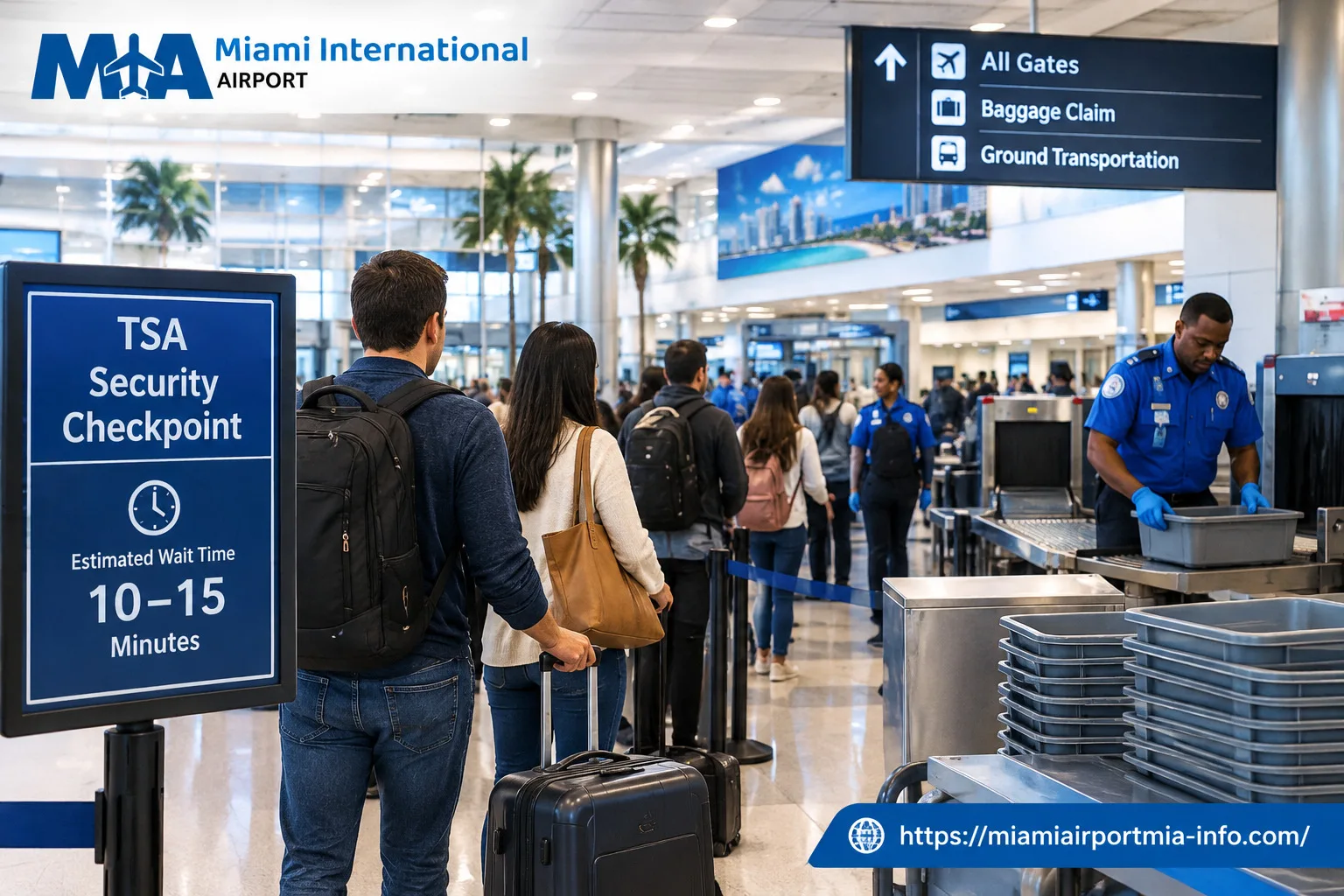
Traveling through a major airport requires careful timing, especially when your schedule includes baggage check-in, security screening, and a walk to the departure gate. Miami Airport TSA wait times can change throughout the day, making it useful to prepare for more than one possible scenario.
Instead of planning your entire journey around a specific number of minutes, travelers can create a flexible schedule that includes the different stages of their airport visit. This approach can make the departure process easier to manage and reduce the pressure caused by unexpected delays.
Why TSA Timing Matters at MIA
Security screening is one of the most important stages between arriving at the airport and reaching your gate. The length of the queue can vary depending on passenger volume and airport activity.
A quiet checkpoint may allow passengers to move through relatively quickly, while a period of heavier traffic can require additional time. This is why travelers should consider current conditions when planning their departure instead of relying exclusively on a previous visit.
Plan Backward From Your Boarding Time
One practical way to organize your airport schedule is to start with the time you need to be at your gate.
From there, consider how long you may need for security, walking through the terminal, baggage drop-off, and airline check-in. Then add time for transportation to the airport.
This creates a more complete timeline:
Leaving home → Reaching MIA → Check-in → Baggage → TSA → Gate → Boarding
Looking at the entire sequence makes it easier to identify where additional time may be necessary.
Check Your Airline and Terminal
Before traveling, confirm your airline and departure terminal. Knowing where you need to go can prevent unnecessary delays after arriving at MIA.
First-time visitors may also benefit from reviewing an airport map beforehand. Understanding the general location of check-in counters, security areas, and departure gates can make terminal navigation easier.
A few minutes of preparation before leaving home can save time once you are inside the airport.
Prepare Your Carry-On Before the Trip
Security preparation should begin before reaching the airport.
Review current TSA requirements and organize your carry-on accordingly. Keep frequently needed items accessible and avoid unnecessary belongings that could make your bag harder to manage.
Travelers should also check the current rules for liquids and other commonly screened items before packing. Being prepared can make the checkpoint process more straightforward.
Consider More Than TSA
It is easy to focus entirely on security when planning an airport visit, but several other factors can affect your schedule.
Traffic around Miami may influence your journey to the airport. Parking or rental-car returns can require additional time. Airline check-in and baggage drop-off may also take longer during busy periods.
Once you pass security, you still need to reach your gate and be ready for boarding.
For this reason, Miami Airport TSA wait times should be treated as one part of a larger airport timetable.
Check Information on the Day of Travel
Airport conditions can change, so checking available information on your travel day can be more useful than relying on an old estimate.
Before leaving home, confirm your flight status, terminal information, and available security updates. If your schedule changes, you can adjust your plans before reaching the airport.
Travelers researching Miami Airport arrivals may also want to monitor flight activity, although arrival information should not be considered a direct prediction of TSA checkpoint conditions.
Give Yourself a Reasonable Buffer
A schedule with no flexibility can become difficult if one part of your journey takes longer than expected.
For example, heavier traffic, a longer baggage line, additional screening, or difficulty locating your gate could affect your original plan. A reasonable time buffer gives you some room to handle these situations.
The goal is not to spend unnecessary hours waiting at the airport. It is to avoid creating a schedule where even a small delay causes significant problems.
Different Travelers Need Different Amounts of Time
Airport planning depends on your individual circumstances.
A solo traveler with a small carry-on may have fewer tasks than a family traveling with children and several bags. International passengers may also have additional airline procedures to complete.
Consider your own situation when deciding how much time to allow. A schedule that works for one traveler may not be suitable for another.
Make Airport Preparation a Routine
Frequent MIA travelers can simplify their trips by creating a consistent pre-flight routine.
Before leaving home, confirm the flight, check the terminal, prepare your luggage, review available security information, and make sure your transportation arrangements are clear.
When you arrive, follow the planned route and keep your flight information available so you can respond to any changes.
Final Thoughts
Understanding Miami Airport TSA wait times can help travelers create a more realistic departure schedule, but security should not be considered separately from the rest of the airport experience. Transportation, check-in, baggage, terminal navigation, and boarding all contribute to the amount of time you need.
By checking current information, preparing your belongings, and leaving a reasonable amount of flexibility, you can approach your MIA departure with a more organized plan.
For additional Miami airport guides, travel information, and practical resources, visit miamiairportmia-info before your next journey.