Mental health is an important part of everyday wellbeing, yet many young people may find it difficult to talk openly about emotional distress or seek support when they are struggling. Creating spaces where young people can feel heard, respected and understood can make a meaningful difference. This is where mental health volunteer opportunities, particularly youth peer support, can play an important role.
Outlive provides an opportunity for young people in India to contribute to youth suicide prevention by becoming trained peer supporters. The programme is designed around the idea that speaking with someone of a similar age or background can sometimes make it easier to share difficult feelings. Peer support is not about diagnosing someone or providing professional treatment. Instead, it focuses on listening, empathy, understanding and helping another person feel less alone.
What Is Peer Support?
Peer support involves people supporting others who may be going through experiences or challenges that they can understand from a personal or social perspective. For young people experiencing emotional distress, a conversation with a trained peer can provide an opportunity to express their thoughts in a non-judgmental environment.
Outlive has made peer support an important part of its approach to youth suicide prevention. Its programme trains a network of young volunteers across India to provide chat-based emotional support to young people experiencing distress or thoughts of ending their life. Peer supporters are also supported by Outlive peer mentors through individual and group mentoring.
Why Mental Health Volunteering Matters
Volunteering in mental health can be meaningful for both communities and volunteers. Young people who participate in peer support can learn how to communicate more thoughtfully, listen actively and respond with empathy. These skills can be useful not only when volunteering but also in friendships, education, workplaces and everyday interactions.
Mental health volunteering can also help reduce misconceptions surrounding emotional wellbeing. When more young people understand the importance of listening and reaching out for support, conversations about mental health can become more open and less stigmatized.
For volunteers, the experience can also be an opportunity for personal growth. Outlive’s peer supporters have described learning about empathy, mental health and the connection between mental wellbeing and suicide prevention through their volunteering experience.
What Does an Outlive Peer Supporter Do?
Outlive peer supporters provide emotional support through the organisation's chat-based platform. Outlive Chat is a free web platform designed to offer anonymous, chat-based support to young people aged 18–25 who are going through difficult situations or experiencing thoughts of ending their life. The platform also includes safety-planning, self-care tools and other resources.
The role of a peer supporter is centred on listening and providing emotional support rather than attempting to solve every problem. This distinction is important because peer supporters are volunteers who receive training and guidance for their role; they are not expected to replace mental health professionals.
The online format can also make support more accessible. Some young people may feel more comfortable communicating through text than speaking face-to-face, particularly when discussing sensitive emotions. Outlive's model provides a way for trained volunteers to participate in these supportive conversations online.
Who Can Apply?
One of the accessible aspects of Outlive's peer supporter programme is that applicants do not need a formal qualification or professional background in mental health or suicide prevention.
The programme currently looks for young people who are between 18 and 25 years old, reside in India, are fluent in English, Hindi, Marathi or Kannada, and have access to a device with an internet connection. Applicants should also have an interest in contributing to youth suicide prevention.
This makes the opportunity relevant to students, young professionals and other young people who want to use their time and interpersonal skills for community support.
Training and Mentorship
Good peer support requires preparation. Volunteers need to understand how to listen appropriately, communicate sensitively and recognise the boundaries of their role. Outlive therefore provides training for peer supporters and ongoing support through peer mentors.
The programme is structured to help volunteers understand the responsibilities involved in providing emotional support online. Peer mentors provide individual and group mentoring, giving peer supporters guidance throughout their volunteering experience.
This combination of training and mentorship can help volunteers feel better prepared for their responsibilities while continuing to learn from their experiences.
Skills You Can Develop Through Volunteering
Mental health volunteer opportunities can offer more than the chance to contribute to a social cause. They can also encourage the development of practical interpersonal skills.
Peer support can help volunteers strengthen active listening, empathy, communication and the ability to approach sensitive conversations thoughtfully. It can also encourage volunteers to reflect on their own understanding of mental health and the different circumstances people may experience.
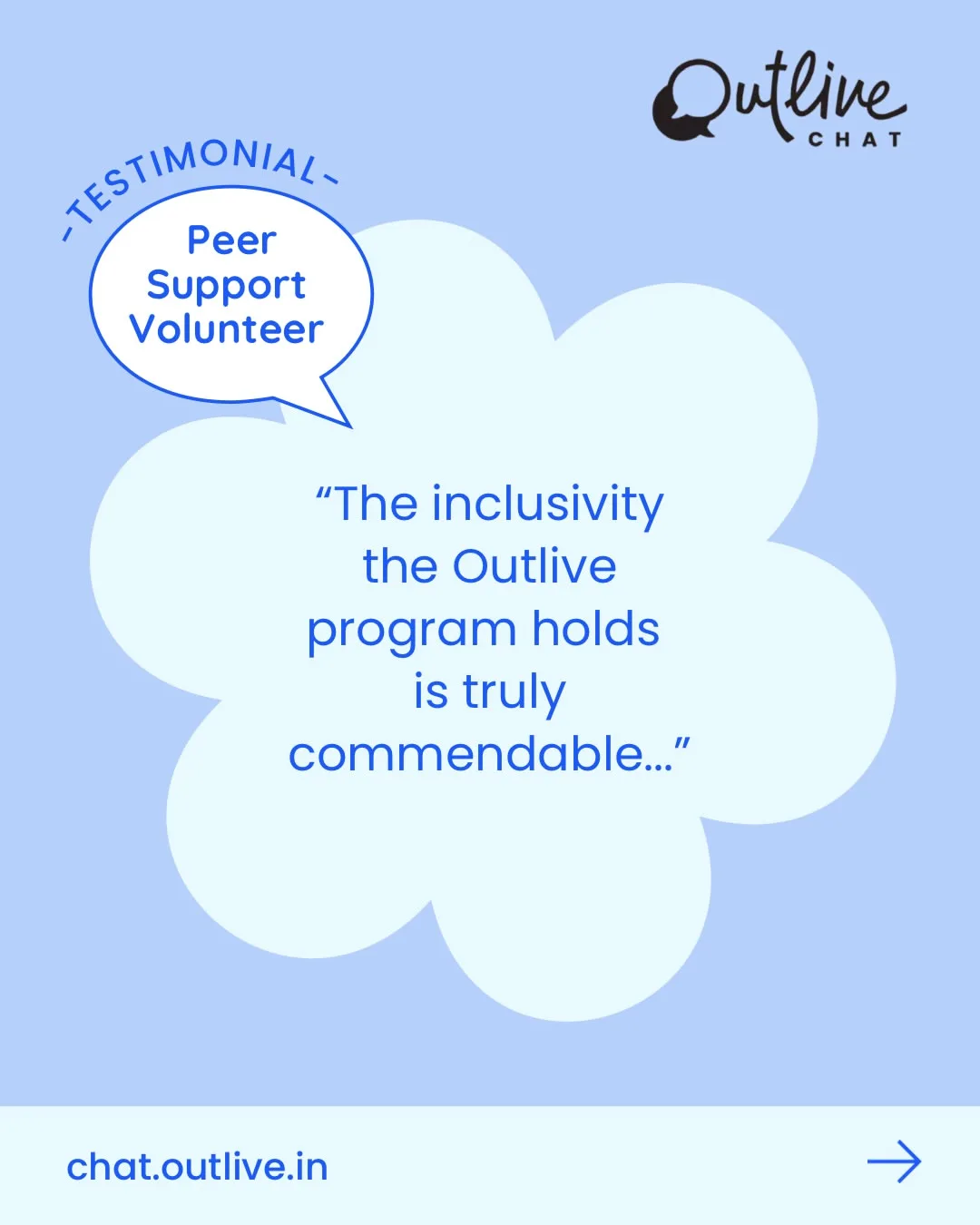
Outlive's volunteer feedback reflects some of these learning experiences, with peer supporters describing greater empathy, a stronger understanding of mental health and a sense of purpose through volunteering.
Creating a More Supportive Youth Community
Mental health support does not always begin in a clinical setting. Sometimes, it begins with a conversation, a willingness to listen or simply creating an environment where someone feels comfortable speaking honestly.
Youth peer support can contribute to this broader culture of understanding. By training young people to provide thoughtful and non-judgmental emotional support, programmes such as Outlive encourage young people to become active contributors to mental health and suicide prevention efforts.
Getting Involved With Outlive
Young people interested in contributing to youth suicide prevention can explore Outlive's peer support programme and review the eligibility requirements before applying. The programme offers an opportunity to learn about peer support, receive training and contribute to chat-based emotional support for young people experiencing difficult situations.
Mental health volunteering is ultimately about people. It is about taking the time to listen, learning how to respond with empathy and helping create communities where conversations about emotional wellbeing can happen without judgment. For young people who want to contribute their time to a meaningful cause, becoming an Outlive peer supporter can be one way to turn those intentions into practical community involvement.