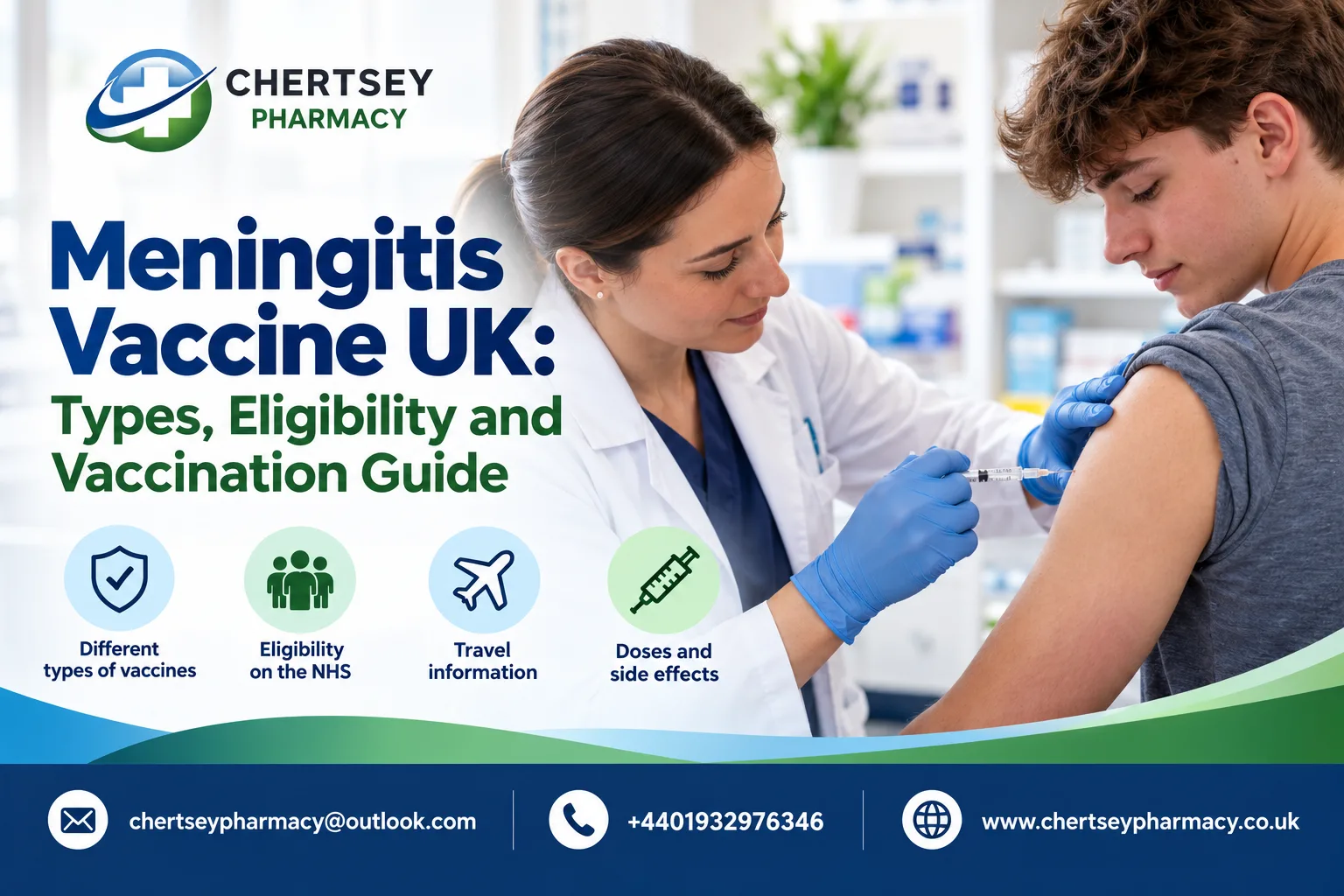
Meningitis is uncommon in the UK, but it can become life-threatening within hours. Vaccination is one of the most effective ways to reduce the risk from some of its bacterial causes. There are several meningitis vaccines available on the NHS, and each one protects against different strains of bacteria. No single vaccine covers every cause of meningitis, so it helps to understand which vaccines are relevant to you or your child, and how to check eligibility against current official guidance.
What Is Meningitis?
Meningitis is inflammation of the meninges, the protective membranes that surround the brain and spinal cord. It is most often caused by a viral or bacterial infection.
Viral meningitis is generally less severe and usually improves with rest and supportive treatment, but it still needs medical assessment. Bacterial meningitis is less common but can progress quickly and may cause serious long-term complications, including brain damage, hearing loss and loss of limbs. Some forms of bacterial meningitis can be prevented by vaccination, which is why the vaccine schedule matters.
What Is Meningococcal Disease?
Meningococcal disease is caused by Neisseria meningitidis, a type of bacteria. It can cause meningitis and septicaemia, a serious infection of the blood also known as blood poisoning. Some healthy people carry these bacteria in the back of the nose and throat without becoming ill. The bacteria spread through close and prolonged contact, such as kissing, sharing drinks or vapes, or spending time with someone who carries them.
Septicaemia can develop very quickly, which is why early recognition and prompt medical help are so important.
What Are the Different Types of Meningitis Vaccines?
MenACWY vaccine protects against meningococcal groups A, C, W and Y. In England, it is routinely offered to young people in school Year 9 (aged 13 to 14), usually alongside the teenage 3-in-1 booster. It is given as a single dose. MenACWY does not protect against MenB.
MenB vaccine protects against meningococcal group B. It is part of the routine childhood schedule for babies, and it was also offered through a time-limited one-off programme to eligible young people in 2026 (see the eligibility section below).
Neither vaccine protects against viral meningitis. Other routine vaccines, such as those against Hib and pneumococcal disease, also help protect against some bacterial causes of meningitis, but they are separate from the MenACWY and MenB vaccines. If you are unsure which vaccines apply to you or your child, check your vaccination record or speak to your GP or pharmacist.
Who Is Eligible for the Meningitis Vaccine on the NHS?
Eligibility depends on age, vaccination history and, in some cases, risk factors. The main groups are:
Babies: MenB is part of the routine infant schedule. Babies are offered doses as part of their routine vaccinations in the first year of life.
Teenagers: MenACWY is routinely offered to young people in school Year 9. Some young people who missed this may be able to catch up, and the NHS website sets out current catch-up eligibility.
Young people in the 2026 one-off MenB programme: The NHS offered a time-limited, free MenB programme to eligible young people in 2026. This included young people completing Year 13 in summer 2026 (born between 1 September 2007 and 31 August 2008), and anyone under 25 starting university or moving into residential further education for the first time in autumn 2026. The vaccine is given as two doses at least 28 days apart, through participating community pharmacies. Bookings are made through the NHS National Booking Service at nhs.uk/book-menb.
Because this programme is time-limited, check the NHS website for current availability and any closing dates before booking.
Do Adults Need a Meningitis Vaccine?
Most adults do not need routine meningitis vaccination. Adults may be offered or advised to consider vaccination in certain circumstances, such as:
- Living without a spleen, or having a condition that affects the spleen or immune system
- Being a close contact of someone with confirmed meningococcal disease, where advised by public health teams
- Travelling to destinations where vaccination is recommended or required
If you think you may be in a risk group, speak to your GP or pharmacist. They can check your history and tell you whether vaccination is appropriate.
Meningitis Vaccination for University Students
Students starting university should check their vaccination history before they arrive. Teenagers who received MenACWY in Year 9 are protected against the groups it covers, but they are not protected against MenB. For students who are eligible for the 2026 one-off programme, the MenB vaccine is especially relevant because close living and social contact can increase the risk of spread.
Students who have not had MenACWY may be eligible for a catch-up dose through the NHS, so it is worth checking the current criteria on nhs.uk or with your GP. Some universities also ask students to confirm their vaccination status when they register for halls.
Meningitis Vaccines for Travel
Meningitis vaccination may be relevant for some international travel. Requirements and recommendations depend on the destination, the length and type of trip, and the time of year. MenACWY is required for some pilgrimages, including Hajj and Umrah to Saudi Arabia. It is also recommended for travellers to parts of sub-Saharan Africa known as the meningitis belt, particularly during the dry season when cases tend to rise.
Travel requirements change, so check TravelHealthPro (run by UKHSA) and GOV.UK travel advice for your destination. Protection takes time to develop after vaccination, so it is best to plan ahead and speak to a travel health service or pharmacist several weeks before you leave.
How Many Doses Are Needed?
Dose schedules vary by vaccine, age and eligibility:
- MenACWY is usually given as a single dose.
- MenB for babies follows the routine infant schedule.
- MenB under the 2026 one-off programme is given as two doses, at least 28 days apart.
Always confirm the current schedule for your situation on nhs.uk or with your healthcare provider, as guidance can change.
Meningitis Vaccine Side Effects
Most people have no problems after a meningitis vaccine. The most common side effects are mild and short-lived. They include pain, redness or swelling where the injection was given, tiredness, headache, feeling generally unwell and, sometimes, a mild fever. Babies may be more unsettled or have a temperature after their vaccinations.
Speak to a GP, pharmacist or NHS 111 if symptoms are severe, get worse after a few days, or if you have any concern, particularly with a high temperature. Serious allergic reactions are rare, but they can occur soon after vaccination. If someone has difficulty breathing, swelling of the face or throat, or collapses, call 999 immediately.
Meningitis Symptoms: When to Seek Urgent Medical Help
Early signs of meningitis can look like flu, and they can appear in different combinations. Common warning signs include fever, severe headache, neck stiffness, vomiting, sensitivity to light, drowsiness or confusion. A rash that does not fade when you press a glass against it can also be a warning sign, but a rash may not always appear, and it can come later in the illness. Babies may show less obvious signs, such as a high-pitched cry, being unusually irritable, feeding poorly or having a bulging soft spot on the head.
Suspected meningitis is a medical emergency. Call 999 or go to your nearest emergency department immediately. Do not wait for a vaccination appointment or a pharmacy visit, and do not wait to see if symptoms improve.
Frequently Asked Questions
Is the meningitis vaccine available on the NHS?Yes. MenACWY is routinely offered to teenagers, MenB is part of the routine infant schedule, and some groups have been eligible for additional NHS vaccines at certain times, such as the 2026 one-off MenB programme. Check nhs.uk for current eligibility.
Which meningitis vaccine is given to teenagers in the UK?The MenACWY vaccine is routinely offered to young people in school Year 9, aged 13 to 14.
Does the MenACWY vaccine protect against MenB?No. MenACWY protects against meningococcal groups A, C, W and Y. MenB needs its own vaccine.
Can adults get a meningitis vaccine?Yes, in some circumstances. Adults in certain risk groups, or those travelling to particular destinations, may be advised to be vaccinated. Speak to your GP or pharmacist to find out whether it applies to you.
Do I need a meningitis vaccine before travelling?It depends on where you are going and what you will be doing. Check TravelHealthPro and GOV.UK travel advice, and speak to a travel health service or pharmacist.
How long does meningitis vaccine protection last?It varies by vaccine and individual circumstances. Protection can decline over time, and whether boosters are needed depends on the vaccine and current official guidance.
Speak to Chertsey Pharmacy
If you have questions about meningitis vaccination or whether you may be eligible, you are welcome to contact Chertsey Pharmacy. We can explain what information we can provide and which services are currently available. Please contact us directly to confirm what we offer.