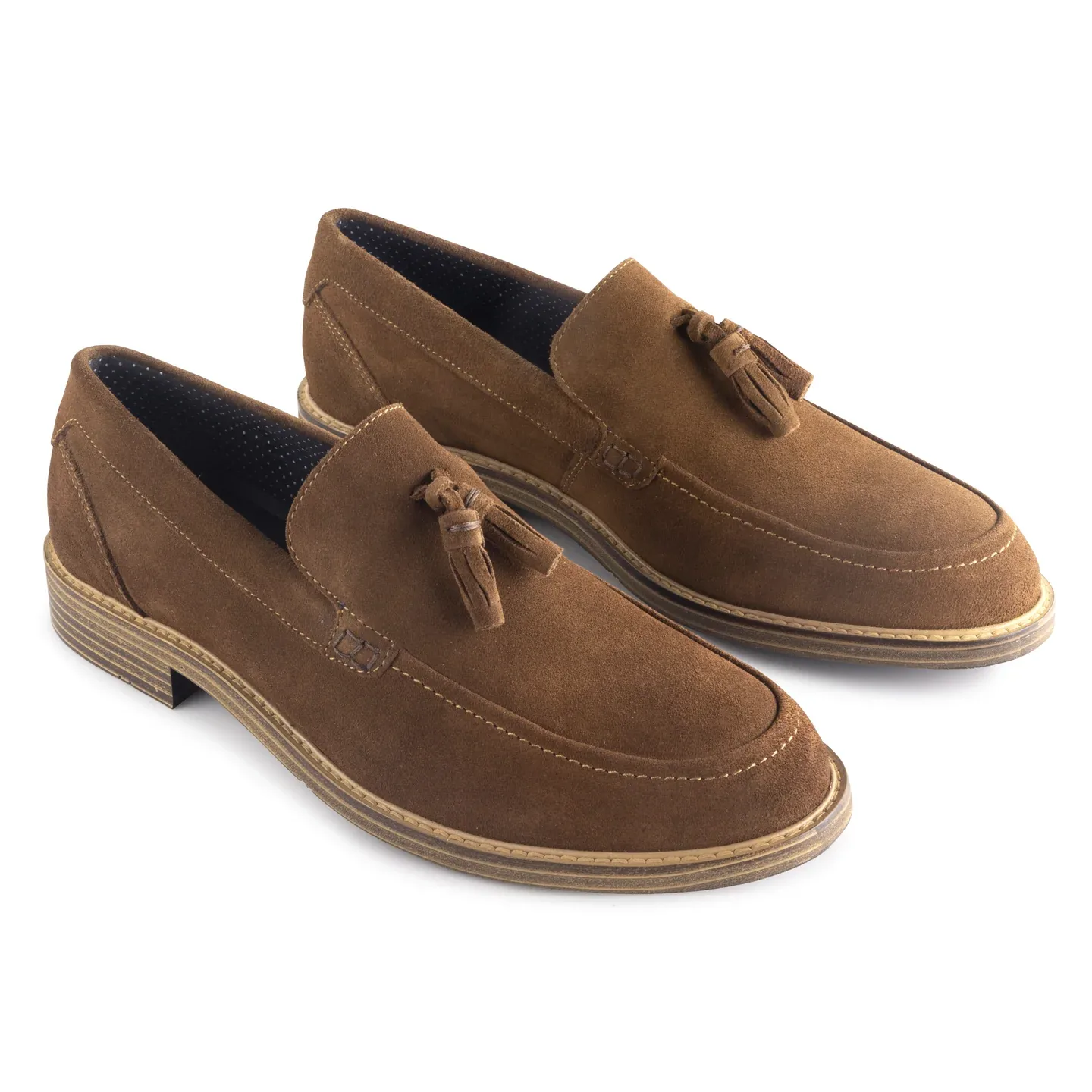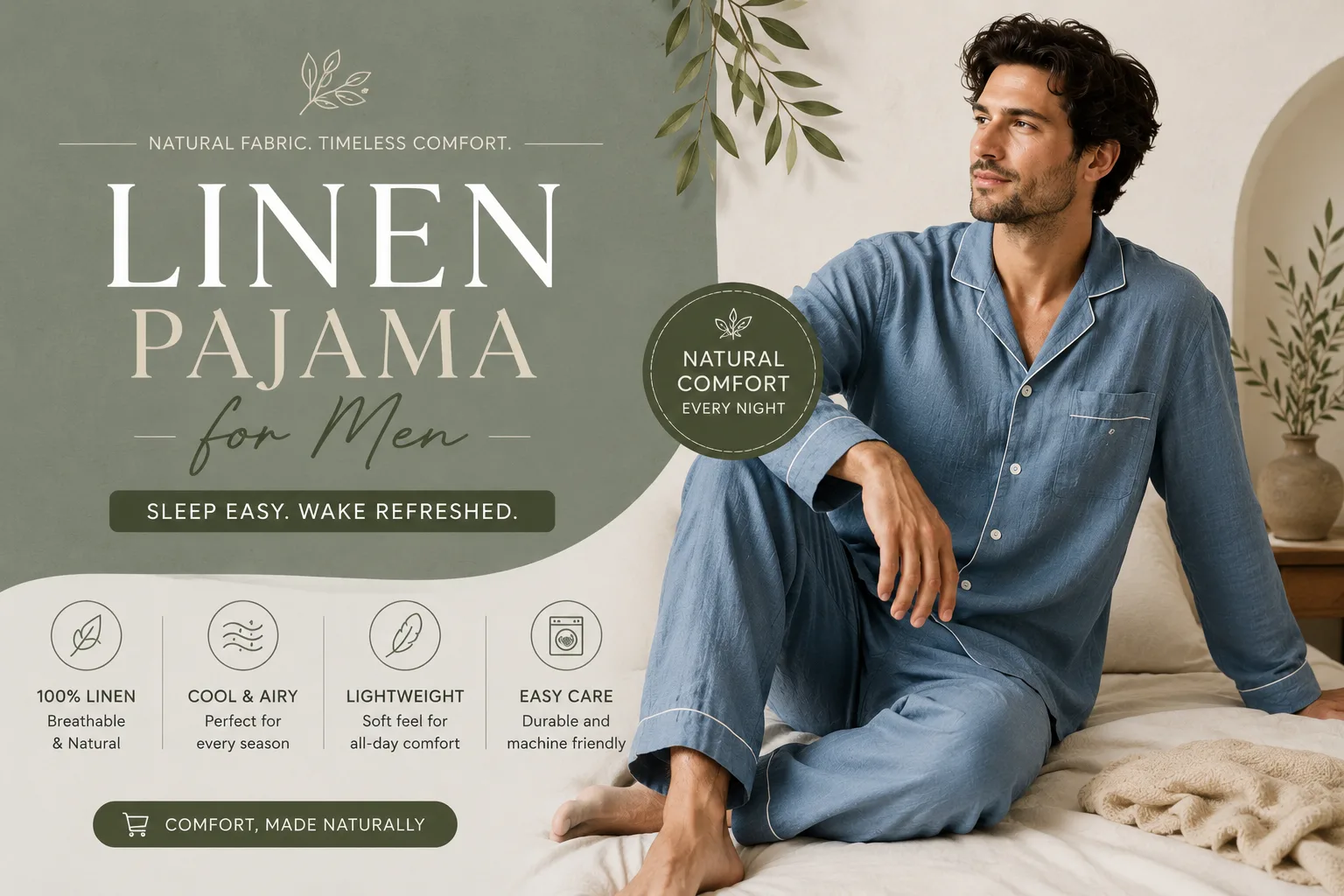
A well-tailored kurta loses its charm the moment the Men's Pajama for Kurta underneath is too baggy, too short, or hanging in the wrong proportion. The pajama isn't a background piece — it's what holds the entire silhouette together, and getting the length, drape, and fabric right is the difference between looking put-together and looking like you borrowed someone else's outfit.
This guide breaks down exactly how to choose the right Men's Pajama for your kurta, when a linen pajama for men works better than cotton, and how to measure proportion the way tailors actually do it — not just guesswork.
How Should a Men's Pajama for Kurta Fit?
A correctly fitted pajama sits comfortably at the natural waist, tapers gently without clinging to the calves, and ends right at or just above the ankle bone. The waist should allow two fingers of ease when tucked in with a drawstring — tight enough to stay up, loose enough to sit for hours without discomfort.
The most common fitting mistake is choosing a pajama that's cut for trousers rather than traditional wear. A trouser-style straight leg breaks the flow of the kurta, while a slightly tapered "churidar-adjacent" cut (without being skin-tight) keeps the outfit looking intentional.
What Is the Ideal Length for a Kurta Pajama?
The ideal length depends on the kurta length and the occasion, but as a general rule:
- Ankle-length (full length): Ends exactly at the ankle bone — the safest, most versatile choice for weddings, festivals, and formal events.
- Slightly cropped (above ankle): Ends about 1–1.5 inches above the ankle — works well with mojaris or juttis where you want the footwear visible.
- Churidar-style bunching: Extra length that gathers softly at the ankle — a more traditional North Indian silhouette, common with longer kurtas or sherwanis.
A quick way to check: stand straight, and the pajama hem should just graze the top of your footwear without pooling on the floor.
Cotton vs Linen Pajama for Men: Which Should You Choose?
Fabric choice changes both comfort and how the pajama drapes with the kurta. Here's a direct comparison:
FactorCotton PajamaLinen Pajama for MenBreathabilityGood, moderate airflowExcellent, ideal for humid climatesDrapeSoft, slightly structured fallFluid, relaxed drape with natural textureBest seasonYear-round, especially winter eventsSummer weddings, daytime functionsWrinkle behaviorWrinkles less, holds crease longerWrinkles more, but this is part of its casual-elegant lookOccasion fitFormal and semi-formalSemi-formal, destination weddings, outdoor eventsWeightSlightly heavier, warmer feelLightweight, cooler on skinIf you're attending an outdoor summer wedding or a daytime function, a linen pajama for men paired with a matching or contrast linen kurta gives a naturally elegant, breathable look. For winter functions or indoor formal events, cotton remains the more practical, structured choice.
Should the Pajama Match or Contrast the Kurta?
Both approaches work, and the right one depends on the occasion:
- Matching sets (same fabric, same or near-identical shade) are safer for formal events like weddings and religious ceremonies — they read as a cohesive, deliberate outfit.
- Contrasting pajamas (a lighter or darker neutral tone against a bold kurta) work well for festive or semi-casual settings and add visual depth without looking mismatched.
A general styling rule: if the kurta has heavy embroidery or a printed pattern, keep the pajama solid and understated. If the kurta is plain, a contrasting pajama in a complementary tone adds interest.
What Pajama Style Goes With Which Kurta Length?
Kurta LengthRecommended Pajama StyleShort kurta (above knee)Straight-cut pajama or slim-fit pajamaKnee-length kurtaStraight-cut, ankle-length pajamaBelow-knee to calf-length kurtaSlightly tapered or churidar-style pajamaLong kurta (near-ankle)Churidar or narrow-bottom pajama for a streamlined lookShorter kurtas pair better with a straighter pajama silhouette to balance proportion, while longer kurtas look sharper with a narrower pajama that doesn't compete with the length of the top.
What Fabric Works Best for Different Seasons?
- Summer: Linen or lightweight cotton — both allow airflow and reduce clinging in humidity.
- Winter: Heavier cotton, cotton-silk blends, or brushed cotton for added warmth.
- Monsoon/Humid climates: Linen is particularly effective here, since it dries faster and feels less sticky against skin than heavier cotton blends.
Brands working in traditional menswear, including Fabmade, often offer both cotton and linen options within their pajama range, which makes it easier to pick based on season and occasion rather than settling for a single fabric across all outfits.
Common Mistakes to Avoid When Buying a Kurta Pajama
- Buying pajama and kurta separately without checking proportion — a mismatched length ratio (too much kurta, too little visible pajama, or vice versa) throws off the entire look.
- Ignoring waist adjustability — a fixed elastic waist without a drawstring option limits how well the pajama sits across different body types.
- Choosing fabric based on look alone — a linen pajama looks elegant in photos but may not be practical for a full-day indoor formal event; check the occasion first.
- Over-tapering the leg — pajamas cut too slim can look like leggings rather than traditional wear, breaking the classic silhouette.
- Skipping a trial with footwear — length that looks right standing barefoot may sit differently once juttis or mojaris are on.
How Do You Measure Yourself for the Right Pajama Size?
- Waist: Measure at the natural waistline, not the hip, since most pajamas are worn with a drawstring above the hipbone.
- Inseam: Measure from the crotch to the ankle bone while standing straight — this determines the finished length.
- Thigh and calf ease: If ordering online, check the brand's fit chart for thigh and calf measurements to avoid a pajama that's too tight to sit comfortably.
- Compare with an existing pajama: If you already own a well-fitting pair, lay it flat and match its measurements against the size chart rather than relying on standard S/M/L labels alone.
Quick Answer: Key Takeaways
- The right Men's Pajama for Kurta ends at or just above the ankle, with a tapered (not skin-tight) leg.
- Linen pajama for men works best for summer and outdoor events; cotton suits winter and formal indoor functions.
- Match fabric and color for formal occasions; contrast for festive, casual settings.
- Always check proportion between kurta length and pajama style before buying — they should be selected together, not separately.
Fabric quality standards for cotton and linen textiles in India are set and monitored by the Ministry of Textiles, Government of India, which is a useful reference point when comparing fabric grades across brands. You can review official fabric and textile standards on the Ministry of Textiles website.
Frequently Asked Questions
Q: Can I wear a linen pajama for a wedding?
Yes, especially for daytime or outdoor weddings. Pair it with a matching or complementary linen kurta for a cohesive, breathable outfit that holds up well through long ceremonies.
Q: How loose should a kurta pajama be at the waist?
Loose enough to allow two fingers of space when the drawstring is tied — tight enough to stay in place without shifting throughout the day.
Q: Is cotton or linen better for daily wear kurta pajama?
Cotton is generally more practical for daily or frequent wear since it holds shape better and wrinkles less across a full day of movement.
Q: What length pajama suits a short kurta?
A straight-cut, ankle-length pajama works best with short kurtas, keeping the proportion balanced without overwhelming the shorter top length.