
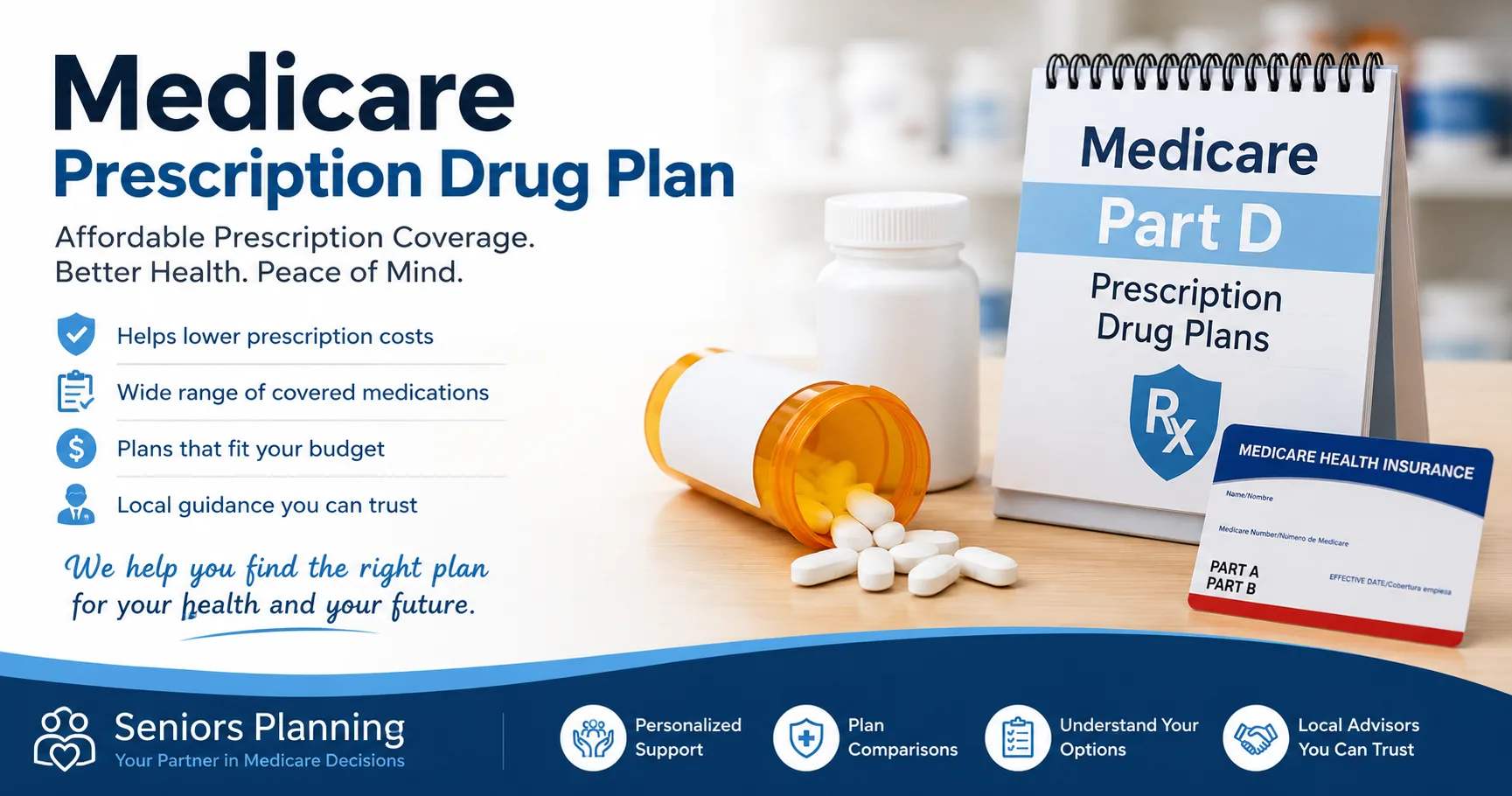
Prescription medications are an important part of healthcare for many seniors. As medication needs change with age, finding affordable and reliable prescription coverage can become an important part of Medicare planning.
A Medicare Prescription Drug Plan, commonly called Medicare Part D, helps pay for many prescription medications. However, plans can differ in premiums, covered medications, pharmacies, deductibles, and other costs. Understanding these differences can help you choose coverage that better fits your healthcare needs and budget.
This guide explains how Medicare prescription drug plans work, what they cover, how costs are determined, and what seniors should consider before enrolling.
What Is a Medicare Prescription Drug Plan?
A Medicare Prescription Drug Plan is insurance that helps cover eligible outpatient prescription medications. Medicare Part D is available to people with Medicare, and coverage is provided through Medicare-approved private insurance plans.
There are generally two ways to receive Medicare drug coverage:
- A standalone Medicare Part D prescription drug plan with Original Medicare.
- A Medicare Advantage Plan that includes prescription drug coverage.
Most Medicare Advantage Plans include Part D coverage, while people with Original Medicare can generally purchase a separate Part D plan. (Medicare)
Why Is Medicare Prescription Drug Coverage Important?
Prescription costs can become a significant part of a senior's healthcare budget, particularly for people who take several medications every month.
Without appropriate prescription coverage, medication costs can vary significantly depending on the drug, pharmacy, and other factors.
A Medicare Prescription Drug Plan can help provide coverage for eligible medications and give beneficiaries a more predictable way to manage prescription expenses.
Even if you do not currently take prescription medications, it is important to understand your Medicare drug coverage options because delaying enrollment without other qualifying coverage can potentially result in a late enrollment penalty. (Medicare)
What Does Medicare Part D Cover?
Medicare Part D plans cover a broad range of prescription medications. Each plan has its own list of covered drugs called a formulary.
A formulary may include:
- Generic medications
- Brand-name medications
- Certain biological products
- Biosimilars
The specific medications covered can vary from one plan to another. Medicare requires plans to cover a wide range of medications and most drugs in certain protected categories. (Medicare)
This is why checking your medications against a plan's formulary is one of the most important steps when comparing Medicare prescription drug plans.
What Is a Medicare Drug Plan Formulary?
A formulary is the list of prescription drugs that a Medicare drug plan covers.
Plans can place medications into different tiers based on cost. Generally, drugs in lower tiers may cost less than drugs in higher tiers.
Before choosing a plan, make a list of your current medications and check whether each medication is included in the plan's formulary.
Also check:
- The medication's tier
- Copayment or coinsurance
- Quantity limits
- Prior authorization requirements
- Preferred pharmacies
- Mail-order options
A plan with a low monthly premium may not necessarily be the least expensive option if your medications have high out-of-pocket costs.
How Much Does a Medicare Prescription Drug Plan Cost?
The cost of Part D coverage varies depending on the plan and your circumstances.
Potential costs can include:
- Monthly premiums
- Deductibles
- Copayments
- Coinsurance
- Prescription costs
Your total prescription expenses can also depend on the medications you take, the tier of each drug, the pharmacy you use, and whether you qualify for financial assistance.
Medicare states that plan costs and coverage can change from year to year, so reviewing your coverage regularly is important. (Medicare)
Medicare Part D Out-of-Pocket Limit in 2026
For 2026, Medicare Part D-covered prescription drug costs have a yearly out-of-pocket limit of $2,100. Once you reach that limit for covered Part D drugs, you generally pay nothing for covered Part D drugs for the remainder of the calendar year. (Medicare)
This change is important for seniors who have high prescription medication expenses.
Your actual costs can still depend on whether your medications are covered by your specific plan and whether other coverage or assistance applies.
What Are Drug Tiers?
Medicare prescription drug plans commonly place covered medications into different cost tiers.
For example, a plan may have separate tiers for:
- Preferred generic drugs
- Non-preferred generic drugs
- Preferred brand-name drugs
- Non-preferred brand-name drugs
- Specialty medications
The exact number of tiers and the costs associated with them vary by plan.
When comparing plans, do not look only at whether your medication is covered. Check which tier your medication is placed in and how much you may pay.
What Are Pharmacy Networks?
Your choice of pharmacy can affect what you pay for prescription medications.
Some Medicare drug plans have preferred pharmacies where you may pay less for covered medications. Other pharmacies may be considered standard or out-of-network pharmacies, depending on the plan.
Before choosing a Medicare Prescription Drug Plan, check whether your preferred pharmacy participates in the plan and whether it offers preferred cost-sharing. (Medicare)
Mail-order pharmacy services may also be available for certain medications and can provide convenience for people who regularly take prescriptions.
Can Medicare Prescription Drug Plans Have Coverage Rules?
Yes. Some Medicare drug plans have rules that determine how certain medications are covered.
These may include:
Prior Authorization
Your doctor may need to obtain approval from the plan before the medication is covered.
Step Therapy
You may need to try another medication first before the plan covers a particular drug.
Quantity Limits
The plan may limit the amount of a medication it will cover during a specific period.
These rules can vary by plan. If your doctor believes a particular medication is medically necessary, you or your prescriber may be able to request an exception. (Medicare)
How to Choose the Right Medicare Prescription Drug Plan
Choosing a Part D plan should be based on your actual prescription needs rather than simply choosing the plan with the lowest premium.
1. Make a List of Your Medications
Write down every prescription medication you currently take, including the dosage and frequency.
2. Check the Formulary
Make sure your medications are covered by the plan.
3. Compare Drug Tiers
Check the tier of each medication and the associated copayment or coinsurance.
4. Check Your Pharmacy
Make sure your preferred pharmacy participates in the plan and determine whether it is considered a preferred pharmacy.
5. Compare Total Costs
Consider premiums, deductibles, copayments, coinsurance, and expected prescription expenses.
6. Review Coverage Rules
Check whether any of your medications require prior authorization, step therapy, or quantity limits.
What Happens If Your Medication Isn't Covered?
If a medication you take is not included on your plan's formulary, you may have options.
You or your prescriber can contact the plan to ask about coverage or request an exception when appropriate.
In some circumstances, a plan may provide a temporary transition supply when coverage begins for a medication you were already taking but that is not covered or has certain coverage restrictions. (Medicare)
Never stop taking a prescribed medication simply because you discover a coverage issue. Talk with your healthcare provider and insurance plan about your options.
Medicare Prescription Drug Plan Enrollment
Understanding when you can enroll is important.
People who are new to Medicare generally have an Initial Enrollment Period around the time they first become eligible. Other enrollment opportunities may apply depending on your circumstances.
Medicare also has an annual Open Enrollment Period from October 15 through December 7. During this period, people with Medicare can make certain changes to their Medicare health and drug coverage, with changes generally taking effect January 1. (Medicare)
Some individuals may qualify for a Special Enrollment Period because of certain life circumstances, such as losing other qualifying coverage or moving.
What Is the Medicare Part D Late Enrollment Penalty?
If you do not enroll in Medicare drug coverage when you are first eligible and later go 63 days or more without Medicare drug coverage or other creditable prescription drug coverage, you may have to pay a Part D late enrollment penalty.
The penalty is generally calculated based on how long you went without creditable coverage and may continue for as long as you have Medicare drug coverage. (Medicare)
If you already have prescription coverage through an employer, union, VA, or another source, check whether it is considered creditable prescription drug coverage before making changes. (Medicare)
Final Thoughts
Choosing the right Medicare Prescription Drug Plan is an important part of managing healthcare expenses during retirement. The best option is not necessarily the plan with the lowest monthly premium. Your medications, pharmacy, drug tiers, coverage rules, and total expected costs should all be considered.
For seniors in Yakima, Seniors Planning provides Medicare guidance to help you understand prescription drug coverage and other Medicare options.
Before enrolling or changing plans, review your medications and compare the plan's formulary, costs, pharmacy network, and coverage rules. Taking these steps can help you choose coverage that better fits your healthcare needs and budget.