
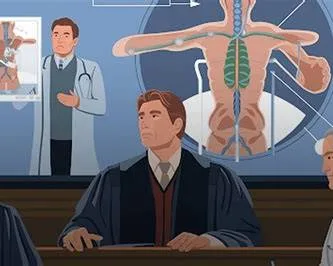
Medical illustration services help transform complicated medical information into clear visual explanations that people can understand quickly. In healthcare and legal cases, written records and technical terminology can be difficult for nonmedical audiences to follow. Accurate illustrations make anatomy, injuries, treatments, surgical procedures, and medical devices easier to explain. Medical illustration services When cases involve questions about professional care or defective products, medical malpractice illustrations and product liability animation can add valuable visual context. Trial Graphics 360 uses medical and legal visualization to help complex information become more organized, understandable, and memorable for the intended audience.

Why Medical Illustration Services Matter in Complex Cases
Medical illustration services combine scientific knowledge with visual communication. A carefully prepared visual can present an injury or procedure in a logical format.
This is particularly important when the audience includes people without medical training. Attorneys, jurors, clients, insurance professionals, students, and patients may need to understand information that normally requires years of clinical education. A clear illustration can reduce unnecessary confusion while keeping attention on the medically important details.
Medical visuals may be used to explain:
- Human anatomy and anatomical relationships
- Traumatic injuries and fracture patterns
- Surgical procedures and treatment methods
- Disease progression and physiological changes
- Medical devices and their intended operation
- Diagnostic imaging findings
- Treatment timelines and patient outcomes
The strongest visuals do not simply add decoration. They organize information so viewers can better understand what happened, where it happened, and why the details matter.
Medical Illustration Services for Medical-Legal Communication
Medical-legal communication requires accuracy, careful research, and a clear understanding of the available evidence. Medical records often contain technical language, abbreviations, imaging reports, and descriptions of procedures that may be difficult to interpret outside a clinical setting.
Medical illustration services can help translate this information into understandable exhibits. For example, an illustration may identify the location of a spinal injury, show the relationship between damaged tissue and surrounding anatomy, or explain a surgical procedure.
A successful visual presentation should be based on reliable source material and reviewed with appropriate medical expertise. Their purpose is to make complicated evidence easier to follow.
For legal teams, useful visual elements may include:
- Anatomical injury illustrations
- Surgical procedure sequences
- Enlarged views of affected structures
- Colorized or annotated diagnostic images
- Chronological treatment timelines
- Comparative illustrations showing normal and injured anatomy
By presenting information step by step, these visuals can help create a stronger connection between medical facts and the central questions of a case.
How Medical Malpractice Illustrations Explain Difficult Events
Medical malpractice illustrations are especially useful when a case involves a complex treatment sequence or an alleged deviation from an expected standard of care. Readers can struggle to visualize the anatomy, timing, and sequence involved.
A well-designed illustration can explain a procedure before, during, and after the relevant event. It can identify important structures, show where an instrument or treatment was applied, and help clarify the relationship between an event and an alleged injury.

They may be useful for surgical errors, delayed diagnosis, birth injuries, anesthesia complications, and postoperative problems. Every visual should focus on medical facts supported by records and expert analysis.
Clarity is particularly important. An overloaded illustration with too many labels can become as confusing as a lengthy report. Effective visuals focus on the information needed for the audience to understand the issue being discussed.
The Role of Product Liability Animation
Product liability animation can help explain how a medical device, consumer product, industrial component, or other product is alleged to have contributed to an injury. Static illustrations are useful for showing individual components, while animation can demonstrate movement, sequence, and cause-and-effect relationships.
For example, a product liability animation may show how a device is designed to operate, how a component interacts with surrounding structures, or how a mechanical failure could affect a user. In medical device cases, animation may also help explain implantation, device positioning, component movement, or an alleged malfunction.
However, accuracy remains essential. The animation should reflect documented evidence, relevant specifications, expert opinions, and the facts appropriate to the presentation.
When used responsibly, product liability animation can help audiences understand:
- Product design and intended function
- Component relationships and movement
- Mechanical or structural failure concepts
- The sequence leading to an incident
- Potential interactions between a product and the human body
- Complex technical testimony

Choosing the Right Type of Medical Visual
Not every situation requires the same visual solution. Medical illustration services can include simple two-dimensional diagrams, detailed anatomical artwork, radiology enhancements, timelines, infographics, and three-dimensional animations.
The right choice depends on the information that needs to be communicated. A simple injury location may only require a labeled illustration. A complicated surgery may benefit from multiple sequential visuals. A case involving motion, timing, or a mechanical process may be better explained through animation.
Before developing a visual, it is helpful to consider:
- Who will view the presentation?
- What is the main point that needs explanation?
- Which records and evidence support the visual?
- Does the subject involve movement or a sequence over time?
- How much medical detail does the audience need?
- Will the visual be used for education, mediation, or trial?
Answering these questions helps keep the presentation focused.
Accuracy and Collaboration Are Essential
High-quality medical illustration services require more than artistic ability. Complex projects often involve collaboration among illustrators, attorneys, medical experts, engineers, and other professionals.
The process may begin with reviewing medical records, imaging, operative reports, photographs, expert opinions, or technical documents. A preliminary concept can then be created to establish composition, focus, and visual sequence. Revisions allow the relevant experts to identify areas that require clarification before the final artwork or animation is completed.
This collaborative approach can help ensure that a visual is understandable without losing important technical detail. It also allows the presentation to remain focused on the specific facts of the matter.
Final Answer: Why Professional Visual Communication Makes a Difference
The answer is simple: medical illustration services make complicated information easier to understand by turning technical facts into focused visual explanations. Medical malpractice illustrations can clarify treatment events and injuries, while product liability animation can demonstrate movement, product function, and complex sequences. The most effective visuals remain grounded in reliable information and are designed for the needs of the intended audience.
For cases, presentations, and medical-legal communication that require clear visual storytelling, Trial Graphics 360 provides professional solutions that help transform complex medical and technical details into understandable presentations. Through carefully developed illustrations and animations, important evidence can be presented with greater structure, clarity, and visual impact. When people can clearly see the information being explained, they are often better prepared to understand the details, follow the sequence, and engage with the subject in a meaningful way overall.
Frequently Asked Questions
What are medical illustration services used for?
Medical illustration services are used to explain anatomy, injuries, diseases, surgical procedures, medical devices, and scientific concepts. They can support healthcare communication, education, research, patient information, and medical-legal presentations.
How do medical malpractice illustrations help legal cases?
Medical malpractice illustrations can visually explain anatomy, treatment procedures, injuries, and medical events. They may help legal and nonmedical audiences follow complex information when used alongside relevant records and expert testimony.
When is product liability animation useful?
Product liability animation is useful when movement, timing, product operation, component interaction, or a sequence of events is important to understanding a case. It can make complicated technical concepts easier to visualize.
What information is needed to create a medical illustration?
Projects may require medical records, diagnostic images, operative reports, photographs, expert input, product documents, or other relevant reference materials.