
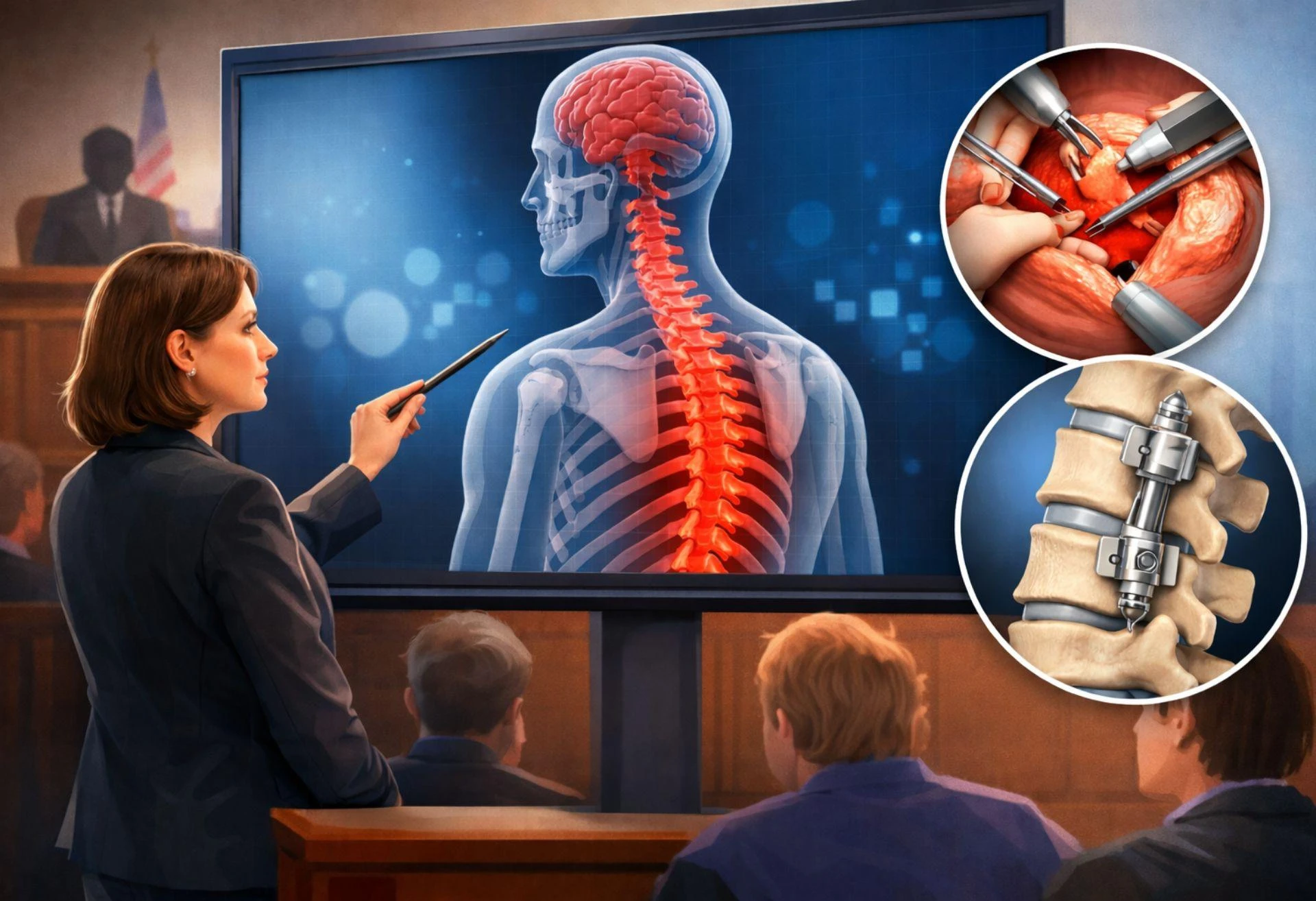
Medical Device Failure Animation has become a powerful visual tool in catastrophic injury litigation. When a defective medical device causes severe harm, attorneys must explain complicated engineering, medical procedures, and injury mechanisms to juries who may have no technical background. Carefully designed animations transform complex evidence into clear visual narratives that help courts understand exactly how a device malfunction caused serious injuries.
In catastrophic injury claims, visual clarity can make the difference between confusion and convincing evidence.
What Is Medical Device Failure Animation?
Medical Device Failure Animation is a type of 3D forensic animation used in legal cases to demonstrate how a medical device malfunctioned and how that malfunction caused injury to a patient. These animations reconstruct device mechanics, patient anatomy, and the sequence of events leading to the injury.
Legal teams often use these animations to illustrate:
- Device design defects
- Manufacturing errors
- Improper device usage or malfunction
- The biological impact on the patient’s body
Because many medical devices involve intricate components or surgical placement, animations make technical explanations easier for judges and jurors to understand. Studies show that visual presentations significantly improve audience recall compared with verbal explanations alone.
Why Medical Device Failures Lead to Catastrophic Injuries
Medical devices are designed to improve health, but when they fail, the consequences can be devastating. Examples include implant failures, malfunctioning pacemakers, defective surgical tools, or faulty radiation equipment.
Device failures typically occur due to:
- Design defects: flaws in the product’s blueprint that make it inherently unsafe
- Manufacturing defects: poor assembly, contamination, or inferior materials
- Inadequate warnings or instructions about proper usage
These failures can lead to catastrophic injuries such as paralysis, organ damage, severe infections, or wrongful death. Victims may pursue product liability claims against manufacturers, hospitals, or other responsible parties.
How Animation Strengthens Catastrophic Injury Claims
Medical device litigation often involves highly technical evidence, expert testimony, and detailed medical records. Medical Device Failure Animation bridges the gap between complex science and courtroom understanding.
Key benefits include:
1. Simplifying Complex Medical Evidence
Animations visually explain device mechanisms, surgical placement, and failure points in seconds, helping jurors grasp complicated medical details.
2. Demonstrating the Mechanism of Injury
A well-crafted animation can illustrate exactly how a device malfunction triggered catastrophic injury—something static diagrams cannot easily show.
3. Supporting Expert Testimony
Medical experts can pause or replay animations to highlight critical moments in the device failure sequence, reinforcing their testimony with visual proof.
4. Increasing Jury Engagement
Visual storytelling helps jurors stay engaged throughout long trials and improves information retention.
Real-World Context of Medical Device Failures
History shows that device failures can have tragic consequences. For example, the radiation therapy machine involved in the Therac‑25 radiation therapy machine accidents delivered massive radiation overdoses due to software flaws, causing severe injuries and deaths.
Cases like this highlight why clear technical explanations are critical in court.
The Future of Medical Legal Visualization
As catastrophic injury claims grow more complex, Medical Device Failure Animation will continue to play an essential role in litigation. Law firms increasingly rely on advanced 3D modeling, medical visualization, and forensic animation to present persuasive evidence.
For attorneys handling catastrophic injury claims, these visual tools provide a compelling way to demonstrate device defects, establish liability, and help juries fully understand the human impact of medical device failures.