When property owners, facility managers, and business operators discuss building systems, the terms mechanical services and HVAC services are often used interchangeably. While they are closely related, they are not exactly the same. Understanding the difference can help you make informed decisions when maintaining, repairing, or upgrading your building's essential systems.
In this guide, we'll explain what mechanical services and HVAC services include, how they differ, and when you may need one or both.
What Are Mechanical Services?
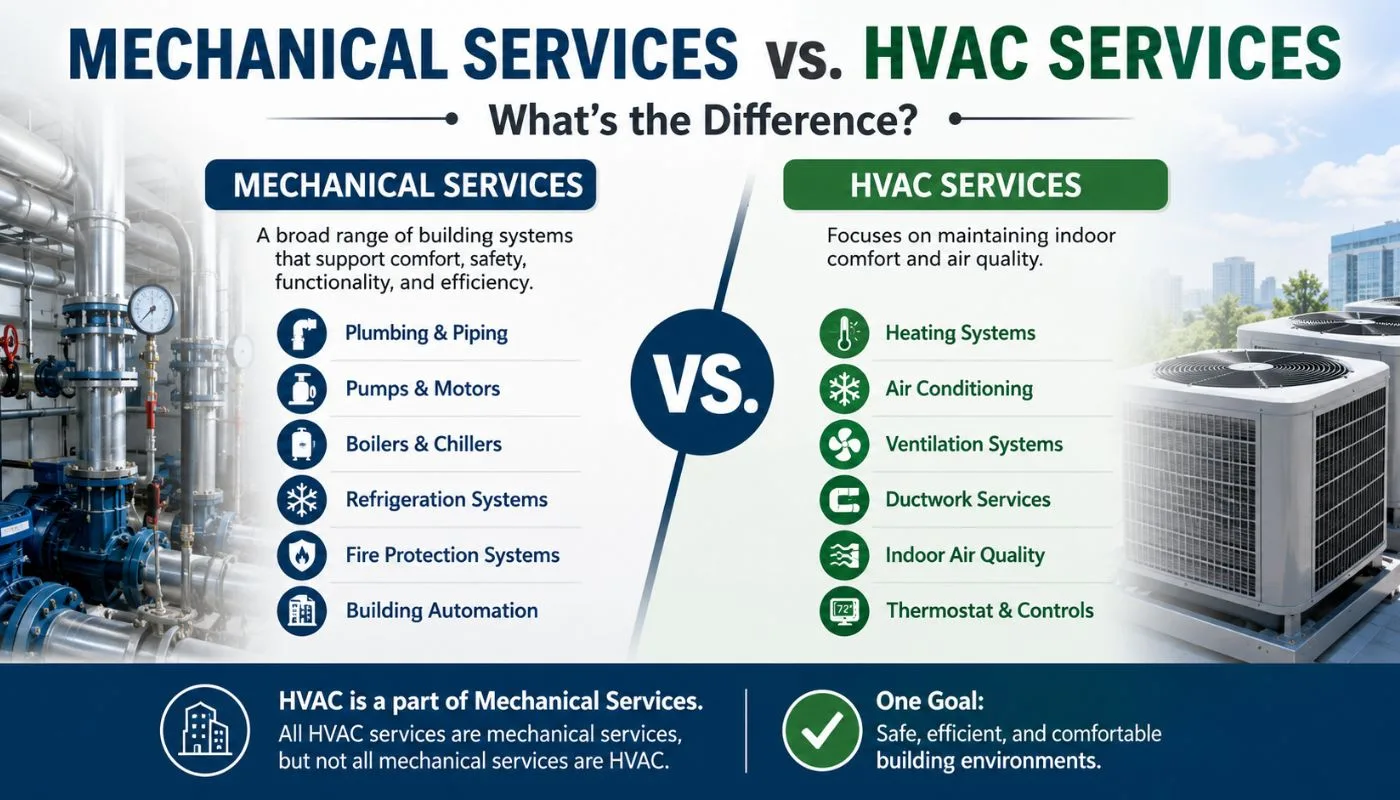
Mechanical services refer to a broad category of building systems that support comfort, safety, functionality, and operational efficiency. These systems involve mechanical equipment that helps a building operate properly.
Mechanical services typically include:
- Heating systems
- Ventilation systems
- Air conditioning systems
- Plumbing systems
- Piping networks
- Pumps and motors
- Boilers
- Chillers
- Refrigeration systems
- Fire protection systems
- Building automation controls
Because mechanical services cover multiple building systems, they are commonly found in commercial buildings, hospitals, hotels, industrial facilities, schools, and large residential developments.
What Are HVAC Services?
HVAC stands for Heating, Ventilation, and Air Conditioning. HVAC services focus specifically on maintaining indoor comfort and air quality.
HVAC services generally include:
- Air conditioning installation and repair
- Heating system maintenance
- Furnace services
- Heat pump installation
- Ventilation system maintenance
- Ductwork installation and cleaning
- Indoor air quality solutions
- Thermostat installation
- HVAC inspections and tune-ups
The primary goal of HVAC services is to regulate temperature, humidity, and airflow within a building.
The Relationship Between Mechanical Services and HVAC Services
One of the easiest ways to understand the difference is to think of HVAC as a subset of mechanical services.
All HVAC services are mechanical services, but not all mechanical services are HVAC-related.
For example:
Mechanical ServiceHVAC ServiceBoiler InstallationYesChiller MaintenanceYesAir Conditioning RepairYesVentilation System ServiceYesPlumbing RepairsNoWater Pump MaintenanceNoRefrigeration SystemsNoFire Protection SystemsNoMechanical contractors often provide HVAC services as part of a larger portfolio of building maintenance and infrastructure solutions.
Key Differences Between Mechanical Services and HVAC Services
Scope of Work
The biggest difference lies in the scope.
Mechanical services cover a wide range of building systems, including plumbing, piping, refrigeration, and industrial equipment.
HVAC services focus solely on heating, cooling, ventilation, and indoor air quality systems.
Building Applications
HVAC services are commonly required in:
- Homes
- Apartments
- Small businesses
- Retail stores
- Offices
Mechanical services are often required in:
- Hospitals
- Hotels
- Manufacturing facilities
- Airports
- Large commercial properties
- Educational institutions
Equipment Involved
HVAC technicians typically work on:
- Air conditioners
- Furnaces
- Heat pumps
- Air handlers
- Duct systems
Mechanical service providers may work on:
- Boilers
- Chillers
- Cooling towers
- Pumps
- Refrigeration units
- Process piping
- Mechanical control systems
Project Complexity
HVAC projects generally focus on climate control and comfort.
Mechanical projects can involve multiple interconnected systems that support an entire facility's operations, making them more complex and large-scale.
When Do You Need HVAC Services?
You likely need HVAC services if you are experiencing:
- Poor indoor air quality
- Uneven temperatures
- High energy bills
- Air conditioning failure
- Heating system issues
- Excessive humidity
- Poor airflow
Routine HVAC maintenance helps improve comfort, reduce operating costs, and extend equipment lifespan.
When Do You Need Mechanical Services?
Mechanical services may be necessary when your property requires:
- Boiler repairs or replacement
- Chiller installation
- Commercial refrigeration maintenance
- Plumbing infrastructure upgrades
- Pump system repairs
- Mechanical system design and installation
- Building automation integration
Large commercial facilities often rely on comprehensive mechanical service providers to manage multiple systems under one contract.
Benefits of Working With a Mechanical Services Provider
Hiring a full-service mechanical contractor offers several advantages:
Single Point of Contact
Instead of coordinating multiple vendors, you can work with one provider for various building systems.
Improved Efficiency
Integrated mechanical systems often operate more efficiently when maintained by a single team.
Reduced Downtime
Proactive maintenance can identify issues before they lead to costly failures.
Cost Savings
Bundled service agreements often reduce overall maintenance expenses.
Better System Performance
Comprehensive oversight ensures all mechanical systems work together effectively.
Can One Company Provide Both Mechanical and HVAC Services?
Yes. Many professional contractors offer both mechanical and HVAC services.
These companies often provide:
- System design
- Installation
- Preventive maintenance
- Repairs
- Emergency service
- Equipment replacement
- Energy efficiency upgrades
Working with a contractor that understands both disciplines can help ensure your building systems remain reliable and efficient.
Choosing the Right Service Provider
When selecting a contractor, consider:
- Industry experience
- Licensing and certifications
- Emergency response capabilities
- Maintenance programs
- Project portfolio
- Safety standards
- Customer reviews
For commercial properties, choosing a company with expertise in both mechanical and HVAC systems can simplify maintenance and improve long-term building performance.
Conclusion
Although the terms are frequently confused, mechanical services and HVAC services are not identical. HVAC services focus specifically on heating, ventilation, and air conditioning systems, while mechanical services hawaii encompass a broader range of building infrastructure, including HVAC, plumbing, piping, refrigeration, and other mechanical equipment.
Understanding these differences helps property owners and facility managers choose the right service provider, maintain efficient operations, and ensure long-term reliability for their building systems.