Businesses need web applications that can handle growing user demand, changing business requirements, and increasingly complex digital workflows. Choosing the right technology stack is therefore an important part of the development process.
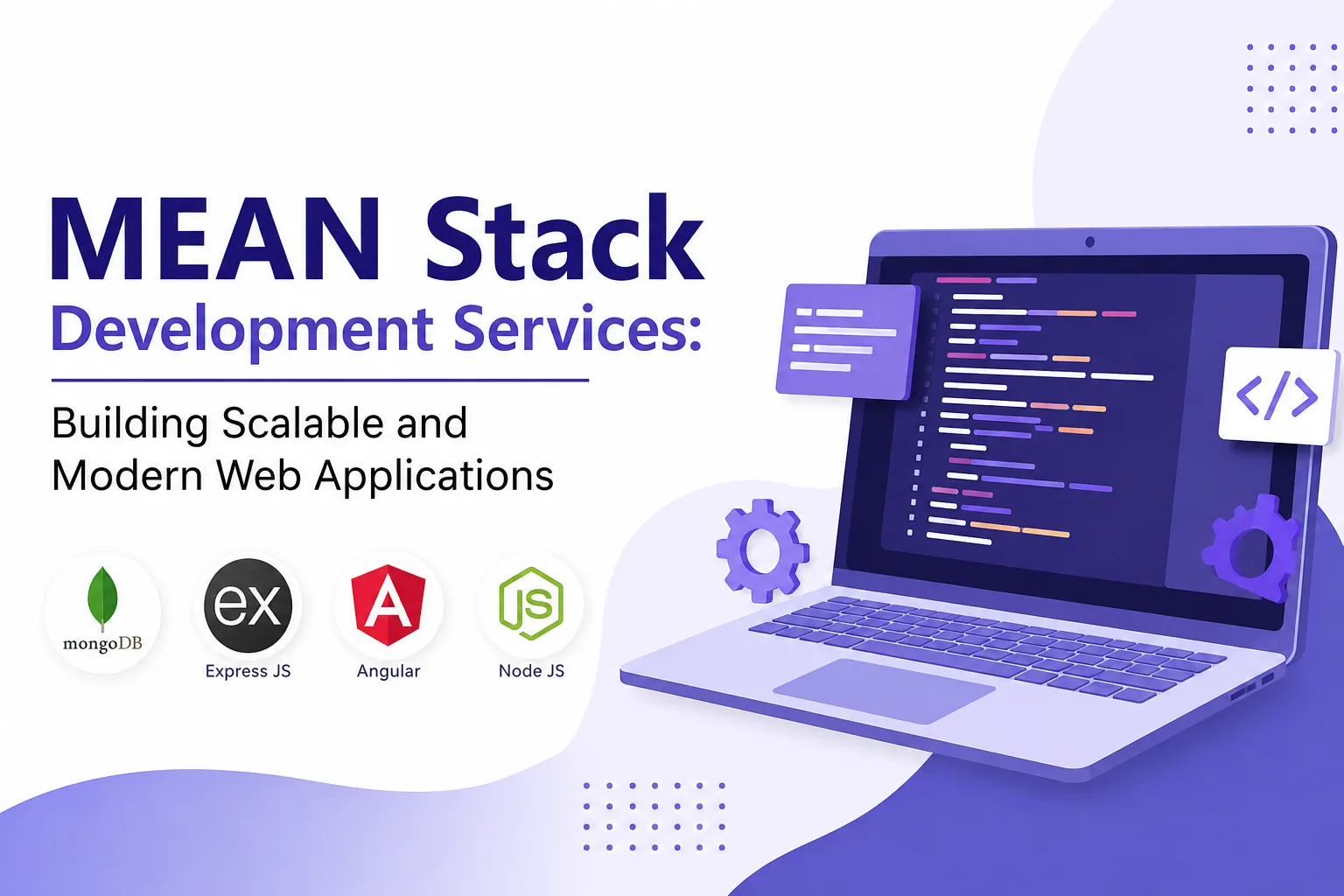
The MEAN stack is one option that has gained attention among businesses looking for a JavaScript-based approach to web application development. It combines MongoDB, Express.js, Angular, and Node.js into a full-stack environment that allows developers to use JavaScript across different layers of an application.
With the right architecture and development practices, mean stack development services can be used to build applications ranging from business dashboards and customer portals to real-time platforms and enterprise web solutions.
What Is the MEAN Stack?
MEAN is an acronym for four technologies that work together to support full-stack web application development:
- MongoDB: A NoSQL database designed to store data in flexible document-based structures.
- Express.js: A lightweight Node.js framework commonly used to build server-side applications and APIs.
- Angular: A TypeScript-based framework used to create structured and interactive front-end applications.
- Node.js: A JavaScript runtime that allows developers to execute JavaScript on the server.
One of the main advantages of this combination is that JavaScript and related development concepts can be used throughout much of the application stack. This can simplify communication between frontend and backend developers and support a consistent development workflow.
Why Businesses Consider MEAN for Web Development
Technology decisions should always be based on project requirements rather than popularity. However, the MEAN stack offers several characteristics that can make it suitable for specific applications.
Full-Stack JavaScript Development
Using JavaScript across the frontend and backend can reduce the need for developers to switch between completely different programming languages and environments.
Flexible Data Management
MongoDB's document-oriented structure can work well for applications where data models may change as requirements evolve.
Efficient API Development
Express.js provides a straightforward foundation for building APIs and server-side functionality.
Interactive User Interfaces
Angular provides tools for developing structured single-page applications with components, routing, forms, services, and other capabilities.
Support for Real-Time Applications
Node.js uses an event-driven architecture that can be useful for applications requiring frequent data exchange, such as dashboards, collaboration platforms, notifications, and communication systems.
Where MEAN Stack Applications Can Be Used
The MEAN stack is not limited to one particular industry. Its suitability depends on the application's technical and business requirements.
Common use cases include:
- Customer relationship management platforms
- Business dashboards
- E-commerce applications
- Booking and scheduling platforms
- Educational portals
- Healthcare applications
- Financial dashboards
- Social networking platforms
- Content management systems
- Real-time communication applications
Inventory and business management systems
For applications with particularly demanding database, analytics, or real-time requirements, developers should evaluate the complete architecture rather than choosing a stack based on individual technologies alone.
Key Benefits of Professional MEAN Development
Working with experienced developers can help businesses address technical requirements more systematically. Professional mean stack development services may include planning, architecture design, development, testing, deployment, and maintenance.
Some practical benefits include:
Consistent Development Environment:
A JavaScript-focused stack can provide a familiar development environment across different application layers.
Scalable Architecture:
Node.js can support applications that handle many simultaneous connections when the system is properly designed and configured.
Reusable Components:
Angular's component-based approach allows development teams to create reusable interface elements, which can improve maintainability.
Flexible Database Structure:
MongoDB can be useful when applications work with semi-structured or frequently changing data.
API-Based Architecture:
Express.js can support RESTful APIs and other backend communication patterns needed for web and mobile applications.
Important Features to Plan Before Development
A successful application begins with clear requirements. Before development starts, businesses should identify the functions that users actually need.
Depending on the project, important features may include:
- User registration and authentication
- Role-based access
- Search and filtering
- Dashboard functionality
- Payment integration
- Push notifications
- Real-time updates
- File and document management
- Third-party API integration
- Reporting and analytics
- Administrative controls
Feature planning should also consider performance, accessibility, security, and future maintenance.
Security Considerations for MEAN Applications
Security should be addressed throughout the development lifecycle rather than treated as a final testing activity.
A MEAN application may require several security measures, including:
- Secure authentication and authorization
- Password hashing
- Input validation
- Protection against common web vulnerabilities
- Secure API endpoints
- Access-control mechanisms
- HTTPS communication
- Database security
- Dependency updates
- Logging and monitoring
- Regular vulnerability testing
Developers should also follow appropriate security practices for the type of information the application stores and processes.
How to Select the Right Development Team
Choosing a development partner requires more than checking whether developers know MongoDB, Express.js, Angular, and Node.js. Businesses should evaluate how the team approaches architecture, testing, security, and long-term maintenance.
Before hiring a provider, consider:
- Experience with similar applications
- Knowledge of MEAN architecture
- Understanding of frontend and backend development
- API integration experience
- Testing and quality-assurance processes
- Security practices
- Cloud and deployment expertise
- Communication and project management
- Post-launch maintenance capabilities
Reviewing previous projects can also help businesses understand whether a development team has experience solving problems similar to their own.
Understanding the Development Process
A structured mean stack development process usually begins with requirements and continues through design, implementation, testing, and maintenance.
Requirement Analysis
The team identifies business objectives, target users, workflows, technical requirements, and project constraints.
UI/UX Design
Designers create interfaces and user flows before development begins, helping stakeholders review the application's structure.
Backend and API Development
Node.js, Express.js, and MongoDB can be used to develop server-side functionality, APIs, authentication, and data management.
Frontend Implementation
Angular is used to build the application's user interface and connect it with backend services.
Testing
Developers and QA teams test functionality, performance, security, compatibility, and usability.
Deployment and Maintenance
After launch, the application requires monitoring, bug fixes, security updates, dependency management, and feature improvements.
Final Thoughts
Mean stack development services can be a practical choice for businesses that need modern, JavaScript-based web applications. MongoDB, Express.js, Angular, and Node.js each serve a specific role, while their combination can provide a structured environment for full-stack development.
However, the technology stack should always match the application's actual requirements. Businesses should consider expected traffic, data structure, security needs, integrations, development expertise, and long-term maintenance before making a technology decision.
A clear project scope, experienced development team, thorough testing process, and well-planned architecture can provide a strong foundation for building a reliable MEAN stack application.