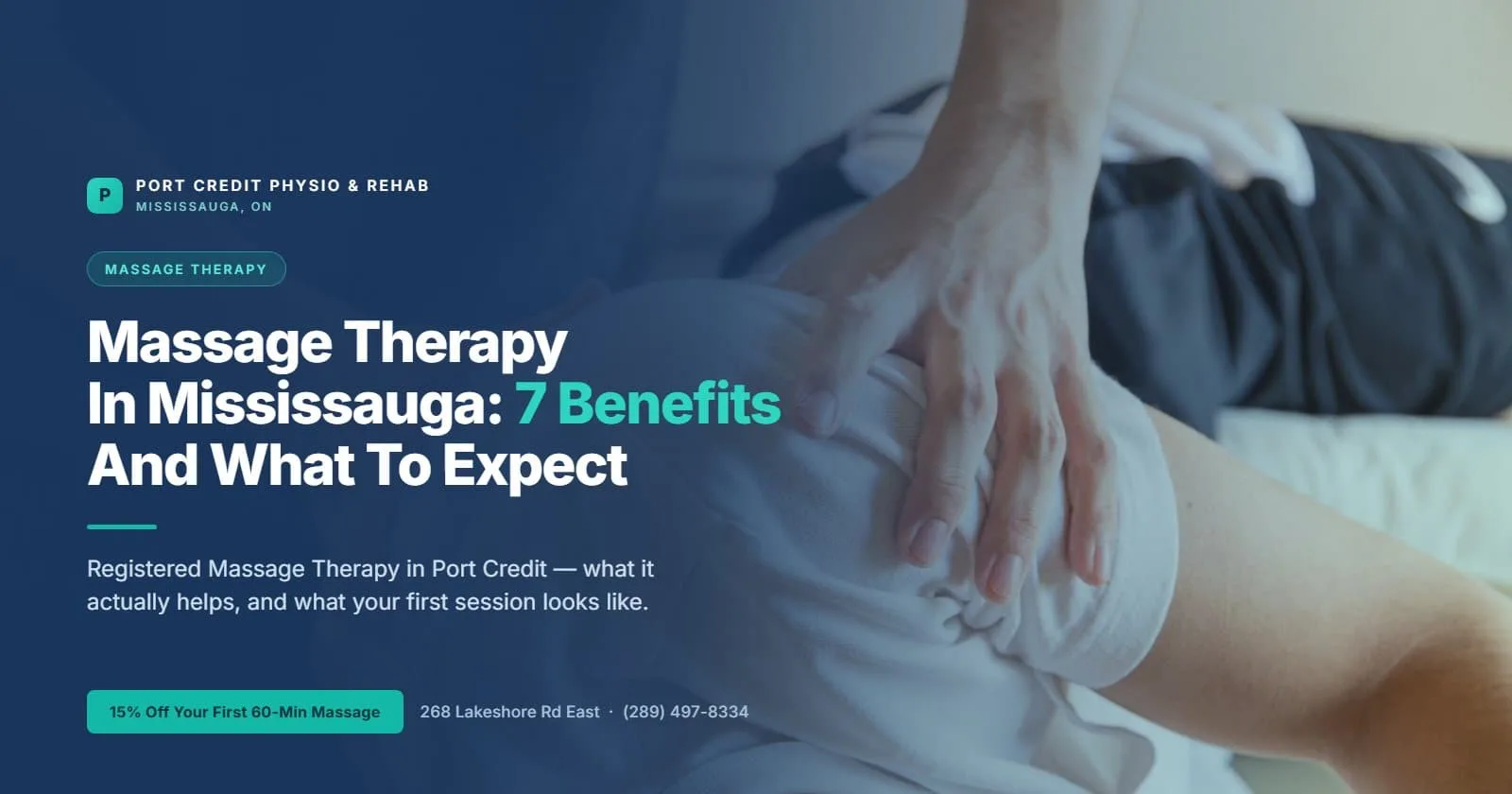
Most people book their first massage for one of two reasons: something hurts, or everything feels wound too tight.
If you've been carrying tension between your shoulder blades for weeks, waking up with a stiff neck, or hitting a wall in your training recovery, massage therapy is worth understanding properly — not as a spa treat, but as regulated healthcare.
Here's what registered massage therapy genuinely does, who it helps most, and what a first appointment at our Port Credit clinic actually looks like.
7 Evidence-Backed Benefits of Massage Therapy
1. Relief From Muscle Tension and Persistent Pain
This is the one people feel first. Sustained pressure on tight muscle tissue and trigger points reduces resting muscle tone and eases the local discomfort that comes with it.
It's most commonly used to help manage:
- Lower back and gluteal tightness, including tension contributing to sciatic symptoms
- Neck, shoulder and upper back stiffness — the "tech neck" pattern from laptop and phone use
2. Lower Stress and a Calmer Nervous System
Massage reliably shifts your body out of a sympathetic "on alert" state into a parasympathetic "rest and recover" one. In practice that means a slower heart rate, slower breathing, and a drop in the physical restlessness that comes with sustained stress.
3. Fewer, Milder Tension Headaches
A large share of everyday headaches are muscular in origin, driven by tightness in the suboccipital muscles at the base of the skull, the upper traps, and the jaw.
4. Better Local Circulation
Massage increases blood flow to the tissue being worked on. Better local circulation means more oxygen and nutrients reaching the area, which supports tissue recovery and contributes to the warm, loosened feeling afterwards.
5. Improved Flexibility and Range of Motion
Long hours seated shorten your hip flexors and chest muscles while your upper back and glutes go quiet. The result is a posture that feels stuck and joints that don't want to move through their full range.
Which Massage Technique Is Right for You?
You don't need to decide before you arrive — your therapist will assess and recommend. But it helps to know the options.
- Deep Tissue Massage — Slower, firmer work through the deeper muscle layers. Best for stubborn knots, long-standing tightness, and people who find lighter pressure doesn't touch the problem. Expect some tenderness for a day afterwards.
- Swedish Massage — Longer, flowing strokes at lighter to moderate pressure. Best for general tension, stress relief, and anyone new to massage or sensitive to firm pressure.
- Sports Massage — Built around athletic demands, whether that's pre-event preparation, post-event recovery, or in-season maintenance for a specific sport.
Deep Tissue or Swedish — How Do I Choose?
The short version: if you want to feel relaxed, Swedish; if you want to feel changed, deep tissue.
Deeper is not automatically better. Pressure that has you clenched and holding your breath is counterproductive — your muscles guard against it. Effective pressure should feel intense but breathable. Tell your therapist during the session, not afterwards; adjusting pressure is completely normal and expected.
Who Gets the Most Out of Massage Therapy?
- Desk workers and hybrid workers — For the postural strain of long screen hours, especially neck, upper back and forearm tension. If you've added home-office hours without adding a proper setup, this is likely you.
- Runners, gym-goers and weekend athletes — For recovery between sessions, in-season maintenance, and keeping older niggles like plantar fasciitis from becoming bigger injuries.
- Older adults — For joint stiffness, general mobility and circulation, using gentler pressure and technique appropriate to the individual.
What Your First Appointment Looks Like
New to massage therapy? Here's exactly what happens when you book with Rajesh, so nothing catches you off guard.
- Before you're on the table (10 minutes) — A short health history, a conversation about what's bothering you and what you want out of the session, and a quick assessment of the relevant area. This is also where you flag anything relevant — pregnancy, recent injuries, medications, medical conditions, or areas you'd rather not have worked on.
- Consent and draping — You undress only to your level of comfort. You're covered by a sheet throughout, with only the area being worked on exposed. Your therapist leaves the room while you get on the table. You can decline any technique or area at any point, and you can end the session at any time. That's your right, and it's set out in CMTO standards.
Why Port Credit Physio & Rehab
We're on Lakeshore Road East in Port Credit, serving clients from across Mississauga — Lorne Park, Clarkson, Cooksville, Erindale and beyond.
- Registered and regulated — Treatment with a Registered Massage Therapist regulated by the College of Massage Therapists of Ontario, providing evidence-based care
- No referral needed — Book directly
- Direct billing — To most major insurers, plus MVA and WSIB claims
- Private treatment rooms — Dedicated, clean, private spaces; not curtained bays
- One-on-one care — Your full appointment with your therapist
Original Source: https://www.portcreditphysio.ca/blog/benefits-of-massage-therapy-mississauga