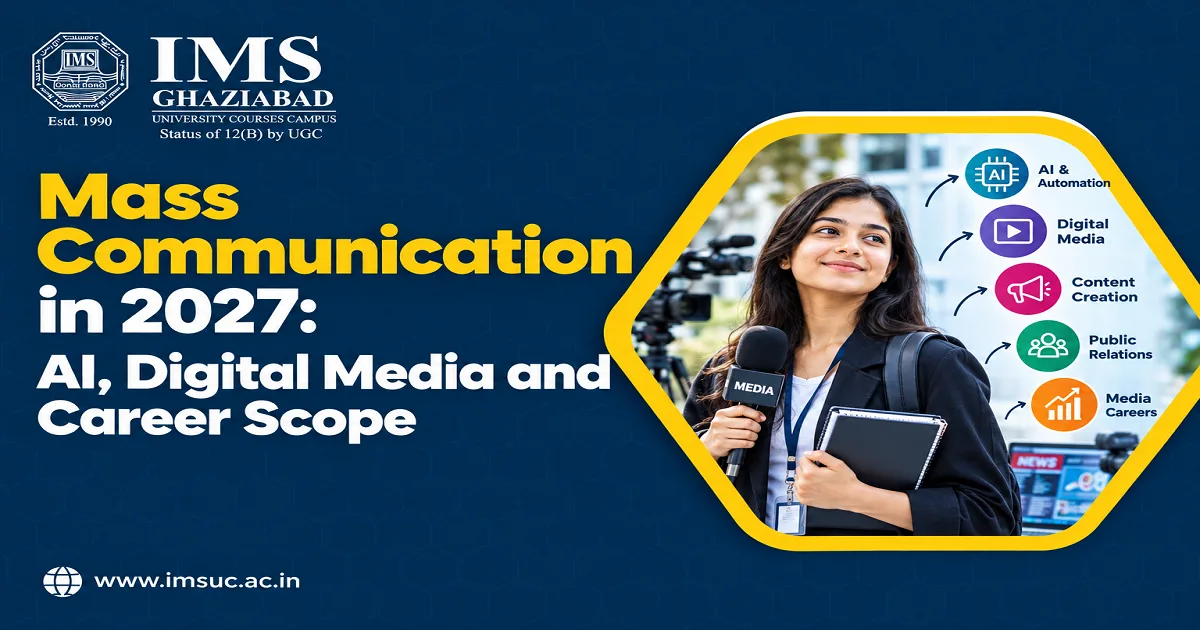
Mass communication is evolving rapidly as technology changes the way people create, consume, and share information. By 2027, the field is expected to be shaped strongly by artificial intelligence (AI), digital platforms, short-form content, data-driven storytelling, and multimedia journalism. For students considering a career in media, understanding these changes can help them prepare for a dynamic professional environment.
The Changing Landscape of Mass Communication
Traditional newspapers, television, and radio continue to play an important role, but digital media has significantly expanded the communication ecosystem. News websites, podcasts, social media, streaming platforms, and independent digital publications have created new opportunities for content professionals.
AI is also becoming part of everyday media workflows. It can assist with research, transcription, content organisation, translation, data analysis, and basic production tasks. However, human judgment, creativity, ethical awareness, and fact-checking remain essential, particularly in journalism and public communication.
Why Digital Skills Matter
Future media professionals will need more than strong writing or speaking abilities. A combination of creative and technical skills can make graduates better prepared for changing industry requirements.
Key skills include:
- Digital storytelling and content creation
- Video editing and multimedia production
- Social media management
- Search and audience analytics
- Podcast and audio production
- Research and fact-checking
Understanding AI-assisted media tools
Students exploring a Mass Media College In Ghaziabad can therefore benefit from programmes that combine communication fundamentals with practical exposure to contemporary digital tools.
Career Scope in 2027
The expansion of digital media is creating diverse career pathways. Depending on their interests and skills, graduates can explore roles such as:
- Digital journalist
- Content writer or editor
- Social media specialist
- Video producer
- Copywriter
- Public relations professional
- Podcast producer
- Multimedia storyteller
Digital marketing professional
The industry is also becoming more interdisciplinary. Communication graduates may work with technology, marketing, entertainment, public relations, publishing, or corporate communications teams.
Choosing the Right Educational Foundation
When comparing Best mass communication colleges, students should look beyond infrastructure or course titles. A useful academic environment should provide opportunities to understand media theory while also developing practical skills through projects, production exercises, internships, and exposure to current industry practices.
Equally important are critical thinking and media ethics. As AI-generated content and misinformation become more prevalent, professionals who can verify information, understand context, and communicate responsibly will remain valuable.
Conclusion
Mass communication in 2027 is likely to be more digital, interactive, and technology-driven than ever. AI may transform many routine processes, but creativity, communication skills, ethical judgment, and human storytelling will continue to have an important place in the profession. For students preparing for this evolving field, IMS Ghaziabad (University Courses Campus) can be considered as part of their exploration of academic pathways in media and communication.