
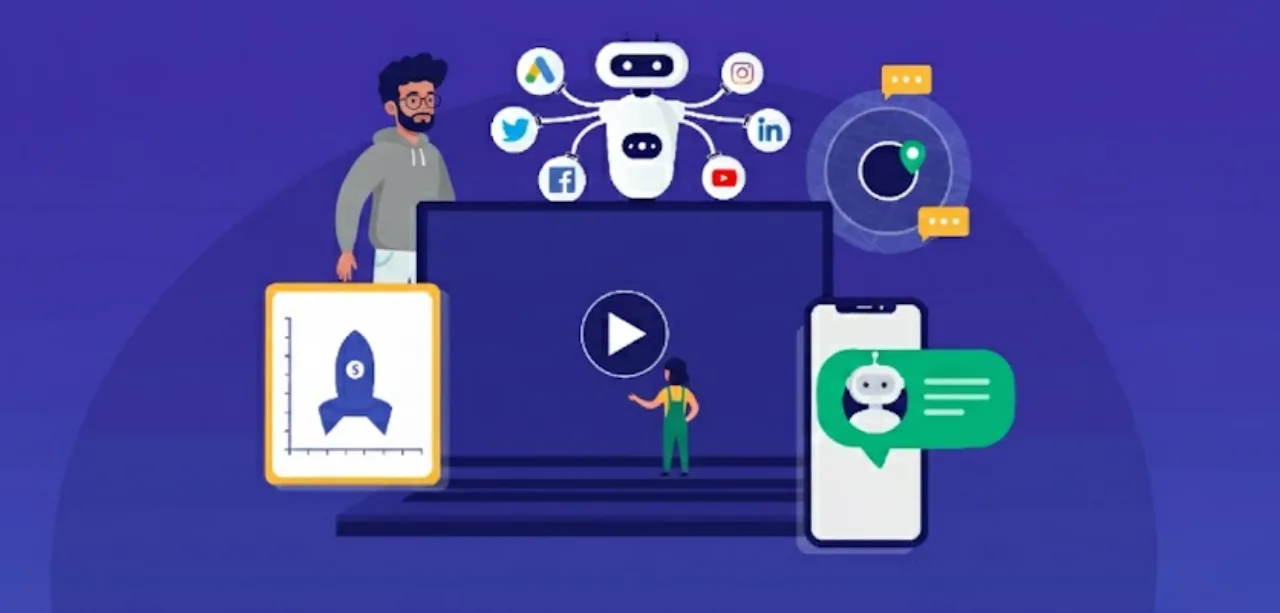
Marketing technology in 2026 is leaner, smarter, and more performance-focused. The winning approach isn’t piling on tools—it’s using a focused stack, moving quickly, and letting data guide decisions.
If your goal is better rankings and real business impact, these MarTech trends for 2026 are the ones to act on.
1. AI Runs the Day-to-Day
AI has moved from helper to operator.
Today it can:
- Draft ad copy, blogs, and social posts
- Create images and videos
- Detect patterns in user behavior
- Adjust bids, budgets, and creatives in real time
Less manual work, more strategic control.
👉 What to do:
Adopt platforms that unify creation, analysis, and automation so your team spends less time switching tools.
2. Personalization Is Table Stakes
Generic campaigns don’t cut it anymore.
Users expect:
- Emails aligned with their interests
- Site experiences that adapt to behavior
- Relevant offers at the right time
At-scale personalization is now practical.
👉 What to do:
Centralize customer data and segment intelligently so each touchpoint feels relevant.
3. Privacy-First Is the Default
With third-party tracking fading, the focus has shifted.
Marketers now rely on:
- First-party data you collect directly
- User-declared (zero-party) data
- Contextual targeting
👉 What to do:
Invest in owned audiences—email lists, communities, and subscriptions—and be clear about how data is used.
4. Content Velocity Is a Growth Lever
Speed and volume matter—if quality holds.
AI enables:
- Rapid video production
- Multiple ad variations for testing
- Consistent publishing without bottlenecks
👉 What to do:
Increase output and test aggressively. Let performance decide what scales.
5. Fewer Tools, Better Outcomes
Tool overload creates friction.
The shift is toward:
- Consolidated platforms
- Strong integrations
- Cleaner workflows
👉 What to do:
Audit your stack. Cut anything that doesn’t move revenue or efficiency.
6. Conversations Convert Better
People want answers now, not forms later.
That’s why:
- Chatbots
- Messaging apps
- AI assistants
are driving higher engagement.
👉 What to do:
Add conversational flows on key pages to capture leads and resolve objections in real time.
7. Search Is More Conversational
Queries are longer and more natural.
Users:
- Ask full questions
- Use voice inputs
- Expect direct answers
👉 What to do:
Target long-tail queries, write in a natural tone, and structure content to answer specific questions clearly.
8. Decisions Are Data-Led
Guesswork is expensive.
Winning teams track:
- Customer acquisition cost (CAC)
- Conversion rates
- Customer lifetime value (LTV)
- Channel-level performance
👉 What to do:
Build simple dashboards and review them weekly. Optimize based on what the numbers say.
9. Omnichannel Is Non-Negotiable
Customers move across platforms constantly.
Your mix likely includes:
- Social platforms
- Website
- Paid media
👉 What to do:
Keep messaging consistent and coordinate campaigns so the journey feels seamless.
10. Speed Beats Perfection
Iteration wins.
Top teams:
- Launch quickly
- Test continuously
- Refine based on results
👉 What to do:
Ship faster. Learn faster. Improve faster.
Bottom Line
Don’t chase every shiny trend. Focus on what compounds:
- Use AI to save time and scale output
- Build and protect your first-party data
- Publish consistently and test often
- Simplify your stack
- Let data drive decisions
MarTech in 2026 rewards clarity, speed, and disciplined execution. Stick to that, and you’ll outpace competitors who are still overthinking it.