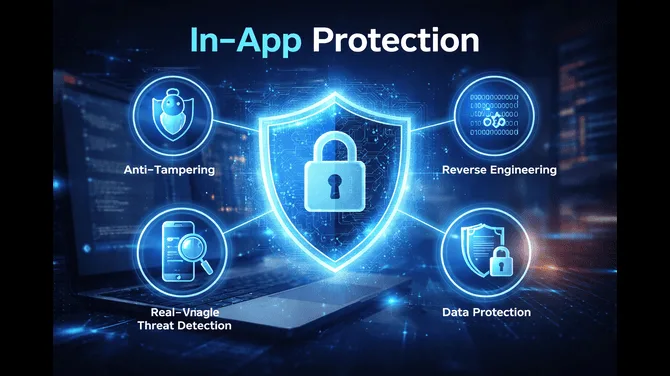
In-App Protection refers to a set of security technologies and strategies designed to protect mobile and web applications from threats originating both inside and outside the application environment. These protections are embedded directly within the application itself, helping to defend against runtime attacks, unauthorized modifications, reverse engineering, and data exposure.
Unlike traditional perimeter security, which focuses on protecting networks and servers, In-App Protection focuses on securing the application layer where sensitive interactions actually occur. It provides continuous monitoring and defense while the app is running, ensuring stronger protection against sophisticated attacks.
Click here for more information : https://qksgroup.com/market-research/market-forecast-in-app-protection-2026-2030-worldwide-2284
Why Organizations Need In-App Protection
Cyber attackers increasingly target applications because they serve as gateways to sensitive business data and customer information. Traditional security solutions such as firewalls and antivirus software are often insufficient to stop application-specific threats.
Organizations require In-App Protection for several important reasons:
Protection Against Reverse Engineering
Hackers often decompile mobile applications to understand their code structure, identify vulnerabilities, and steal intellectual property. Reverse engineering can expose sensitive algorithms, API keys, authentication methods, and business logic.
In-App Protection solutions use code obfuscation, encryption, and anti-debugging mechanisms to make reverse engineering significantly more difficult.
Defense Against Code Tampering
Application tampering occurs when attackers modify an app’s code to bypass security controls, manipulate transactions, or inject malicious behavior. This is especially dangerous in financial services, e-commerce, and healthcare applications.
Runtime Application Self-Protection (RASP) helps detect and prevent tampering attempts in real time, ensuring application integrity remains intact.
Prevention of Data Leakage
Applications process sensitive customer data such as payment information, personal details, healthcare records, and login credentials. If exposed, this data can lead to major compliance violations and trust issues.
Strong encryption, secure storage, and runtime monitoring help prevent unauthorized access and data leakage.
Compliance with GDPR and CCPA
Regulations such as GDPR and CCPA require organizations to protect personal data and implement strong privacy controls. Failure to comply can result in heavy financial penalties and legal consequences.
In-App Protection helps organizations meet compliance requirements by improving data security, access control, and monitoring capabilities.
Click here for market share report : https://qksgroup.com/market-research/market-share-in-app-protection-2024-worldwide-2480
Enhanced Customer Trust
Users expect secure digital experiences. A single application breach can permanently damage brand reputation and reduce customer confidence.
By implementing advanced application security measures, organizations demonstrate their commitment to protecting customer information and maintaining trust.
Key Features of In-App Protection Solutions
Modern In-App Protection platforms offer several advanced capabilities:
- Code Obfuscation
- Anti-Tampering Protection
- Runtime Application Self-Protection (RASP)
- Anti-Debugging and Anti-Emulator Detection
- Root and Jailbreak Detection
- API Protection
- Secure Data Storage
These features work together to create a comprehensive application security framework.
Benefits of In-App Protection
Organizations that invest in In-App Protection gain multiple business and security advantages.
Reduced Security Risks
Embedded protection significantly lowers the chances of successful attacks targeting application vulnerabilities.
Improved Regulatory Compliance
Organizations can better align with data privacy regulations and industry-specific security standards.
Stronger Brand Reputation
Secure applications improve customer confidence and help maintain long-term business relationships.
Lower Incident Response Costs
Preventing breaches is far more cost-effective than managing recovery, legal action, and reputational damage after an incident.
Business Continuity
Secure applications ensure uninterrupted digital services, minimizing downtime and operational disruption.
The Future of In-App Protection
As cyber threats evolve, In-App Protection solutions are becoming more intelligent and adaptive. Artificial intelligence and machine learning are being integrated to detect unusual behavior patterns and stop attacks before they cause damage.
The rise of Zero Trust security models, DevSecOps practices, and cloud-native applications is also driving innovation in application protection strategies. Organizations are increasingly prioritizing security from the development stage rather than treating it as an afterthought.
In the future, In-App Protection will play an even greater role in securing digital ecosystems across industries.
Conclusion
In today’s threat landscape, protecting mobile and web applications is essential for every organization. Cybercriminals continue to target applications as valuable entry points to sensitive data and business operations.
In-App Protection provides the advanced security controls needed to defend against reverse engineering, tampering, fraud, and data leakage while supporting compliance with GDPR, CCPA, and other regulatory requirements.