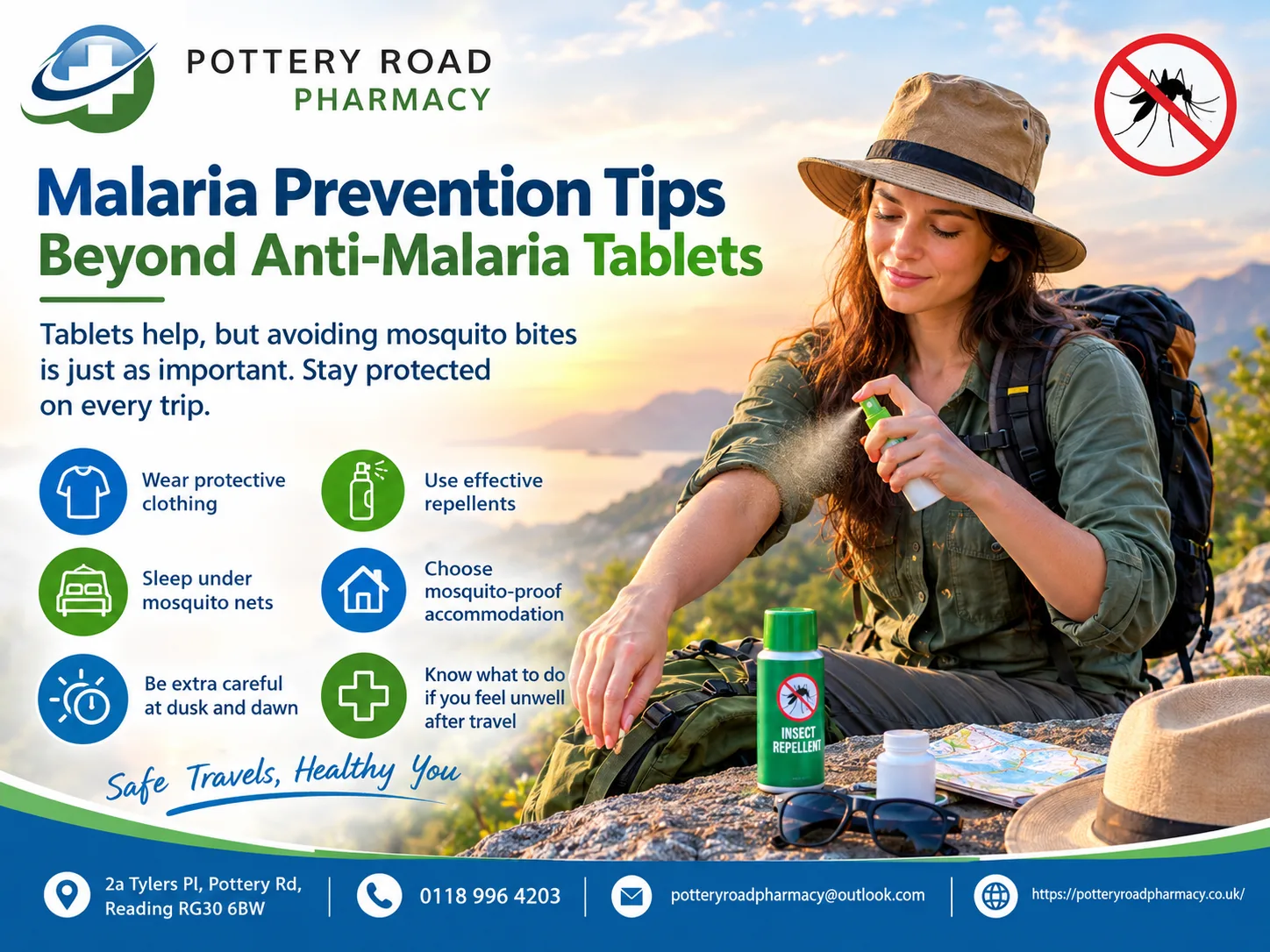
Malaria prevention works best as a combination of anti-malaria medication and avoiding mosquito bites. No antimalarial tablet is 100% effective, so preventing bites is just as important as taking your medicine.
If you've already read our guide to anti-malaria tablets in the UK, you'll know that medication is a key part of staying safe in a malaria-risk country. But tablets are only one layer of protection. Malaria is spread by infected mosquitoes, and it can take just one bite to catch it.
This guide covers the practical malaria prevention tips every traveller should know: what to wear, which repellents work, when to take extra care, and what to do if you feel unwell after coming home.
Why Anti-Malaria Tablets Are Not the Whole Picture
Antimalarial tablets greatly reduce your risk of malaria, but they can't guarantee protection. Taking them correctly matters too: that means starting them before you travel, taking every dose, and continuing for the full period after you return. Missed doses reduce protection further.
UK travel health guidance uses a simple ABCD approach to malaria prevention:
- A – Awareness of risk: know whether malaria is present where you're going
- B – Bite prevention: avoid mosquito bites as much as possible
- C – Chemoprophylaxis: take the right antimalarial tablets correctly
- D – Diagnosis: get medical help quickly if you develop symptoms
Tablets cover just one of these four steps. The rest depend on what you do before, during and after your trip.
Some travellers also face a higher malaria risk when travelling. This includes pregnant women, young children, people over 65, people with a weakened immune system, and people without a spleen. People who were born in or used to live in a malaria-risk country and now live in the UK are also at risk, as they will no longer be immune. For these groups, bite avoidance is especially important.
Practical Ways to Avoid Mosquito Bites While Travelling
Mosquito bite avoidance is your first line of defence against malaria and other mosquito-borne infections. Here are the key steps.
Clothing and Accommodation Choices
- Cover up in the evening. Wear long-sleeved tops, long trousers and socks, especially from dusk onwards, when malaria mosquitoes are most active.
- Choose loose, light-coloured clothing. Mosquitoes can bite through thin, tight fabric, and loose clothing gives better protection.
- Consider treating clothes with permethrin. Permethrin-treated clothing adds an extra barrier, which is useful for long trips, trekking or rural travel.
- Stay somewhere mosquito-proof. Choose accommodation with air conditioning, screened windows and doors, or both. Keep doors and windows closed after dark.
- Sleep under an insecticide-treated mosquito net. If your room isn't fully screened or air-conditioned, a treated net is one of the most effective ways to prevent night-time bites. Check it for holes and tuck it under the mattress.
- Use plug-in vaporisers or knockdown sprays in your room in the evening to reduce mosquitoes indoors.
Repellents and Bite-Prevention Products
- Use a DEET-based insect repellent. NHS guidance recommends repellent containing 50% DEET for travel to malaria areas. It's among the most effective and well-studied options.
- Know the alternatives. If you can't use DEET, other repellents such as icaridin (picaridin), IR3535 or lemon eucalyptus oil (PMD) can be used. Ask a pharmacist which is suitable, particularly for children.
- Apply repellent correctly. Cover all exposed skin and reapply regularly, especially after swimming or sweating. Follow the product's instructions.
- Sunscreen first, repellent second. If using both, apply sunscreen first, let it absorb, then apply repellent on top.
- Don't rely on gadgets. Wristbands, buzzing devices, garlic and vitamin B supplements aren't proven to prevent bites.
Planning a trip to a malaria-risk area? Get a complete pre-travel plan, including the right tablets and bite-prevention advice, at Pottery Road Pharmacy's travel clinic in Reading.
Best Times of Day to Take Extra Care
The Anopheles mosquitoes that spread malaria mainly bite between dusk and dawn. That makes evenings and nighttime the highest-risk periods.
Take extra care:
- At sunset and in the evening: when eating outdoors, sitting on a terrace or walking back to accommodation
- Overnight: when you're asleep and can't notice bites, which is why nets and screened rooms matter
- Early morning: before and around sunrise
Daytime still carries risk. Other mosquitoes that bite during the day can spread infections such as dengue, Zika and chikungunya. It makes sense to use repellent throughout the day as well as in the evening, especially in tropical areas.
What to Do If You Notice Symptoms After Returning Home
Malaria can be hard to spot, and it's a medical emergency that needs quick diagnosis and treatment.
Symptoms of malaria can include:
- A high temperature, or feeling hot, cold or shivery
- Sweating
- Headaches and confusion
- Feeling very tired and sleepy, especially in children
- Feeling or being sick, tummy pain and diarrhoea
- Loss of appetite and muscle pains
- Yellowing of the skin or whites of the eyes (jaundice)
- Sore throat, cough and difficulty breathing
Symptoms usually appear 7 to 18 days after an infected bite. However, they can sometimes appear months after travel and rarely years later, even if you took antimalarial tablets.
What to do:
- Get urgent help. Ask for an urgent GP appointment or contact NHS 111 if you have symptoms and have visited a malaria-risk country in the last 12 months.
- Mention your travel. Always tell the healthcare professional where you've been and when.
- Don't wait it out. Malaria can become serious very quickly. Don't assume it's flu or a stomach bug.
- Tell your travel companions. If you have symptoms, anyone you travelled with should also get checked.
- If you're still abroad, get medical advice locally. Don't wait until you get home.
Frequently Asked Questions
Do I still need repellent if I'm taking anti-malaria tablets?
Yes. Anti-malaria tablets reduce your risk but aren't 100% effective, so you should always combine them with bite prevention. Use a DEET-based repellent, cover up in the evenings and sleep under a treated mosquito net for the best protection.
What time of day are mosquitoes most active?
Mosquitoes that spread malaria mainly bite between dusk and dawn, so evenings and night-time are the highest-risk periods. Other mosquitoes that spread infections like dengue bite during the day, so it's sensible to use repellent throughout the day too.
Can mosquito nets really make a difference?
Yes. Sleeping under an insecticide-treated mosquito net is one of the most effective ways to prevent night-time bites, when malaria mosquitoes are most active. Check the net for holes and tuck it in securely, especially if your room isn't air-conditioned or fully screened.
What should I do if I feel unwell after returning from a malaria-risk country?
Get medical help straight away. Ask for an urgent GP appointment or contact NHS 111 if you have symptoms such as a high temperature, chills, sweating or headaches within 12 months of visiting a malaria-risk country. Always mention where you've travelled, as malaria needs quick testing and treatment.
Get a Complete Pre-Travel Plan at Pottery Road Pharmacy
The best malaria prevention combines the right medication with good bite-avoidance habits. Tablets and repellent work together: neither is enough on its own.
For Reading travellers who've already looked into antimalarial tablets, the next step is a full pre-travel consultation. Our travel clinic can check the malaria risk for your destination, recommend suitable tablets, advise on repellents and nets, and review any other vaccines you may need. For more tips, see our guide to common travel health risks during summer holidays.
It's best to get advice 4 to 6 weeks before you travel, but last-minute advice is still worthwhile.
Book your pre-travel health consultation today. 📍 Pottery Road Pharmacy, 2a Tylers Place, Pottery Road, Reading RG30 6BW 📞 0118 996 4203 ✉️ [email protected] Book an Appointment | Explore Travel Clinic Services