Sydney windows are rarely as standard as we’d like them to be. A terrace might have tall, slightly wonky openings. An apartment can have sliding doors, winders, or flyscreens that eat into the usable space. Even newer builds can surprise you once you start measuring properly.
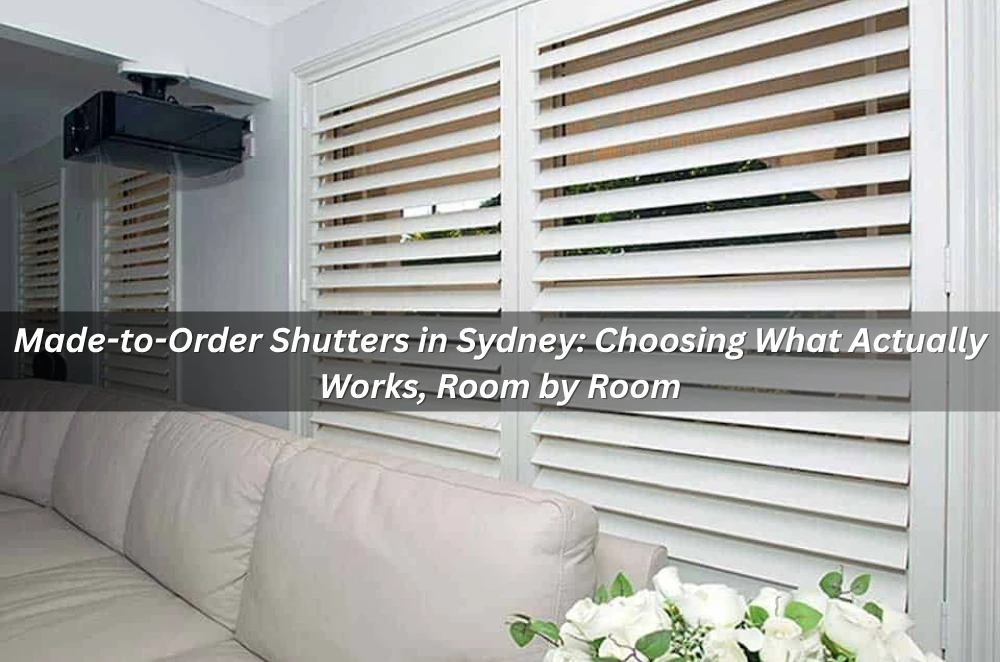
That’s why made to order shutters for Sydney homes aren’t really about being fancy. They’re about fit, panels that close cleanly, louvres that move freely, and frames that don’t fight the window hardware every time you open it.
If the shutters were removed entirely, the aim here is that the decision process still holds up.
Why “made-to-order” matters in Sydney homes
A lot of shutter frustration comes from tiny assumptions. People assume reveals are square. They assume the same window style repeats across the house. They assume a sample display reflects their own frame depths and obstacles.
In real homes, openings can taper by a few millimetres from top to bottom. Architraves aren’t always consistent. A handle or winder can sit right where a panel wants to land.
In Sydney, conditions can also expose poor fit faster than you expect. Dust, humidity, and salty air near the coast don’t create problems on their own, but they make little gaps and little rub points feel bigger over time.
Decision factors that affect everyday life
Shutters look simple until you think about how a room actually behaves at 7am, at 3pm, and at night. The trick is to decide what you want them to do, not just how you want them to look.
Light control vs privacy (they’re not the same thing)
Street-facing rooms usually need “privacy without darkness.” Shutters can do that well because you can angle louvres to cut sight lines while still pulling daylight in.
Bedrooms bring another layer. If early sun is the issue, you’ll get a noticeable improvement with shutters, but be careful about assuming they’re a full blackout solution. Some light creep is normal around frames and joins, especially on bright mornings.
Airflow and how the window opens
Sydney heat makes ventilation non-negotiable for a lot of people. So, check the window type and how you use it now.
Sliding windows, awnings, casements, each one changes what “comfortable shutters” means. If you rely on cross-breezes, consider whether you’ll want panels that fold right back, or whether angled louvres will be enough most days.
Moisture, cleaning, and how honest you are about upkeep
Bathrooms and laundries are where wishful thinking goes to die. Steam, splashes, cleaning sprays, those aren’t “maybe” factors, they’re guaranteed.
Also, be realistic about cleaning. If you want low-maintenance, pick finishes and louvre shapes that wipe down quickly. Some styles look incredible, then annoy you because dust shows up in every groove.
Kids, pets, and “touch points”
If there are kids, shutters will be touched. If there are pets, shutters will be leaned on. If there’s a favourite lookout spot, louvres might become a daily toy.
Shutters can be appealing because they avoid cords, but durability still comes down to hardware quality and how the panels are configured in high-traffic spots.
Inside mount vs outside mount
This one quietly decides the whole project.
Inside mount (in the reveal) can look crisp and built-in, but it depends on reveal depth and squareness. Outside mount can hide uneven openings and give more coverage, but it can also change how far the shutters project and what they overlap.
Plenty of Sydney homes end up mixing both across different rooms. That’s not a failure, it’s just reality.
Common mistakes that lead to re-dos
Most regret isn’t about choosing shutters. It’s about choosing shutters without thinking through the annoying details.
Mistake 1: Measuring once and calling it “close enough”
Windows can be slightly out-of-square and you won’t notice until the panels start rubbing or the gaps show in strong sunlight.
A better approach is to measure width at top/middle/bottom and height at left/centre/right, then treat the biggest variation as a design constraint, not something to ignore.
Mistake 2: Missing obstructions until it’s too late
Handles, winders, flyscreen frames, security sensors, these aren’t small issues. They decide where frames can sit and how panels can swing.
If you only look at the window straight-on, you’ll miss the stuff that sticks out.
Mistake 3: Picking louvre size based on aesthetics only
Bigger louvres can feel modern and open, but they behave differently in shorter window heights. Smaller louvres can feel more traditional and sometimes suit narrower reveals.
There’s no universal “best.” There’s just what suits the room and what you’ll tolerate cleaning.
Mistake 4: Treating wet areas like dry rooms
If you choose for the bathroom based on a living room sample, you’re likely to be annoyed later. Moisture needs a material and finish that won’t hate you in six months.
Mistake 5: Forgetting panel swing paths
This is the one people notice immediately after installation.
A panel that swings into a walkway, hits a cabinet, or blocks a door handle becomes a daily irritation. You want the shutters to disappear into your routine, not become “that thing you have to work around.”
A simple 7–14 day plan to get the decision right
This is the short plan that stops you from guessing and hoping.
Days 1–2: Do a quick “room reality” check
For each room, write the top two outcomes you want. Not five. Two.
Examples: “privacy + daylight,” “glare control + airflow,” “easy cleaning + moisture resistance.” Those priorities will keep you steady when you start comparing options.
Days 3–5: Look for constraints, not just preferences
Open every window fully. Note the hardware. Check for flyscreens and anything mounted near the frame.
Take a couple of photos from the side. Side angles are where you see the obstacles that matter.
Days 6–7: Decide mounting style room by room
Choose inside or outside mount based on function and the window’s reality.
Also decide where you want panels to stack and swing, especially in rooms with furniture close to windows.
Days 8–10: Get measurement-ready
At this stage, you’re not trying to become a professional measurer. You’re trying to capture the right information so your conversations and quotes are grounded.
If you want a structured way to record sizes, obstructions, and mounting notes before requesting quotes, use the Shutters Australia measurement checklist.
Days 11–14: Stress-test your choices
Ask yourself: will this be annoying on a busy weekday?
Check the trade-offs: light vs privacy, airflow vs coverage, style vs cleaning effort, panel swing vs space. If one room is borderline, pick the option that’s easier to live with and easier to maintain.
Operator experience moment
People often fall in love with the clean look of a display shutter, then discover their actual window hardware makes it awkward day to day. The fix is usually simple, adjust the mount, tweak panel layout, or plan for clearance, but it’s only simple if it’s caught early. Once an order is locked in, “small” becomes expensive.
Local SMB mini-walkthrough: a Sydney scenario
A Sydney small business owner tackling a home upgrade might do it like this:
They start with the street-facing bedroom because privacy is non-negotiable.
They then focus on the living area where afternoon glare is the real problem.
They choose a wet-area-safe approach for the bathroom, even if it doesn’t match the main room exactly.
They map panel swing around furniture so nothing smacks into a chair or cabinet.
They keep the front-facing windows visually consistent so the exterior looks intentional.
Only after that do they lock measurements and confirm mounting choices.
Practical opinions
Start where daily comfort changes first, not where the renovation “should” start.
Fit and usability matter more than showroom style points.
If you’re undecided, lean toward easier cleaning and simpler operation.
Key Takeaways
- Made-to-order shutters shine when windows aren’t perfectly standard, which is common across Sydney homes.
- Decide room by room using real priorities (privacy, glare, airflow, cleaning), not just aesthetics.
- Avoid re-dos by accounting for obstructions, moisture, and panel swing paths early.
- A 7–14 day plan helps you turn “maybe” decisions into clear, install-ready choices.
Common questions we hear from Australian businesses
Q1) How do we decide between inside mount and outside mount?
Usually, inside mount works best when reveals are deep and reasonably square, while outside mount is more forgiving when openings are uneven or shallow. A practical next step is to measure reveal depth and check width/height at three points to see how consistent the opening really is. In Sydney, mixed-era renovations often mean different rooms naturally suit different mounting.
Q2) What’s the most common measuring oversight before ordering?
In most cases, it’s ignoring obstructions like winders, handles, flyscreen frames, or sensors until the design is already assumed. The next step is to open every window fully and take side-on photos so you can see what sticks out and where clearance is tight. In many Sydney apartments and terraces, that protruding hardware is the detail that changes the whole layout.
Q3) Are shutters suitable for bathrooms and laundries?
It depends on the material choice and how much steam or splash the area gets. A practical next step is to note where moisture is most consistent and choose a wet-area-friendly option rather than matching the living room by default. In coastal parts of Sydney, humidity can also influence how finishes age, so maintenance realism matters.
Q4) If budget means we stage the work, which rooms should come first?
Usually, you get the most impact from street-facing bedrooms and the main living areas where privacy and glare affect you every day. The next step is to list each room’s top two needs and start with the spaces that remove the most friction from daily life. In Sydney homes with strong afternoon sun, west-facing living spaces often jump to the top of the list quickly.