
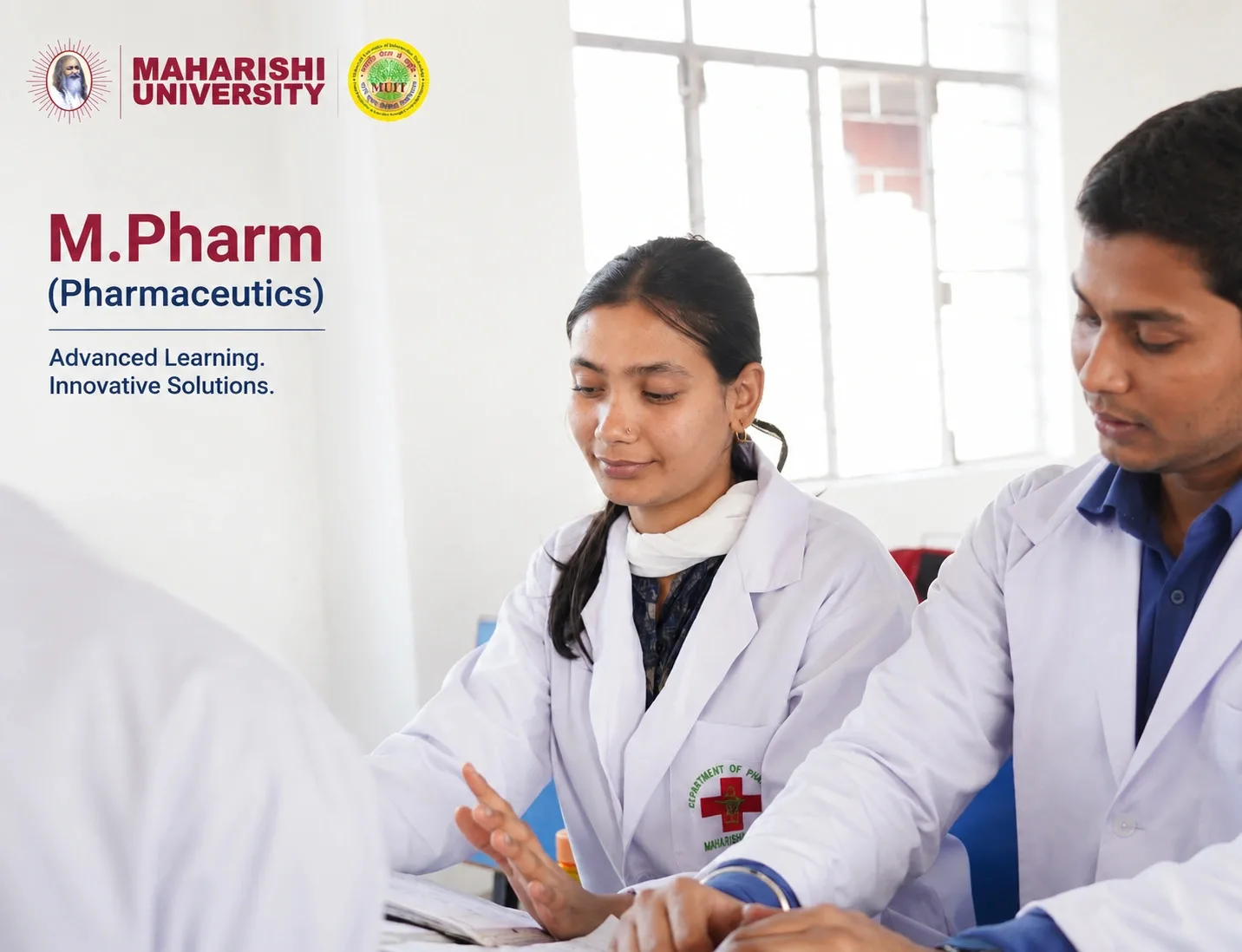
Understanding the Master of Pharmaceutical Sciences Course Duration is important for B.Pharm graduates planning to pursue advanced education in pharmacy. The Master of Pharmacy (M.Pharm) is a postgraduate programme that focuses on specialised pharmaceutical knowledge, practical learning, research, and professional skill development. Before applying, students should understand the course duration, semester structure, subjects, practical training, and project requirements.
Master of Pharmaceutical Sciences Course Duration
M.Pharm programme is generally designed as a two-year postgraduate course after completion of a Bachelor of Pharmacy degree. The programme is commonly divided into four semesters, allowing students to gradually develop advanced knowledge in their selected area of pharmaceutical sciences.
The exact curriculum and semester-wise subjects may vary depending on the university and specialisation. Students should therefore check the official programme curriculum before admission.
Semester-Wise M.Pharm Study Structure
Semester 1: Advanced Pharmaceutical Learning
The first semester generally introduces students to advanced concepts related to their selected specialisation. Students may study subjects covering pharmaceutical research, advanced drug delivery, formulation development, pharmaceutical analysis, or other specialised areas.
Along with classroom learning, practical sessions can help students understand how theoretical concepts are applied in laboratory and pharmaceutical settings.
Semester 2: Specialised Knowledge and Practical Skills
The second semester generally focuses on deeper understanding of the chosen pharmaceutical discipline. Students may participate in laboratory work, research-oriented activities, seminars, and practical assignments.
This stage helps students strengthen analytical, technical, and problem-solving abilities relevant to pharmaceutical sciences.
Semester 3: Research and Advanced Applications
The third semester may place greater emphasis on advanced applications, research methodology, specialised practical work, and project preparation. Students can gain experience in scientific literature review, data analysis, experimental methods, and research documentation.
Research exposure at this stage can help students understand how pharmaceutical concepts are applied to real-world problems.
Semester 4: Dissertation and Research Project
The final semester generally focuses on research work, dissertation, project completion, and presentation. Students may conduct research under academic supervision and prepare a detailed project report based on their work.
This stage allows students to apply the knowledge and skills developed throughout the programme.
What Students Learn During M.Pharm?
M.Pharm curriculum can help students develop skills in:
- Pharmaceutical research
- Drug formulation and development
- Laboratory techniques
- Research methodology
- Pharmaceutical analysis
- Data interpretation
- Scientific communication
- Problem-solving and critical thinking
The specific subjects depend on the chosen specialisation and university curriculum.
Career Scope After M.Pharm
After completing the programme, graduates can explore opportunities in pharmaceutical companies, research and development, formulation, quality assurance, quality control, pharmaceutical analysis, manufacturing, academia, and related healthcare sectors. Students interested in advanced research can also consider further studies, including doctoral programmes, subject to eligibility requirements.
Apply Now for M. Pharm
📞 Call Us: +91-9870200541
📧 Email: [email protected]
🌐 Apply Online: MUIT Lucknow Admission Portal
🏫 Visit Website: MUIT Lucknow Official Website
FAQs
1. What is the Master of Pharmaceutical Sciences Course Duration?
The M.Pharm programme is generally completed in two years and is commonly structured into four semesters.
2. Is M.Pharm a postgraduate course?
Yes. M.Pharm is a postgraduate pharmacy programme generally pursued after completing a B.Pharm degree.
3. What is studied in the final semester of M.Pharm?
The final semester generally involves research work, dissertation, project completion, and presentation, depending on the university curriculum.
4. Does M.Pharm include practical learning?
Yes. M.Pharm programmes generally include laboratory work, practical activities, research training, seminars, and project-based learning.
5. What can I do after completing M.Pharm?
Graduates can explore careers in pharmaceutical research, manufacturing, formulation, quality management, pharmaceutical analysis, academia, and related fields.