Most men discover they have a low sperm count during a fertility evaluation — not because they noticed anything different about themselves. This is the defining challenge of low sperm count as a medical condition. It is largely invisible. No obvious symptoms. No disruption to daily function or sexual health. Just a number on a report that suddenly carries enormous weight.
Understanding what low sperm count actually means, what causes it, how it is diagnosed, and what can be done about it is the most useful thing a couple can know when that number first appears on a page.
At Dr. Aravind's IVF Fertility & Pregnancy Centre, the best fertility centre in Tirupathur, low sperm count is one of the most commonly evaluated and most successfully treated causes of male infertility seen in clinical practice. Here is the complete picture.
What Is Low Sperm Count?
Low sperm count — medically termed oligospermia — is defined as a sperm concentration below sixteen million sperm per millilitre of semen, or a total sperm count below thirty-nine million per ejaculate, according to WHO reference values. When no sperm is found at all, the condition is called azoospermia — a more severe presentation that requires a different treatment pathway.
Low sperm count reduces the probability of natural conception because fewer sperm reach the egg during the fertile window. The impact depends on severity. Mild oligospermia — counts between ten and fifteen million per millilitre — reduces conception probability but does not eliminate it. Severe oligospermia — counts below five million per millilitre — significantly impairs natural conception and typically requires assisted reproduction. But in almost all cases, treatment options exist that meaningfully improve outcomes.
Low Sperm Count Symptoms — What Men Actually Notice
This is where the honest clinical picture diverges from most men's expectations.
The vast majority of men with low sperm count experience no symptoms that would alert them to the condition independently. Sexual function, libido, ejaculatory volume, and physical appearance are all unaffected by sperm count alone. A man with severely low sperm count feels exactly the same as a man with a perfectly normal fertility profile.
For a complete clinical overview of low sperm count symptoms and what each one means for fertility, this resource covers every indicator worth knowing.
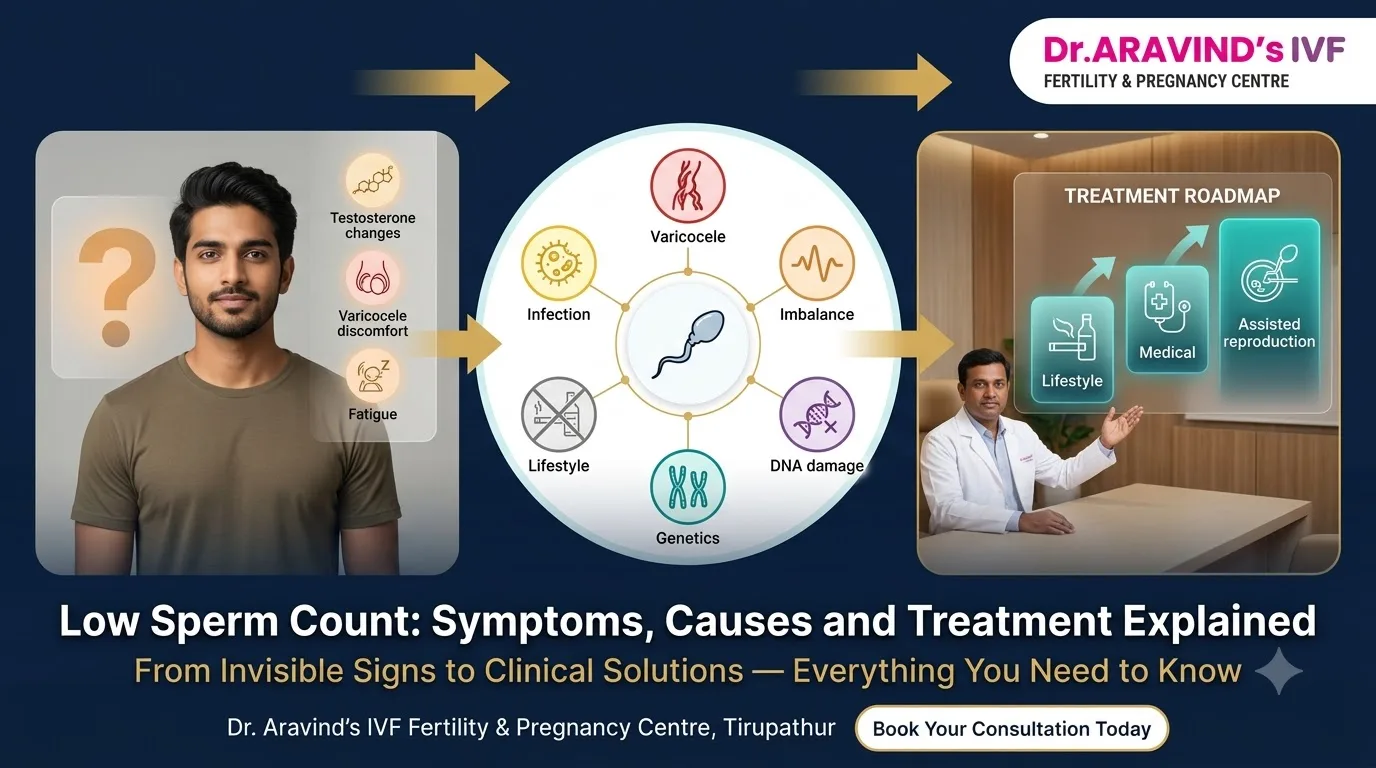
The indirect signs that occasionally accompany low sperm count are not caused by the low sperm count itself — they are caused by the underlying conditions that are also reducing sperm production. These include reduced libido and erectile changes associated with low testosterone, testicular discomfort or swelling in men where varicocele is contributing to both low sperm count and scrotal changes, reduced body or facial hair suggesting hormonal imbalance affecting both appearance and sperm production, and persistent fatigue linked to thyroid dysfunction or testosterone deficiency that independently impairs sperm count.
In all these cases, the symptom reflects the underlying cause — not the low sperm count itself. This distinction matters because it means the absence of symptoms never rules out low sperm count.
Common Causes of Low Sperm Count
Low sperm count has multiple potential causes — often overlapping rather than singular. Understanding the specific cause is essential because treatment depends entirely on what is driving the reduction.
Varicocele
Varicocele — enlarged veins around the testicles that raise scrotal temperature — is the single most common identifiable and treatable structural cause of low sperm count. It is present in approximately forty percent of men presenting with male infertility and is frequently completely asymptomatic. The sustained heat exposure from varicocele impairs sperm production, reduces sperm motility, and increases sperm DNA fragmentation — often simultaneously. Surgical correction through microsurgical varicocelectomy produces measurable improvements in sperm count in the majority of appropriate candidates.
Hormonal ImbalancesThe hypothalamic-pituitary-gonadal axis controls sperm production through a cascade of hormonal signals. Disruption at any point in this cascade — whether from low testosterone, elevated FSH, disrupted LH, elevated prolactin, or thyroid dysfunction — reduces sperm production at the source. Hormonal causes are identified through a dedicated blood panel rather than a semen analysis, which is why hormonal evaluation is always part of a complete low sperm count workup.
Sperm DNA Fragmentation
This is the hidden factor most men with low sperm count are never told about. High sperm DNA fragmentation — damage to the genetic material inside sperm cells — can coexist with low sperm count or occur independently in men with seemingly normal counts. It is caused by oxidative stress, which can be driven by varicocele, lifestyle factors, infection, or environmental exposure. High fragmentation compounds the impact of low sperm count on fertility outcomes and must be assessed separately from standard semen parameters.
Lifestyle Factors
Smoking, excessive alcohol, obesity, chronic sleep deprivation, sustained work stress, and prolonged heat exposure all reduce sperm count progressively over months and years. Urban men face a particularly high cumulative lifestyle burden — and these factors frequently combine in ways that amplify each other's impact on sperm production. The good news is that lifestyle factors are modifiable — and because sperm regenerates every seventy-two to ninety days, targeted changes produce measurable improvements within three months.
Genetic Causes
Y chromosome microdeletions, karyotyping abnormalities, and specific genetic variants affect sperm production at a fundamental level. Genetic causes are more commonly identified in severe oligospermia and azoospermia than in mild low sperm count, but they are worth screening for in cases where no other cause is identified and counts remain persistently very low despite treatment.
Environmental and Occupational ExposureProlonged exposure to pesticides, industrial chemicals, heavy metals, radiation, or sustained high-temperature environments — common in certain occupational settings — can suppress sperm production over time. These are modifiable factors when identified and removed, though recovery timelines depend on the duration and intensity of exposure.
Prior Infections
Sexually transmitted infections, epididymo-orchitis — infection of the epididymis and testicle — and prostatitis can all damage the sperm production environment either temporarily or permanently. Men with a history of these conditions may present with low sperm count years after the infection itself resolved, with no obvious connection apparent until a detailed clinical history is taken.
Diagnosing Low Sperm Count Properly
A complete diagnostic evaluation for low sperm count goes significantly beyond a single semen analysis.
Two separate semen analyses are recommended before drawing conclusions, since sperm count naturally varies between samples. The second sample is typically taken two to four weeks after the first, allowing assessment of whether the initial result reflects a true baseline or a temporary variation.
Beyond semen analysis, a complete workup includes sperm DNA fragmentation testing, a full hormonal panel covering FSH, LH, total and free testosterone, prolactin, and TSH, scrotal ultrasound to identify varicocele and structural abnormalities, and genetic screening when counts are severely low or treatment has not produced expected improvement.
For couples exploring azoospermia treatment Tirupathur options — where low sperm count has progressed to complete absence — the diagnostic process additionally includes testicular volume assessment and genetic evaluation to determine whether surgical sperm retrieval is a realistic pathway.
This level of diagnostic completeness is what distinguishes a specialist evaluation at the fertility centre in Tirupathur from a basic semen test at a general clinic.
Treatment Options for Low Sperm Count
Lifestyle Optimisation
For men with lifestyle-driven low sperm count, targeted correction is the most fundamental treatment intervention available. Quitting smoking, reducing alcohol, achieving healthy weight, improving sleep quality to seven to eight hours consistently, managing chronic work stress, and eliminating heat exposure to the scrotal area all produce measurable sperm count improvements within three months.
Targeted supplementation strengthens this foundation. CoQ10 supports mitochondrial function in sperm cells. Vitamin D deficiency — extremely common in India — directly impairs sperm production and should be tested and corrected. Zinc supports testosterone production and sperm development. Folate reduces sperm DNA fragmentation. These are not alternative medicine suggestions. They are evidence-backed micronutrient interventions with clinical support for improving sperm count in deficient men.
Varicocele Repair
Microsurgical varicocelectomy produces measurable sperm count improvements in the majority of appropriately selected men — typically becoming apparent at the three-month post-operative semen analysis, aligned with the sperm regeneration cycle. For couples where varicocele is the primary driver of low sperm count, surgical correction often eliminates the need for assisted reproduction entirely.
Hormonal Treatment
When hormonal imbalance drives low sperm count, targeted medical management corrects the imbalance at its source. Clomiphene citrate and gonadotropin therapy stimulate the body's own testosterone and sperm production. Prolactin-lowering medication and thyroid correction address the relevant hormonal disruptions directly. Most hormonal causes show measurable sperm count improvement within three to six months of appropriate treatment.
IUI — Intrauterine Insemination
For mild to moderate low sperm count where lifestyle and medical optimisation have improved parameters but natural conception has not occurred, IUI with laboratory-prepared sperm is the recommended first assisted reproduction step. Sperm preparation concentrates the best-performing sperm from the sample and delivers them directly to the uterus at the time of ovulation — improving the effective count and placement simultaneously.
IVF with ICSI
For significant low sperm count — counts below five million per millilitre, or where IUI cycles have not succeeded — IVF with ICSI is the recommended pathway. A single viable sperm is selected and injected directly into each retrieved egg, bypassing the count limitation entirely. As one of the best IVF centres in India, Dr. Aravind's IVF Fertility & Pregnancy Centre applies fully personalised IVF protocols — with stimulation tailored to the female partner's profile and ICSI technique matched to the specific sperm retrieval characteristics.
Conclusion
Low sperm count is common, frequently symptom-free, and almost always treatable when properly diagnosed and addressed with the right clinical approach. The couples who achieve the best outcomes are those who investigate thoroughly — not stopping at a single semen analysis — and who choose a clinical team with both the diagnostic depth to identify the specific cause and the treatment range to address it effectively.
As the best fertility centre in Tirupathur and a trusted name among the best IVF centres in India, Dr. Aravind's IVF Fertility & Pregnancy Centre brings together complete male fertility evaluation, personalised treatment planning, and advanced assisted reproduction — giving every couple the most informed, most effective path toward the family they are working toward.
FAQ
Q1. What are the symptoms of low sperm count in men?
Most men with low sperm count experience no symptoms that would independently alert them to the condition. The indirect signs — reduced libido, testicular discomfort, or hormonal changes — reflect the underlying causes rather than the low sperm count itself. A proper semen analysis is the only reliable way to identify low sperm count, which is why evaluation should not wait for symptoms to appear.
Q2. What causes low sperm count in young men in India?
The most common causes in younger urban Indian men include varicocele, lifestyle factors such as smoking, obesity, poor sleep and chronic work stress, hormonal imbalances, sperm DNA fragmentation from oxidative stress, and in some cases genetic factors. These often combine rather than occurring in isolation — which is why a complete diagnostic workup rather than a basic semen test is always recommended.
Q3. Can low sperm count be treated naturally without IVF?
Yes, in many cases. Lifestyle optimisation, targeted supplementation, varicocele repair, and hormonal therapy restore sperm count sufficiently for natural conception or IUI in a meaningful proportion of men. IVF with ICSI becomes the recommended pathway when simpler treatments have not succeeded or when sperm count is severely low. The appropriate treatment depends entirely on the specific cause and severity identified through proper evaluation.
Q4. What is azoospermia treatment in Tirupathur and how does it differ from low sperm count treatment?
Azoospermia — complete absence of sperm — requires different treatment than low sperm count. Surgical sperm retrieval through PESA, TESA, or micro-TESE is necessary when no sperm is present in the ejaculate, while low sperm count can often be improved through medical, surgical, or lifestyle interventions before assisted reproduction is considered. The best fertility centre in Tirupathur evaluates both conditions through the same structured diagnostic pathway and recommends the most appropriate treatment for each specific case.
Q5. How long does it take to improve sperm count after treatment?
Because sperm regenerates every seventy-two to ninety days, improvements from lifestyle changes, hormonal treatment, or varicocele repair typically become measurable at approximately three months after the intervention begins. A follow-up semen analysis at this point gives the clearest picture of how much improvement has occurred and what the next clinical step should be.