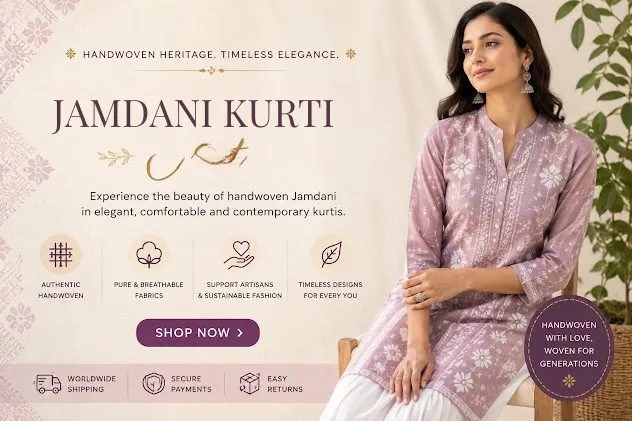
A long Jamdani kurti gives a handwoven fabric room to actually move, drape, and catch the light the way it's meant to. Because Jamdani motifs are woven directly into the cloth rather than printed on, a longer, flowing silhouette lets the pattern repeat and unfold across more fabric, which is exactly what makes the weave feel special in the first place. If you're deciding between a shorter cut and a long jamdani kurti, here's why the length itself changes how the weave reads.
Why Does a Long Silhouette Suit Jamdani Weaves So Well?
A long silhouette suits Jamdani weaves because the fabric's motifs are created through a discontinuous weft technique that produces a subtle, almost shadow-like pattern across the cloth, which needs length and movement to be fully appreciated. A shorter kurti crops this pattern early, while a longer cut allows the woven booti or floral motifs to repeat naturally down the body, giving the garment a more complete, flowing visual rhythm.
What Makes a Long Jamdani Kurti Different From a Regular-Length Kurti?
Beyond length, a long jamdani kurti is typically cut with a straighter or slightly A-line silhouette to let the fabric fall cleanly, rather than the gathers or flares sometimes used on shorter kurtis. This straighter drape is intentional — it keeps the weave's motifs aligned and undistorted, since excessive flaring can stretch or shift how the pattern appears as the fabric moves.
How Does Length Affect the Visibility of Jamdani Motifs?
Longer kurtis simply offer more surface area for Jamdani's discontinuous weft motifs to repeat, which means patterns like booti, paisley, or geometric designs appear more rhythmic and complete rather than cut off partway. In shorter kurtis, especially with heavier motif placement, the pattern can look abruptly truncated at the hem, which is one reason Jamdani fabric is often favoured for longer silhouettes.
What Fabric Weight Works Best for a Long Jamdani Kurti?
A lightweight to medium-weight Jamdani, typically woven in fine cotton or cotton-silk blends, works best for a long kurti, since it drapes close to the body without adding bulk. Heavier Jamdani variants with denser zari work can still be used for longer silhouettes, but they tend to suit more structured, A-line cuts rather than flowy, straight-fall designs.
How Does a Long Jamdani Kurti Compare to Other Long Kurti Styles?
Buyers often compare a long Jamdani kurti against other popular long kurti fabrics before deciding.
FeatureLong Jamdani KurtiLong Printed KurtiLong Chikankari KurtiPattern techniqueWoven directly into fabricPrinted/digitally appliedHand or machine embroideryTextureSubtle, slightly raised motifsFlat, smooth surfaceTextured embroidery on fine fabricBest fabric weightLight to medium cotton/cotton-silkAny cotton or rayonLightweight cotton or georgetteOccasion suitabilityFestive, formal, elevated daily wearCasual, everyday wearFestive, semi-formal occasionsHow Should You Style a Long Jamdani Kurti?
Keep the rest of the outfit understated when styling a long Jamdani kurti, since the woven motifs already provide visual interest; solid-coloured bottoms and minimal jewellery let the fabric remain the focal point. A structured belt at the waist can add shape to a straight-cut long kurti without interrupting the flow of the motifs down the length of the garment.
What Bottoms and Layers Pair Best With a Long Jamdani Kurti?
Straight pants, palazzos, or dhoti-style bottoms in a solid colour drawn from the kurti's base tone generally pair best, since they don't compete with the fabric's woven detailing. For cooler weather, a plain jacket or shrug in a neutral shade can be layered over a long Jamdani kurti without covering too much of the pattern, keeping the weave visible while adding warmth.
How Do You Care for a Long Jamdani Kurti?
A long Jamdani kurti should be hand-washed or gently machine-washed in cold water, then air-dried in shade to protect the fine threadwork from fading. Iron on a low setting, ideally with a thin cloth between the iron and fabric, since the delicate woven motifs can be damaged by direct, high heat. Proper care matters even more with longer kurtis, given the larger fabric area exposed to handling and storage.
What Should You Check Before You Buy Jamdani Kurti Online?
When you buy jamdani kurti online, check whether the motifs are genuinely woven into the fabric rather than printed, since this significantly affects both price and authenticity. Platforms like Indeloom curate handloom pieces, including long jamdani kurti styles, for buyers who want traceable craftsmanship along with the convenience of online shopping. Reviewing size charts closely matters more for longer kurtis, since fit and length both affect how the motifs ultimately fall.
Frequently Asked Questions About Long Jamdani Kurtis
Why do Jamdani motifs look better on longer kurtis?
Because the motifs repeat across the fabric, a longer length lets the pattern unfold more fully instead of being cut off early.
What fabric is best for a long Jamdani kurti?
Lightweight to medium-weight cotton or cotton-silk blend Jamdani generally works best, as it drapes cleanly without adding bulk.
Can a long Jamdani kurti be worn to the office?
Yes, paired with tailored or straight-fit bottoms and minimal accessories, it works well for semi-formal or elevated workplace settings.
Is Jamdani a protected regional craft? Yes, Jamdani weaving has Geographical Indication recognition in India, documented through the Geographical Indications Registry, Government of India.
Final Thoughts
A long Jamdani kurti gives the fabric's handwoven motifs the room they need to unfold properly, which is exactly why the silhouette works so well for this particular weave. From choosing the right fabric weight to pairing it with the right bottoms, a little attention to length and drape goes a long way in letting the craftsmanship show. If you're ready to buy jamdani kurti online, platforms like Indeloom that focus on authentic handloom sourcing make it easier to find a long jamdani kurti worth the investment.