
Introduction
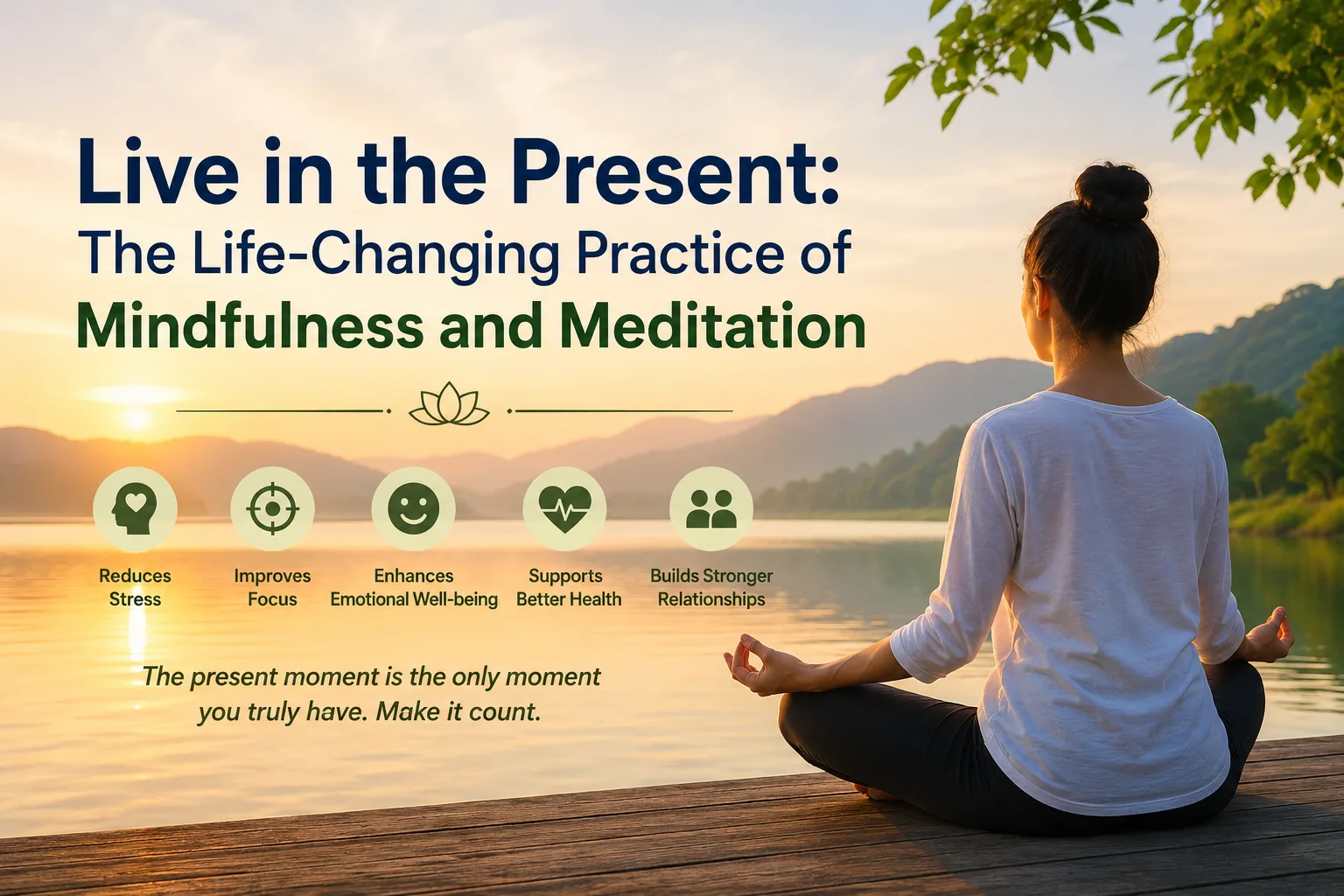
In today's fast-paced world, people often find themselves overwhelmed by stress, anxiety, and endless responsibilities. Many spend their time worrying about the future or dwelling on the past, leaving little room to enjoy the present moment. Mindfulness and meditation offer a simple yet powerful way to reconnect with ourselves, reduce stress, and improve overall well-being. These practices have been embraced for centuries and are now supported by modern scientific research for their positive effects on both mental and physical health.
What Is Mindfulness?
Mindfulness is the practice of paying full attention to the present moment without judgment. It involves becoming aware of your thoughts, emotions, bodily sensations, and surroundings while accepting them as they are. Instead of reacting automatically to situations, mindfulness encourages thoughtful responses and greater self-awareness.
Mindfulness can be practiced during everyday activities such as eating, walking, working, or simply breathing. By focusing on the present, individuals can experience greater clarity, emotional balance, and peace of mind.
What Is Meditation?
Meditation is a mental practice that helps train the mind to become calm, focused, and aware. It often involves sitting quietly, concentrating on the breath, repeating a calming word or phrase, or observing thoughts without becoming attached to them.
There are many forms of meditation, including:
- Mindfulness Meditation
- Loving-Kindness Meditation
- Guided Meditation
- Transcendental Meditation
- Body Scan Meditation
Each technique offers unique benefits, but all aim to cultivate inner peace and mental clarity.
Benefits of Mindfulness and Meditation
1. Reduces Stress and Anxiety
Mindfulness and meditation help calm the nervous system by encouraging relaxation and reducing the production of stress hormones. Regular practice allows individuals to respond to challenges with greater composure and resilience.
2. Improves Focus and Concentration
Training the mind to remain present strengthens attention and improves concentration. This can enhance productivity, learning, and decision-making in both personal and professional life.
3. Promotes Emotional Well-Being
Meditation increases self-awareness and emotional regulation. It helps people recognize negative thought patterns and develop healthier responses to difficult emotions.
4. Supports Better Physical Health
Research suggests that regular meditation may lower blood pressure, improve sleep quality, strengthen the immune system, and reduce symptoms associated with chronic stress.
5. Encourages Positive Relationships
Being mindful helps individuals communicate more effectively, listen with empathy, and respond with patience. These qualities contribute to healthier and more meaningful relationships.
Simple Ways to Practice Mindfulness
Incorporating mindfulness into daily life does not require major lifestyle changes. Here are a few simple practices:
- Take five minutes each day to focus on your breathing.
- Eat meals slowly while paying attention to taste, texture, and aroma.
- Go for a mindful walk and observe your surroundings.
- Limit distractions by putting away electronic devices during important activities.
- Pause throughout the day to notice your thoughts and emotions without judging them.
Consistency is more important than duration. Even a few minutes of daily practice can make a meaningful difference.
Tips for Beginners
If you are new to mindfulness and meditation, keep these tips in mind:
- Start with short sessions of five to ten minutes.
- Choose a quiet and comfortable place.
- Focus on your natural breathing.
- Do not worry if your mind wanders; gently return your attention to your breath.
- Practice regularly and be patient with yourself.
Meditation is a skill that develops over time. Progress comes through consistent practice rather than perfection.
Challenges and How to Overcome Them
Many beginners believe they are "bad" at meditation because their minds wander. In reality, wandering thoughts are a normal part of the experience. The goal is not to eliminate thoughts but to become aware of them and gently redirect attention.
Finding time can also be challenging. Setting aside just a few minutes each day, perhaps in the morning or before bedtime, can help establish a lasting habit.
Conclusion
Mindfulness and meditation are powerful practices that encourage individuals to live fully in the present moment. By reducing stress, improving focus, supporting emotional health, and enhancing overall well-being, these simple habits can create lasting positive changes in everyday life. Whether practiced for a few minutes or as part of a daily routine, mindfulness and meditation remind us that true peace begins within. By embracing the present with awareness and acceptance, anyone can build a calmer, healthier, and more fulfilling life.
Frequently Asked Questions (FAQs)
1. What is the difference between mindfulness and meditation?
Mindfulness is the practice of being fully aware of the present moment during everyday activities, while meditation is a dedicated practice that trains the mind through techniques such as focused breathing, observation, or guided exercises. Meditation is one way to develop mindfulness.
2. How long should I meditate each day?
Beginners can start with just 5–10 minutes of meditation each day. As you become more comfortable, you can gradually increase your practice to 20–30 minutes or longer, depending on your goals and schedule.
3. Can mindfulness and meditation help reduce stress?
Yes. Regular mindfulness and meditation practices can lower stress levels by calming the mind, reducing anxiety, and helping you respond to challenges more peacefully rather than reacting impulsively.
4. Is meditation suitable for everyone?
Yes, meditation is generally safe for people of all ages. However, individuals with certain mental health conditions should consult a healthcare professional before starting intensive meditation practices.
5. Do I need special equipment to meditate?
No. You don't need any special equipment. A quiet place, comfortable seating, and a few uninterrupted minutes are enough to begin your meditation practice.