Learning Technology Gets a Reality Check: LearnUpon’s 2026 IDC Recognition and What Comes Next
AI is changing workplace learning, but customer experience, useful functionality, and measurable skills development still determine whether training technology delivers value.
Workplace learning is at an important turning point. Businesses want employees to build skills faster, training teams are under pressure to work more efficiently, and AI is creating new ways to design and deliver learning experiences.
Yet the fundamental challenge remains unchanged: how can organizations make training useful, accessible, and relevant to the work people actually do?
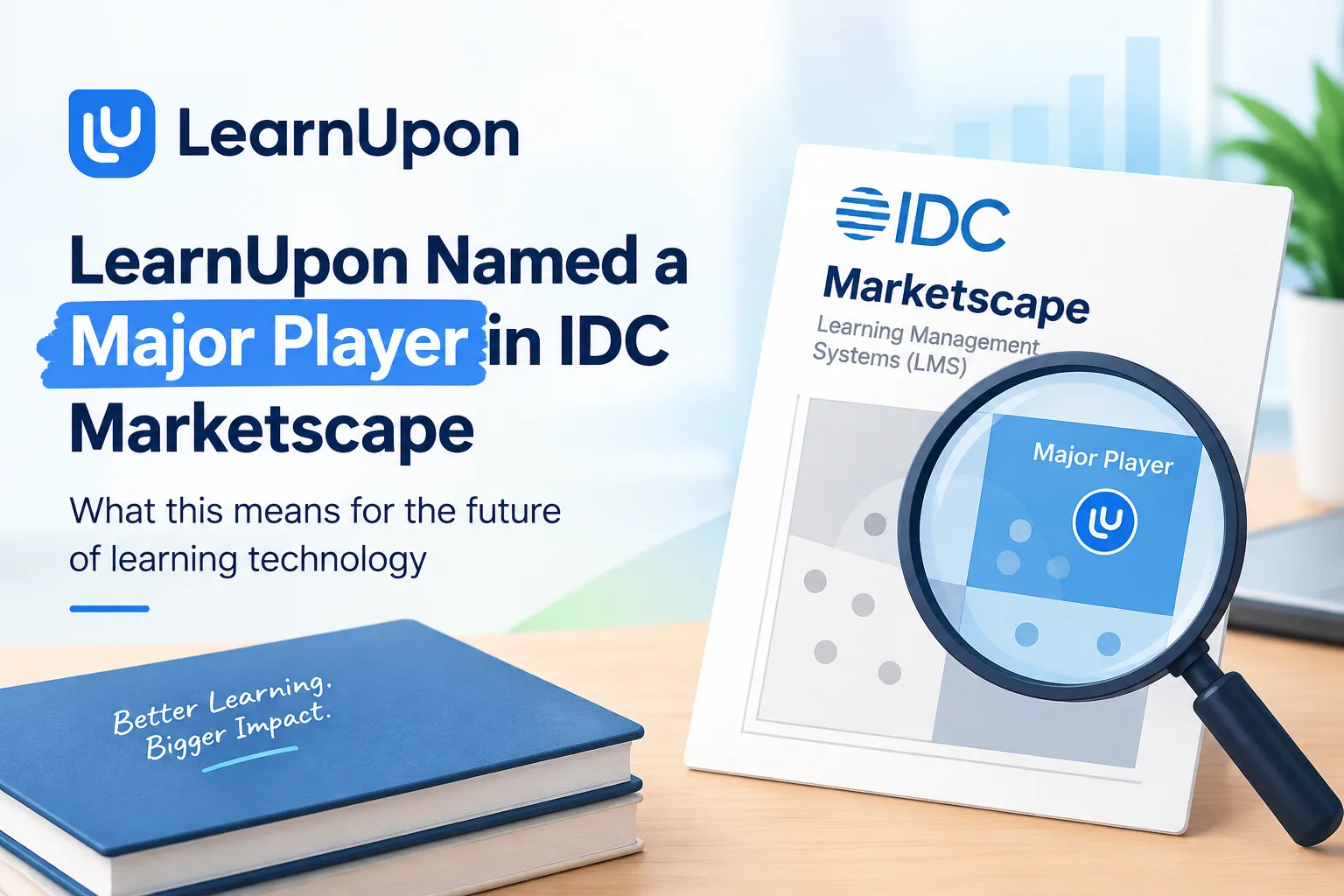
LearnUpon added a new development to this conversation on October 2, 2026, when it announced that it had been named a “Major Player” in the IDC MarketScape: Worldwide Employee Experience for Learning Experience Management 2026 Vendor Assessment.
According to the company, its scores improved in customer satisfaction, pricing and offering structure, and functionality.
The announcement is worth examining, but the broader story is what it tells us about the questions buyers should ask when choosing learning technology. Recognition can attract attention. The real test comes when the platform is used by learners, trainers, administrators, and managers.
What Is Behind the Latest Recognition?
IDC MarketScape is an assessment framework for technology and service providers. It evaluates vendors using qualitative and quantitative criteria, considering factors such as capabilities, strategy, and market position.
LearnUpon’s announcement confirms its placement in the Major Player category for the 2026 assessment. The company also reports improvements across three scoring areas.
There are limits to what can be concluded from the public announcement. It does not disclose numerical scores or a complete comparison of participating vendors. Consequently, the designation alone cannot establish a precise competitive ranking or prove that the platform is the best choice for every organization.
LearnUpon previously announced a Major Player designation in the 2024 assessment in January 2025. The latest announcement reports improved scoring, although it does not quantify the changes.
For technology buyers, this is useful context rather than a final verdict. Analyst research can help organizations decide which vendors to investigate, while product demonstrations, reference checks, and requirements testing help determine suitability.
Official source: LearnUpon’s 2026 IDC MarketScape announcement.
Why Customer Experience Is Becoming a Competitive Factor
A learning platform does not serve just one audience.
Employees need to find relevant training without unnecessary steps. Trainers need reliable tools for delivering sessions and assessing progress. Administrators need efficient ways to manage users and content. Managers need clear information about participation and development.
When these experiences do not work together, a platform can become another source of administrative work.
Consider a training team that spends hours chasing incomplete courses, correcting enrollment records, and preparing reports manually. Even if the software offers many features, the organization may not be getting the efficiency it expected.
A useful assessment should therefore look at the entire experience, from implementation and onboarding to daily use and technical support.
LearnUpon reported improved customer satisfaction in the 2026 assessment. Buyers should explore that claim through practical demonstrations and conversations with customers who have similar needs.
The important questions are straightforward: Can people complete common tasks easily? Is the system reliable? Are support requests handled effectively? Does the platform remain useful as training requirements change?
Pricing and Functionality Need to Be Evaluated Together
Learning technology purchases can become difficult when price and capability are considered separately.
A low subscription price may not include every integration, report, or administrative feature the organization needs. Conversely, a platform with extensive functionality may be unnecessarily complex for a team with basic requirements.
LearnUpon reported improvements in pricing and offering structure, alongside functionality. The public announcement does not provide enough information to conclude that the platform is cheaper than competing solutions or that every required feature is included in a standard package.
A fair comparison begins with a shared requirements list.
For example, organizations can ask each vendor to demonstrate enrollment, assessment tracking, reporting, content updates, and user management. They should then compare implementation effort, support, integration costs, and the price of future expansion.
This method provides a more realistic picture of value than comparing headline subscription prices.
The AI Shift: From Course Libraries to More Responsive Learning
AI is one of the most visible developments in learning technology.
Depending on the platform, AI tools may help create course drafts, summarize material, recommend learning resources, support content discovery, or automate repetitive tasks. Other approaches aim to personalize learning and connect information across workplace systems.
LearnUpon’s current platform messaging describes an agentic learning platform built around specialized AI agents and automated administrative workflows.
This direction reflects a wider interest in making learning systems more responsive and reducing the time teams spend on repetitive work.
However, AI features should be assessed according to the problems they solve. A tool that generates a course quickly is not useful if the material is inaccurate or unsuitable for its audience. A recommendation system may also be ineffective if it lacks reliable information about the learner’s role or needs.
Organizations should review human oversight, privacy, access controls, content accuracy, and how AI-generated material can be checked.
The goal is not to adopt AI simply because it is available. It is to use it where it improves the quality or efficiency of learning.
The Skills Gap Is Driving Business Attention
Technology alone cannot solve a workforce skills problem. Organizations first need to understand what their employees must learn and how development can support business goals.
LinkedIn’s 2025 Workplace Learning Report found that 49% of surveyed learning and talent development professionals said their executives were concerned that employees lacked the skills needed to execute business strategy.
This finding illustrates why learning teams increasingly need to demonstrate value beyond participation numbers.
Completion rates can show whether employees finished a course, but they do not necessarily prove that knowledge has been retained or applied. Depending on the program, businesses may also need assessments, practical demonstrations, certification records, and manager feedback.
A useful learning strategy starts with the capabilities the organization needs. Teams then identify gaps, select suitable learning methods, and measure progress using indicators linked to the intended outcomes.
Technology can support that process, but the business objective should come first.
Source: LinkedIn’s 2025 Workplace Learning Report.
Why Training Models Matter When Selecting Software
A company delivering self-paced courses has different requirements from a training provider organizing live sessions for multiple customers.
Self-paced programs may prioritize course access, assessments, learning paths, and reporting. Instructor-led programs may require scheduling, trainer availability, enrollment, attendance, and resource coordination.
Organizations delivering instructor-led training (ILT) should test the full process, from planning a session to recording attendance and measuring results afterward.
A Learning Management System (LMS) generally supports learning delivery, learner records, and progress tracking. A Training Management System (TMS) often places greater emphasis on training operations, including schedules, trainers, resources, and attendance. Some products combine capabilities from both categories.
The labels are less important than the workflows. Buyers should establish what their teams actually need to manage and verify that the selected system can do it without excessive manual work.
Turning Analyst Research Into a Practical Decision
An analyst designation is most useful when it encourages better questions.
Before selecting a provider, organizations should define the problem, set must-have requirements, and ask shortlisted vendors to demonstrate the same workflows. They should also review integrations, security, customer support, and total cost of ownership.
Customer references can help uncover issues that are easy to overlook during a sales presentation. A structured scorecard can then compare vendors against the same requirements instead of relying on general impressions.
As LearnUpon CEO and co-founder Brendan Noud said in the October announcement:
“It’s been a significant year for us, and we’re excited to continue driving innovation in the learning space.”
That statement reflects the company’s own view of its progress. Buyers should use independent evidence and their own evaluation to determine whether a provider meets their needs.
Frequently Asked Questions
What did LearnUpon announce in October 2026?
LearnUpon announced that it had been named a Major Player in the 2026 IDC MarketScape assessment for worldwide employee experience in learning experience management. It reported improvements in customer satisfaction, pricing and offering structure, and functionality.
Does the designation prove that LearnUpon is better than competing platforms?
No. The public announcement does not provide numerical scores or a complete vendor comparison. Buyers should review available evidence against their own requirements.
How is AI changing learning technology?
AI can support content creation, recommendations, content discovery, and workflow automation. Its value depends on accuracy, appropriate oversight, data protection, and relevance to real learning needs.
How can businesses measure training effectiveness?
They can combine completion data with assessments, certifications, practical demonstrations, learner feedback, and relevant workplace indicators. The best measures depend on the program’s objectives.
What should companies check before purchasing a learning platform?
Important considerations include usability, administration, reporting, integrations, security, support, pricing, scalability, and whether the product fits the organization’s training model.
The Bigger Picture
LearnUpon’s 2026 IDC MarketScape recognition highlights several areas that matter in the learning technology market. But the announcement is only one part of a much larger conversation.
As AI and skills-based development reshape workplace learning, organizations need to focus on what technology helps them accomplish: make training easier to deliver, give employees relevant learning opportunities, and understand whether development is meeting business needs.
The strongest buying decisions come from combining credible research with practical testing. That is how organizations move beyond the headline and choose technology that works for their people.