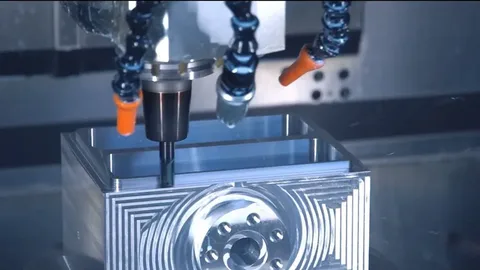
Precision CNC machining has become the backbone of modern industrial manufacturing, enabling companies to produce highly accurate components for various industries. The demand for complex, high-quality parts has spurred a wave of innovations that enhance speed, precision, and efficiency. Today, precision CNC machining for industrial parts is not only about creating exact components but also about integrating advanced technologies such as automation, AI, and real-time monitoring to redefine manufacturing standards.
With industries ranging from aerospace to medical devices requiring parts with tolerances often within microns, the latest advancements in CNC technology ensure that manufacturers meet stringent quality requirements. By combining traditional CNC methods with cutting-edge technologies, engineers can now produce parts that were previously considered impossible to manufacture at scale. These innovations are reshaping industrial production and setting new benchmarks for quality, reliability, and efficiency.
Integration of AI and Machine Learning in CNC Machining
Artificial Intelligence (AI) and machine learning have become pivotal in advancing precision CNC machining for industrial parts. AI-driven algorithms analyze large volumes of production data to predict potential issues, optimize tool paths, and reduce cycle times. By learning from previous operations, these systems can anticipate wear and tear on tools, prevent machine downtime, and improve the overall efficiency of the machining process.
Moreover, machine learning models are helping manufacturers achieve superior precision by dynamically adjusting cutting parameters based on material properties and machining conditions. This innovation minimizes human error and ensures consistent quality across batches. The integration of AI allows companies to operate smarter, reduce production costs, and maintain high standards of precision, which is particularly critical in industries such as aerospace and automotive.
Advanced Multi-Axis CNC Machines
The evolution from traditional 3-axis to advanced 5-axis and 7-axis CNC machines has revolutionized precision CNC machining for industrial parts. Multi-axis machines enable the production of complex geometries without multiple setups, reducing errors and saving significant time. Components that once required several machining processes can now be completed in a single run with enhanced accuracy.
These machines also offer greater flexibility for producing intricate designs, which is essential for high-performance industries. For example, aerospace engine components and medical implants often require complex curves and precise tolerances that only multi-axis CNC machines can deliver. As a result, manufacturers can achieve superior surface finishes, tighter tolerances, and faster turnaround times while maintaining high consistency across production runs.
Real-Time Monitoring and IoT Integration
Real-time monitoring systems integrated with the Internet of Things (IoT) are transforming precision CNC machining for industrial parts. Sensors installed on CNC machines provide continuous feedback on parameters like temperature, vibration, and spindle speed. This data is transmitted to a central system, enabling engineers to monitor machine performance and detect anomalies before they lead to defects.
The integration of IoT also allows predictive maintenance, reducing unplanned downtime and prolonging machine life. By continuously analyzing machine health, manufacturers can schedule maintenance precisely when needed rather than relying on fixed intervals. This approach not only ensures consistent quality but also optimizes production efficiency, lowers operational costs, and minimizes material waste.
High-Speed and Micro-Machining Capabilities
High-speed CNC machining and micro-machining are driving precision to new levels in industrial parts manufacturing. High-speed machining reduces cycle times while maintaining dimensional accuracy, allowing manufacturers to increase throughput without compromising quality. These techniques are particularly beneficial for industries that require rapid prototyping or large-scale production of small, intricate components.
Micro-machining, on the other hand, focuses on producing extremely small parts with tolerances in the micron range. This capability is critical in sectors such as medical devices, electronics, and precision engineering. Innovations in tool materials, spindle technology, and vibration control have enabled manufacturers to achieve unprecedented precision, opening the door for new product designs and applications that were previously unattainable.
Automation and Robotic Assistance in CNC Machining
Automation and robotic integration are reshaping the landscape of precision CNC machining for industrial parts. Robotic arms and automated loading systems reduce human intervention, increase operational efficiency, and ensure consistent handling of materials. This not only speeds up production but also improves safety by minimizing human exposure to potentially hazardous machining environments.
Additionally, automated systems can handle multiple machines simultaneously, enabling 24/7 production without compromising precision. By combining robotics with CNC technology, manufacturers can scale operations efficiently, reduce labor costs, and maintain high-quality standards. The synergy between automation and precision machining ensures that industrial parts are produced with superior accuracy, repeatability, and reliability.
Conclusion
The latest innovations in precision CNC machining for industrial parts are transforming manufacturing across industries. From AI-driven optimization and multi-axis machines to IoT-enabled monitoring, high-speed micro-machining, and robotic automation, these advancements are enabling manufacturers to meet increasingly complex demands with unparalleled accuracy. As technology continues to evolve, the integration of these innovations will define the next generation of industrial parts production, ensuring higher efficiency, improved quality, and greater competitiveness for manufacturers worldwide.
By embracing these cutting-edge technologies, companies can not only improve their operational capabilities but also stay ahead in a rapidly changing industrial landscape. Precision CNC machining for industrial parts is no longer just a process—it has become a strategic advantage that drives innovation, reduces costs, and delivers excellence in modern manufacturing.