Why Lab-Grown Diamond Engagement Rings Are Becoming a Popular Choice for 2026 Proposals in Dubai
As couples rethink traditional engagement ring shopping, lab-grown diamonds are attracting attention for their design flexibility, modern appeal and wider choice of diamond shapes and settings.
Dubai, UAE | 8 October 2026
Engagement ring shopping is changing in 2026. Couples are increasingly interested in jewellery that reflects their personal style rather than simply following traditional expectations. From elegant oval solitaires to contemporary emerald-cut settings, the focus is shifting towards individuality, craftsmanship and informed diamond selection.
Among the options receiving growing attention are lab-grown diamond engagement rings, which offer buyers the beauty and durability associated with diamonds while allowing greater flexibility when considering size, shape and design.
In Dubai, where fine jewellery has long played an important role in weddings, engagements and special occasions, lab-created diamonds provide another option for couples exploring modern engagement rings.
Their appeal extends beyond appearance. Greater choice, opportunities for personalisation and the ability to compare diamond specifications are helping to make lab-grown diamonds an established part of the engagement ring conversation.
Lab-Grown Diamonds Are Changing Traditional Ring Shopping
For generations, natural diamonds have been closely associated with marriage proposals. Today, laboratory-grown diamonds are giving couples another way to select a genuine diamond without following exactly the same purchasing considerations.
Lab-grown diamonds are created using specialised technology that reproduces the conditions necessary for diamond crystal growth.
The two principal production methods are Chemical Vapour Deposition (CVD) and High Pressure High Temperature (HPHT).
Unlike diamond alternatives such as cubic zirconia or moissanite, laboratory-grown diamonds possess essentially the same chemical composition, crystal structure and optical properties as natural diamonds.
Once polished, their appearance can be remarkably similar to that of mined diamonds.
This distinction matters to buyers who want the characteristics of a real diamond while considering alternatives to traditionally mined stones.
Why Dubai Couples Are Exploring Lab-Created Engagement Rings
Dubai's jewellery market serves a diverse range of customers, including UAE residents, expatriates and international visitors.
Engagement ring preferences naturally vary across different cultures, budgets and personal tastes. However, there are several reasons lab-grown diamond rings are appealing to modern buyers.
More Flexibility with Diamond Size
One attraction is the opportunity to compare different carat weights within a planned budget.
Lab-grown diamonds generally cost less than comparable natural diamonds, although prices depend on quality, retailer and the individual stone.
This can make it possible to consider a larger centre diamond or allocate more of the budget towards the setting and overall craftsmanship.
A larger diamond is not automatically the better choice, however. Proportions, cut and how the stone looks on the hand remain important.
A Wider Selection of Designs
Modern engagement rings are no longer limited to traditional round solitaire settings.
Buyers can consider oval diamonds, emerald cuts, radiant cuts, pear shapes and other distinctive designs.
Each shape brings its own character to an engagement ring, allowing couples to choose something that suits the wearer's preferences.
Greater Interest in Personalisation
Rather than selecting a finished ring without making changes, some couples prefer to take part in the design process.
Choosing the diamond, setting, metal and finishing details can make the engagement ring feel more personal.
This approach is particularly appealing to buyers who want their ring to complement an existing jewellery collection or match a future wedding band.
Engagement Ring Designs Attracting Attention in 2026
Several established styles continue to influence contemporary engagement ring design.
Oval-Cut Diamond Engagement Rings
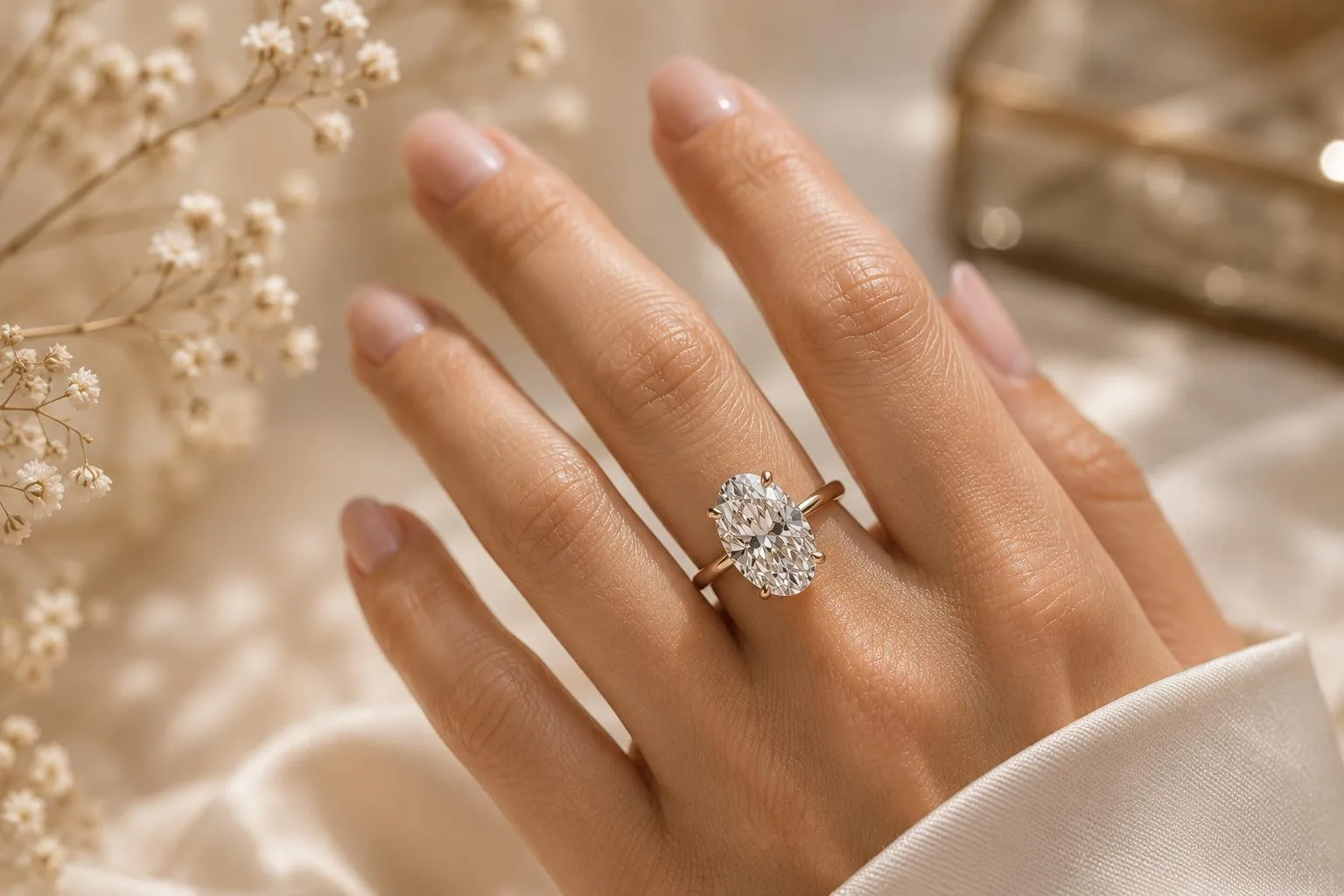
Oval diamonds remain an appealing option for buyers who prefer an elongated silhouette.
Their rounded shape combines classic diamond brilliance with a more contemporary appearance.
Oval solitaires work well with slim gold bands, while hidden halos and delicate side stones can introduce additional detail.
Emerald-Cut Engagement Rings
Emerald-cut diamonds have a distinctive rectangular shape with step-cut facets.
Rather than emphasising sparkle in the same way as many brilliant-cut diamonds, emerald cuts are admired for their broad flashes of light and clean geometric appearance.
They are often paired with minimalist settings that allow the diamond's proportions to remain the centre of attention.
Radiant-Cut Diamond Rings
Radiant cuts combine a rectangular or square outline with brilliant-style faceting.
They appeal to couples who want a structured diamond shape without losing the lively sparkle associated with brilliant cuts.
Classic Solitaire Rings
Despite changing trends, solitaire engagement rings remain a timeless choice.
A single centre diamond creates an understated design that can suit a wide variety of styles.
Solitaire rings are also versatile when pairing an engagement ring with a wedding band.
Hidden Halo and Three-Stone Designs
Hidden halo settings add small diamonds beneath or around the base of the centre stone, creating a subtle detail from certain viewing angles.
Three-stone rings offer another distinctive option, using side diamonds to complement the main stone.
Both styles can be adapted to different diamond shapes and metal finishes.
Understanding the Four Cs Before Buying
Diamond selection remains an important part of purchasing an engagement ring.
Whether a diamond is natural or laboratory-grown, buyers should understand the characteristics that influence its appearance and quality.
Cut: A diamond's cut affects how light moves through the stone and contributes to its brightness and sparkle. A carefully proportioned diamond can look particularly lively.
Colour: Traditional diamond colour grading uses a D-to-Z scale, with D representing the least coloured grade. Near-colourless diamonds can offer an attractive balance of appearance and cost.
Clarity: Clarity describes the presence of internal inclusions and surface features. Buyers may prefer a diamond that appears clean to the unaided eye rather than automatically selecting the highest available clarity grade.
Carat Weight: Carat measures diamond weight, not its exact visible dimensions. Two diamonds of the same carat weight may look different depending on their shape, proportions and measurements.
Considering these characteristics together makes it easier to choose a diamond based on its overall appearance rather than concentrating on a single specification.
Diamond Certification Is Becoming an Important Buying Consideration
As buyers become more familiar with laboratory-grown diamonds, independent diamond assessment is an important part of the purchasing process.
A diamond grading report can provide information about its origin, measurements and quality characteristics.
The International Gemological Institute (IGI) offers laboratory-grown diamond reports designed to help buyers understand and verify the stones they are considering.
Where applicable, a laser inscription on the diamond's girdle can also correspond with its report number.
Before purchasing an engagement ring, buyers should check whether an independent report is available, confirm its details and understand any warranties, resizing arrangements or after-sales services offered by the jeweller.
These practical checks can be just as important as selecting the diamond itself.
Personalised Engagement Rings Are Part of Modern Jewellery Shopping
One of the advantages of today's engagement ring market is the freedom to select designs that reflect individual preferences.
A couple might prefer a minimalist yellow-gold solitaire, while another may favour an oval diamond surrounded by small accent stones.
The choice of metal also changes the finished ring's appearance.
Yellow gold provides a traditional warm finish, white gold creates a cooler contemporary look, and rose gold introduces softer pink tones. Platinum offers another alternative, valued for its durability and naturally white appearance.
Band width, setting height and the arrangement of accent diamonds all influence the final result.
For couples exploring contemporary diamond jewellery in the UAE, Dubai-based Laxmi Jewellers is one of the local jewellery businesses offering lab-grown diamond designs. Its collections provide an option for buyers interested in modern diamond jewellery and different personal styles.
The increasing availability of lab-grown diamond jewellery is helping customers approach ring selection with more freedom to compare designs and specifications.
What Should Buyers Consider Before Choosing a Ring?
Although diamond size and design often receive the most attention, several practical details deserve consideration.
Lifestyle and everyday comfort: A low-profile setting may be more practical for someone who regularly works with their hands, while a higher setting can create a more prominent appearance.
Ring proportions: A diamond should suit the band and overall design. An oversized centre stone may not always provide the most balanced appearance.
Metal preferences: The colour and durability of the metal should complement both the design and how the ring will be worn.
Wedding band compatibility: Certain engagement ring settings sit neatly alongside a straight wedding band, while others may require a shaped or specially designed band.
Long-term care: Regular cleaning, occasional setting inspections and appropriate storage help keep fine jewellery in good condition.
Buyers should also compare the total purchase price rather than looking only at the diamond's carat weight.
For laboratory-grown diamonds, it is worth understanding that resale values can differ considerably from retail prices and may be limited. An engagement ring is generally better considered a personal purchase than a financial investment.
Are Lab-Grown Engagement Rings Replacing Natural Diamonds?
Lab-grown diamonds have become an important part of the wider diamond jewellery market, but it would be premature to suggest that they have completely replaced natural diamonds.
Both categories continue to appeal to different buyers.
Some customers value the geological rarity and history of natural diamonds. Others are drawn to laboratory-grown diamonds for their pricing, appearance and design flexibility.
The most significant change in engagement ring shopping is the increased range of options available.
Rather than approaching the purchase with one predetermined idea, couples can compare different diamonds, settings and styles before deciding what best represents their relationship.
The Future of Engagement Rings in Dubai
As 2026 progresses, personalisation and informed purchasing are likely to remain important themes in engagement ring shopping.
The appeal of lab-grown diamonds lies in their combination of familiar diamond characteristics and the ability to explore a broad range of jewellery designs.
For Dubai buyers, the availability of both traditional and modern engagement rings offers greater freedom to select pieces that reflect individual taste.
Whether the preferred design is an oval solitaire, a rectangular emerald cut or a more elaborate three-stone setting, the emphasis is increasingly on choosing jewellery that feels personal.
Final Thoughts
Lab-grown diamond engagement rings are becoming a significant option for modern proposals in 2026.
Their growing visibility reflects a change in how couples approach jewellery shopping, with greater attention given to design, diamond characteristics, personal preferences and overall value.
While traditional natural diamonds retain their place in the engagement ring market, laboratory-grown alternatives are expanding the possibilities for customers seeking genuine diamond jewellery.
For couples planning a proposal in Dubai, understanding the different diamond shapes, grading characteristics and setting styles can make the selection process more confident and enjoyable.
Ultimately, the most meaningful engagement ring is not necessarily the largest or most elaborate. It is the one that reflects the personality, preferences and story of the person who will wear it.