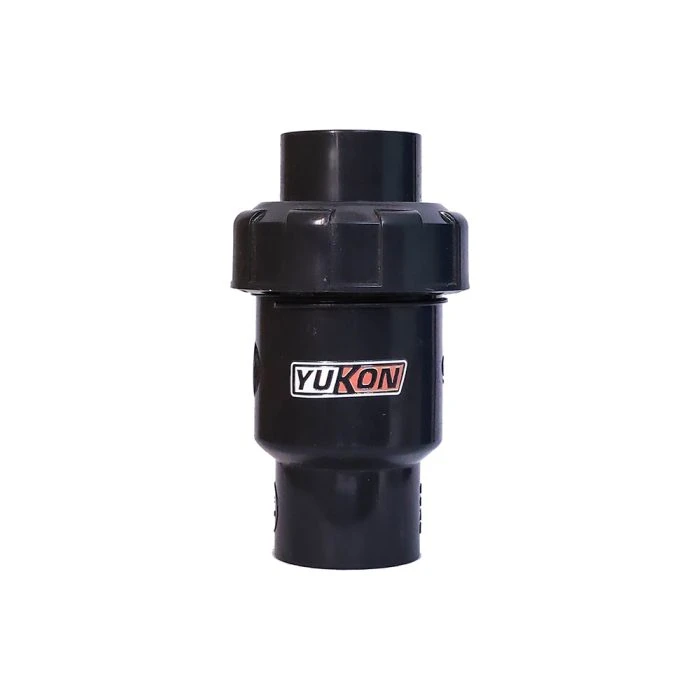
In industrial fluid handling systems, preventing reverse flow is essential for protecting equipment, maintaining process stability, and ensuring operational safety. A upvc non return valve is commonly used in water treatment, chemical processing, utilities, and effluent handling systems due to its corrosion resistance and reliable performance. Selecting the right valve, however, requires careful evaluation of several technical and application-specific factors. Understanding these considerations helps ensure long-term efficiency and trouble-free operation.
Understanding the Application and Media Type
The first step in selecting a upvc non return valve is to clearly understand the type of fluid being handled. UPVC is highly resistant to many chemicals, acids, alkalis, and salts, making it suitable for a wide range of industrial media. However, it is important to confirm compatibility with the specific fluid composition and concentration.
The operating temperature and pressure of the media should also fall within the recommended limits for UPVC material to avoid deformation or performance loss.
Valve Design and Operating Principle
UPVC non return valves are available in different designs, such as swing check, lift check, and spring-loaded types. Each design offers distinct advantages depending on the application.
- Swing type valves are suitable for low-pressure systems with steady flow
- Spring-loaded valves offer quicker response and are ideal for preventing water hammer
- Lift type valves are often used in vertical installations
Selecting the appropriate design ensures reliable backflow prevention and smooth system operation.
Pressure Rating and Flow Requirements
Matching the valve’s pressure rating with the system’s operating conditions is critical. An undersized or improperly rated upvc non return valve can lead to excessive pressure drop, flow restriction, or premature failure.
Flow rate also plays a key role, as the valve must open fully under normal operating conditions to avoid chattering or partial closure. Proper sizing helps maintain efficiency and prolongs valve life.
Installation Orientation and Space Constraints
Installation conditions significantly influence valve performance. Some UPVC non return valves are designed for horizontal pipelines, while others can be installed vertically. Ensuring the correct orientation helps maintain consistent flow control and effective sealing.
Space availability should also be considered, especially in compact piping layouts where installation access may be limited.
Sealing Materials and Leak Prevention
The sealing elements of a upvc non return valve are responsible for preventing leakage and backflow. Seals should be selected based on chemical compatibility and operating temperature. Common sealing materials are chosen to ensure tight shut-off without swelling or degradation.
Reliable sealing enhances process safety and prevents fluid loss or contamination.
Maintenance and Accessibility
Although UPVC non return valves generally require minimal maintenance, accessibility should still be considered during selection. Valves with simple construction and easy access for inspection help reduce downtime during maintenance or replacement.
Selecting a valve that supports quick servicing improves long-term operational efficiency.
Resistance to Corrosion and Scaling
One of the major advantages of a upvc non return valve is its resistance to corrosion and scaling. This is particularly beneficial in applications involving hard water, chemicals, or wastewater. Unlike metal valves, UPVC does not rust or pit, ensuring consistent performance over time.
Compliance with Industry Standards
Ensuring that the valve meets relevant industry standards and quality requirements is essential for safe operation. Compliance with recognized standards ensures dimensional accuracy, pressure performance, and material reliability.
Conclusion
Selecting the right upvc non return valve involves evaluating multiple factors, including media compatibility, valve design, pressure rating, installation conditions, sealing performance, and maintenance requirements. By carefully considering these aspects, industries can ensure reliable backflow prevention, improved system safety, and long service life. A well-chosen UPVC non return valve contributes significantly to efficient and dependable industrial fluid handling systems.