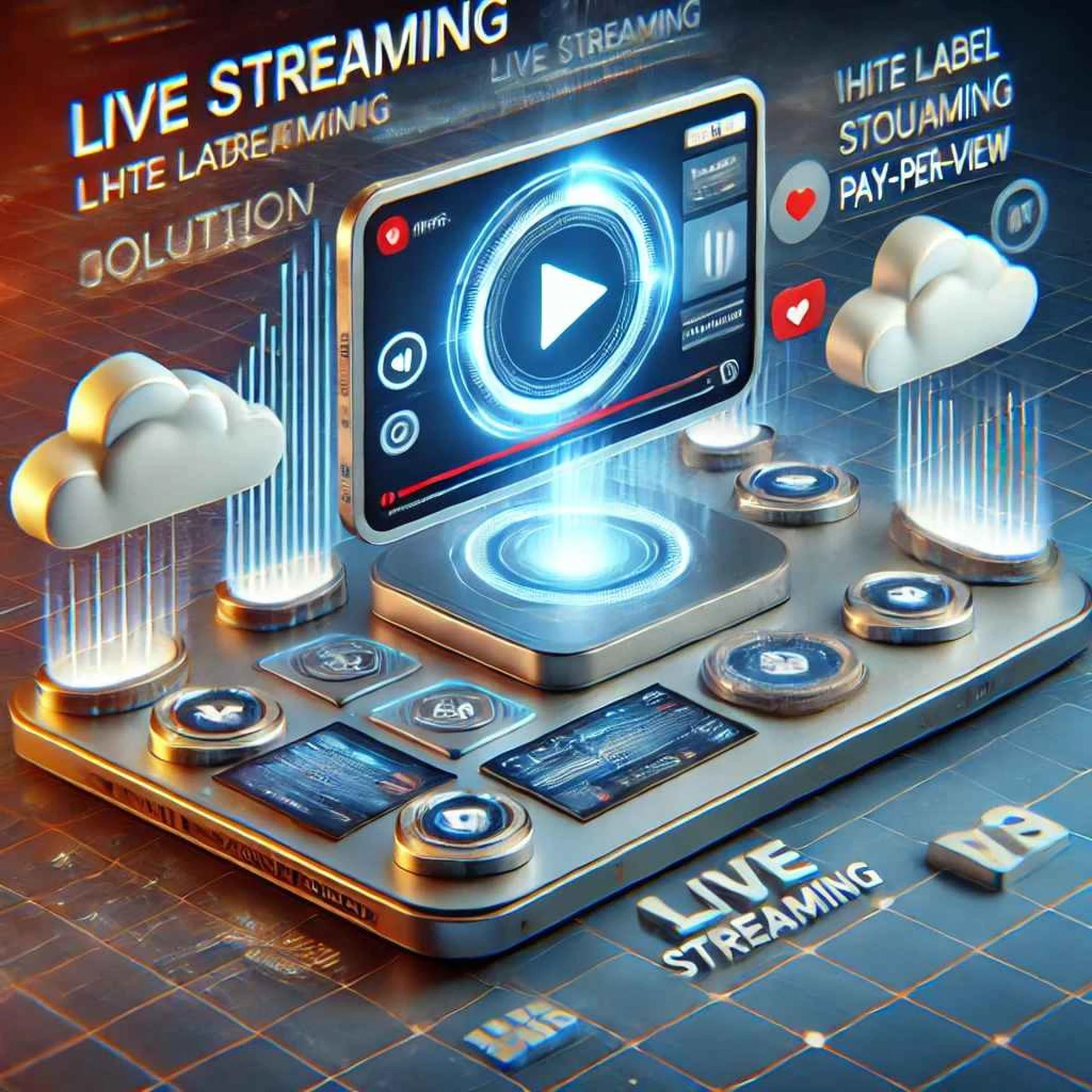
In today’s fast-evolving streaming landscape, broadcasters, content creators, and media companies are seeking greater flexibility, brand control, and scalability. The shift from traditional broadcasting to digital-first delivery has made White Label OTT platforms an essential tool for modern content distribution. These platforms empower media owners to launch their own branded streaming services—without building the infrastructure from scratch. When paired with reliable broadcast playout software, they enable seamless delivery of live and on-demand content across multiple devices.
Let’s explore the key benefits of using White Label OTT platforms for multi-device streaming and why they’re redefining the future of video delivery.
1. Complete Brand Control
One of the most significant advantages of a White Label OTT platform is the ability to maintain full control over branding. Unlike third-party streaming services that prioritize their own logos and layouts, a white-label solution lets you create an app or web interface that reflects your brand identity—logo, colors, UX design, and content presentation.
This helps build stronger brand recognition and loyalty among your audience. Viewers interact with your brand, not a hosting provider’s. Broadcasters and studios can also customize interfaces for different platforms—smart TVs, mobile apps, and web browsers—ensuring a consistent and recognizable experience everywhere.
2. Faster Time to Market
Developing an OTT streaming solution from the ground up is time-consuming and costly. A white-label system eliminates this burden by offering pre-built architecture that can be customized and launched quickly.
With ready integrations for encoding, CDN delivery, payment gateways, and analytics, broadcasters can go live within weeks instead of months. Combined with broadcast playout software, the setup process becomes even smoother—automating content scheduling, playlist management, and streaming to multiple devices simultaneously.
This rapid deployment capability is particularly valuable for sports networks, news broadcasters, and entertainment channels that need to respond quickly to changing audience demands or seasonal programming.
3. Multi-Device Compatibility
Modern audiences expect access to content on their preferred devices—smart TVs, mobile phones, tablets, and web browsers. White Label OTT platforms are designed with multi-device compatibility in mind, using adaptive streaming technologies like HLS and DASH to deliver consistent quality regardless of screen size or connection speed.
Broadcasters can expand their reach without worrying about device-specific limitations. When integrated with advanced broadcast playout software, the platform ensures that content is automatically formatted and delivered in optimal resolution—be it 4K, HD, or mobile-friendly SD.
This flexibility enhances viewer experience while minimizing technical challenges for broadcasters.
4. Monetization Flexibility
White-label OTT solutions provide multiple monetization models—Subscription Video on Demand (SVOD), Advertising Video on Demand (AVOD), Transactional Video on Demand (TVOD), and hybrid approaches. This flexibility allows broadcasters to test revenue strategies and adapt based on audience behavior.
For instance, sports or entertainment channels can combine subscriptions with ad-supported streams to balance engagement and revenue. Broadcast playout software complements this by supporting ad scheduling, server-side ad insertion, and real-time analytics to track ad performance.
These integrated features ensure that monetization remains smooth, scalable, and fully under the broadcaster’s control.
5. Data Ownership and Audience Insights
Unlike third-party hosting platforms that limit access to user data, a White Label OTT platform gives you full ownership of audience analytics. This includes insights into viewer behavior, watch time, engagement trends, and subscription metrics.
Having control over this data enables broadcasters to make informed programming decisions and optimize content strategies. For example, you can identify which shows perform best on mobile versus connected TV and adjust scheduling using your broadcast playout software to maximize audience retention.
Data ownership also enhances personalization—allowing for custom recommendations, targeted ads, and tailored user experiences that boost engagement and revenue.
6. Seamless Integration with Broadcast Playout Software
For broadcasters managing live channels alongside on-demand libraries, integration between White Label OTT platforms and broadcast playout software is crucial. Playout tools handle real-time automation, transitions, graphics overlays, and EPG (Electronic Program Guide) updates.
When synced with a white-label OTT backend, this integration allows for unified management of live and VOD content from one dashboard. You can schedule linear TV-like feeds, automate reruns, and even broadcast special events across devices without downtime.
This workflow bridges the gap between traditional broadcasting and digital streaming, offering the best of both worlds—automation efficiency and OTT flexibility.
7. Scalability and Future Readiness
As viewership grows, your streaming infrastructure must scale effortlessly. White-label OTT solutions are cloud-based, meaning they automatically scale bandwidth and storage to handle audience spikes during major live events or new show releases.
Moreover, many platforms now support next-gen features like AI-driven recommendations, multi-bitrate streaming, and DRM security, ensuring your service stays competitive in the evolving media landscape.
Integrating these capabilities with modern broadcast playout software guarantees uninterrupted delivery and professional-grade broadcast quality, even as you expand globally.
Final Thoughts
For broadcasters aiming to create their own OTT service, a White Label OTT platform offers the perfect balance of speed, customization, and control. By combining it with robust broadcast playout software, you can deliver high-quality streaming experiences across every device—without sacrificing efficiency or scalability.
Whether you’re launching a niche channel, a sports network, or a global media brand, white-label OTT technology empowers you to own your platform, your audience, and your future in the streaming era.