
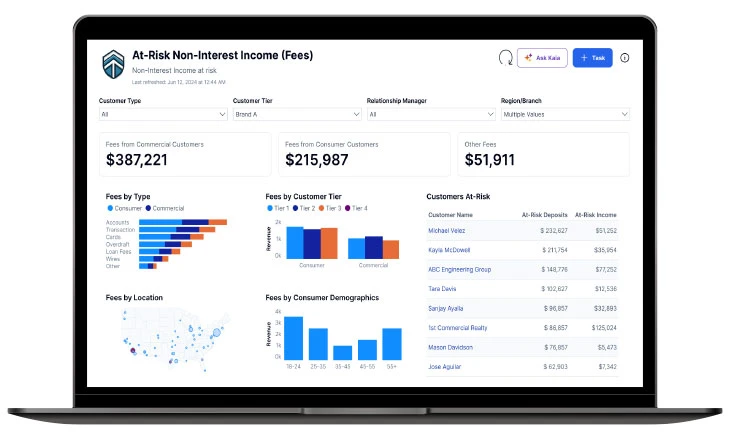
Organizations need reporting environments that deliver clarity, speed, and strategic insight. As operations become increasingly complex, visualizing performance in real-time becomes critical. A Power BI business dashboard, implemented through a unified platform, turns raw data into actionable business insight.
Modern Business Leaders Demand Clarity and Control from Dashboards
In today’s fast-paced environment, transparent decision-making is essential. Leaders must act quickly, using tools that deliver accurate performance snapshots. This makes Power BI business dashboards a vital part of modern business intelligence reporting.
Dashboards within a governed business intelligence platform give executives consolidated views to assess trends instantly. Unlike fragmented tools, a unified environment removes guesswork from high-level decisions. Each visual, whether a revenue projection or operational overview, supports a specific goal.
When integrated into a comprehensive analytics system, Power BI dashboards become a command center for tracking progress, aligning priorities, and reinforcing accountability.
Why Visual-First Reporting Enhances Decision-Making at the Executive Level
Executives need more than spreadsheets. They require fast, clear insights. Visual first reporting delivers clarity. A strong Power BI dashboard distills complex data into clear summaries that drive faster, more confident decisions.
Instead of combing through raw numbers, leaders can instantly spot trends, outliers, and shifts. One screen might highlight profitability, customer behavior, or regional performance. Every metric becomes a decision point.
Dashboards offered within a business intelligence platform ensure consistency and reliability. Aligned definitions and shared priorities allow for immediate understanding. Visual-first reporting bridges access to insights with executive oversight.
Integrating Dashboards into a Broader Business Analytics Platform
A dashboard delivers actual value only when embedded in a structured data analytics ecosystem. Standalone visuals may show metrics but often lack depth. Within a central Data Lakehouse platform, a Power BI dashboard supports strategic visibility and operational clarity.
A unified business analytics platform connects insights across departments, revealing links between finance, operations, and customer trends. This ensures decisions reflect a complete picture, not isolated figures.
Lumify360 has embedded Power BI dashboards into a cohesive performance management framework. Dashboards serve as entry points to real-time, goal-aligned data, transforming routine reports into forward-looking management tools that drive informed decision-making.
Usability Defines the Value of Business Intelligence Solutions
Even advanced dashboards lose value if they are difficult to interpret. A Power BI dashboard must present data clearly and intuitively. Executives need tools aligned with business goals, not just analytical capabilities.
Effective dashboards remove clutter and highlight priorities. Structured platforms provide consistent layouts, familiar labeling, and purposeful visuals. This clarity enables confident decisions, even under pressure.
Top-tier business intelligence solutions prioritize usability. Whether reviewing enterprise trends or departmental performance, users must quickly grasp key insights. Dashboards should support the decision-maker, not hinder them.
How Business Dashboards Deliver Actionable Context
Dashboards that only display numbers fall short of expectations. Leaders need context to guide the next steps. A well-integrated Power BI dashboard reveals both metrics and meaning.
Rather than listing figures, a contextual dashboard shows trends, benchmarks, and outliers. Executives understand not just what has changed but why, and what actions to take. This shift from observation to interpretation is what makes dashboards strategically useful.
The most effective dashboards avoid templates and generic visuals. They reflect business functions and strategic goals. With that alignment, dashboards move from static reports to purposeful, actionable tools.
Lumify360 Embeds Power BI to Deliver Seamless, Contextual Insights
A dashboard’s impact depends on access to real-time, accurate, and governed data. Lumify360 delivers this by embedding Power BI into its performance platform—not as a standalone tool, but as a seamless visualization layer.
Each Power BI dashboard reflects unified definitions and governed metrics. Visuals align with business functions and strategies. Executives interact with dashboards that offer context, not disconnected data points.
With native Power BI integration, Lumify360 eliminates the need to manage multiple tools. Decision-makers get instant insights without switching systems. Dashboards become live views into real-time operations, driven by complete, trusted information.
Lumify360 Centralizes Business Intelligence into One Scalable Platform
Lumify360 combines reporting, analysis, and visualization into a single, governed, and scalable platform. It unifies structured and unstructured data to deliver the clarity and speed executives need. With Power BI dashboards embedded as native tools, Lumify360 provides role-specific, strategic insights.
Unlike fragmented toolsets, Lumify360 offers a single source of truth. Departmental data connects enterprise goals. Executives monitor key metrics, identify trends, and act with confidence within a consistent decision-making framework.
From real-time oversight to predictive analysis, Lumify360 transforms Power BI’s business intelligence solutions into high-performance management systems. Leaders transition from static reporting to proactive decision-making, supported by centralized, governed insights.
Explore how Lumify360 empowers enterprise performance through seamless analytics and reporting: Click here to read more.