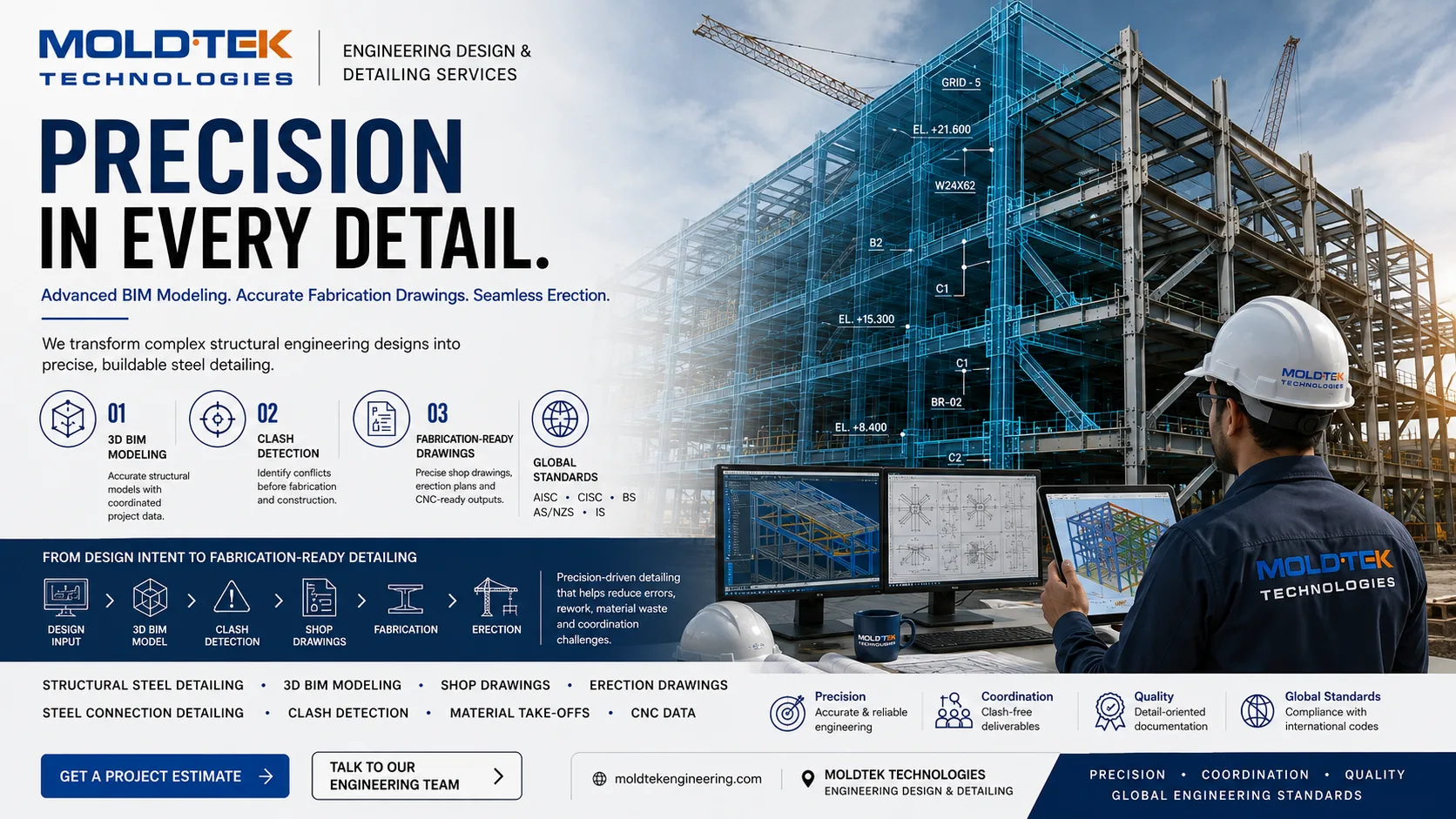
A sound structural design can still run into costly delays if the fabrication drawings do not match up. Structural steel detailing sits between design and fabrication, and small errors here tend to surface later as change orders, rework, or missed schedules on site. For engineers, contractors, and fabricators, knowing what separates a capable steel detailing company from an average one can save real time and money.
Understanding Structural Steel Detailing
Structural steel detailing translates a structural engineer's design into the drawings a fabrication shop needs: shop drawings, erection plans, connection details, and bills of materials. Detailers typically work in 3D modeling software such as Tekla Structures, SDS/2, or Advance Steel, building a model of every beam, column, plate, and bolt before a single piece of steel is cut.
This is not simply a drafting exercise. Detailers interpret load paths and connection types, then convert them into dimensions, weld symbols, and bolt patterns a fabricator can follow without guessing.
Why Structural Steel Detailing Matters in Modern Construction
The gap between a structural design and a buildable structure is where many avoidable project problems originate. A missed clash between a beam and a duct run, incorrect bolt spacing, or a connection that does not match the field condition can each trigger an RFI, a fabrication delay, or rework on site.
As projects grow more complex, with tighter schedules and coordination across multiple trades, detailing accuracy has a direct effect on cost and timeline. Catching a clash on the model is far less expensive than catching it during erection.
Key Factors to Consider When Evaluating a Steel Detailing Company
A few factors are worth checking before assigning a project to a steel structure detailing company:
- Software compatibility with the platform your team or fabricator standardizes on, such as Tekla, SDS/2, Advance Steel, or Revit.
- Experience with the governing code for the project's region, since steel codes vary between AISC in the US, CSA S16 in Canada, and BS or AS/NZS elsewhere.
- Connection design capability, since some projects require delegated design with a licensed engineer's stamp, not just detailing.
- Turnaround capacity to scale output for fast-track schedules and larger tonnage without sacrificing accuracy.
Common Challenges and How to Address Them
Coordination gaps between architects, engineers, and fabricators are a frequent source of delay, since clashes surface late when drawings are developed in isolation. Running 3D coordination reviews before shop drawings are finalized catches most of these issues early.
Mid-project design changes are another recurring challenge, since a late structural revision can ripple through connection details, bolt lists, and material orders. Keeping one coordinated 3D model as the source of truth, rather than updating drawings individually, keeps revisions consistent.
Tight schedules can also push teams to prioritize speed over accuracy. Phasing detailing work by erection sequence, so drawings for early packages release first, lets fabrication start sooner without compromising later phases. This phased approach is common on larger structural steel detailing services engagements, where erection sequencing spans several months across multiple fabricators.
Best Practices for Better Project Outcomes
Involve the detailing team early, once structural design is substantially complete but before construction documents are finalized, so coordination issues surface before they become expensive on-site problems.
Maintain a single coordinated 3D model as the shared reference for all disciplines, set clear QA checkpoints at key milestones, and match the detailing partner to the project itself rather than defaulting to whoever is available.
Conclusion
Structural steel detailing is often treated as a back-office step, but it has a measurable effect on how smoothly a project moves from design to erected structure. Projects that build in early detailing involvement, consistent 3D coordination, and phased release schedules tend to see fewer RFIs and steadier fabrication timelines. For teams comparing providers, what matters most is rarely price alone, but whether the detailing process fits how the project will actually be built.