
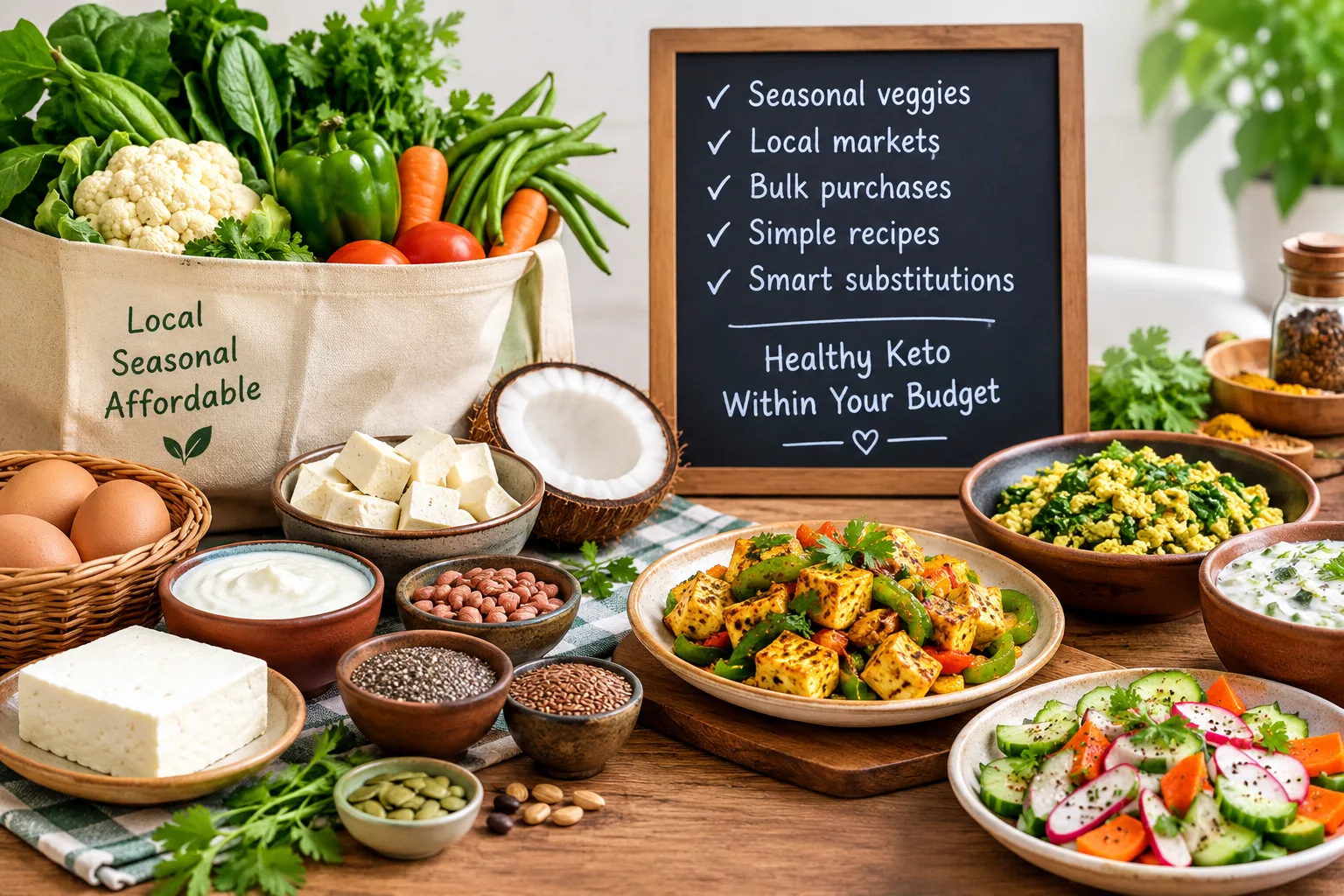
Many people assume keto is expensive because they see imported almond flour, avocado, specialty cheese, packaged keto snacks, and protein products in online stores. But an Indian keto kitchen does not need to depend on premium products.
With seasonal shopping, local markets, bulk purchases, simple recipes, and sensible substitutions, you can create affordable low-carb meals using vegetables, paneer, eggs, tofu, curd, coconut, peanuts, seeds, and traditional spices.
The most important principle is simple: buy real food first and packaged keto products last.
Health note: A strict ketogenic diet is not suitable for everyone. People with diabetes, kidney or liver disease, pancreatitis, gallbladder problems, high cholesterol, pregnancy, breastfeeding, or a history of eating disorders should consult a qualified healthcare professional before making major dietary changes. Some diabetes medicines may require adjustment because of hypoglycaemia risk.
Is Keto Expensive in India?
Keto can be expensive when it is built around imported products and convenience foods:
- Almond flour.
- Imported berries.
- Avocados.
- Keto cookies and bars.
- Specialty breads and noodles.
- Imported cheese.
- Packaged electrolyte powders.
- Premium protein products.
- Ready-made low-carb meals.
However, these products are not essential.
A budget-friendly Indian low-carb diet can centre on:
- Seasonal vegetables.
- Paneer and tofu.
- Eggs.
- Curd and buttermilk.
- Coconut.
- Peanuts and local nuts.
- Flax, sesame, sunflower, and pumpkin seeds.
- Ghee or locally available cooking oils.
- Common Indian herbs and spices.
The cost will vary by city, season, food preferences, and whether you eat vegetarian or non-vegetarian meals. But local sourcing can make a significant difference.
Build a Budget Keto Shopping List
Affordable protein foods
Protein is the part of a keto meal that can become expensive if you depend on premium cuts of meat or large quantities of paneer. Use a rotation of different foods.
Good options include:
- Eggs.
- Paneer.
- Tofu.
- Unsweetened curd.
- Hung curd.
- Chicken.
- Sardines and other local fish.
- Soy chunks, if they fit your carbohydrate target.
- Peanuts and seeds in controlled portions.
- Homemade paneer from milk, when practical.
Eggs are particularly useful because they are versatile and can be used for omelettes, egg bhurji, curry, boiled snacks, and egg-based wraps.
Vegetarians can reduce costs by alternating paneer with tofu, curd, and seasonal vegetables instead of eating paneer at every meal.
Affordable low-carb vegetables
You do not need imported salad leaves to eat vegetables on keto. Visit your local market and choose seasonal produce such as:
- Cabbage.
- Cauliflower.
- Spinach.
- Fenugreek leaves.
- Amaranth leaves.
- Bottle gourd.
- Ridge gourd.
- Brinjal.
- Okra.
- Cucumber.
- Radish.
- Capsicum.
- Mushrooms.
- Green beans.
- Zucchini when reasonably priced.
- Tomatoes and onions in controlled portions.
Leafy greens, gourds, cabbage, cauliflower, and brinjal are often more economical than packaged salad vegetables. They can be cooked in Indian styles using spices, curd, coconut, or a small amount of ghee.
Current Indian dietary guidance also emphasizes increasing vegetables and maintaining dietary variety rather than depending on a narrow list of so-called superfoods.
Budget-friendly fats
Choose fats based on availability, cooking requirements, taste, and medical advice:
- Mustard oil.
- Groundnut oil.
- Coconut oil.
- Sesame oil.
- Ghee.
- Butter.
- Olive oil for selected dishes.
You do not need to use expensive imported oils for every recipe. The main budget issue is usually not the type of oil but the quantity used.
Measure oil and ghee with a spoon. Free-pouring directly from the bottle makes it easy to use more than intended.
Shop at the Right Place
Local sabzi mandi
Local vegetable markets are often useful for:
- Seasonal produce.
- Leafy greens.
- Cauliflower and cabbage.
- Gourds.
- Brinjal.
- Okra.
- Cucumber.
- Fresh herbs.
Visit near closing time if appropriate for your area, when vendors may offer discounts on perishable vegetables. Choose quality carefully and avoid buying more than you can use.
Weekly haat and farmers’ markets
Weekly markets can offer seasonal produce at competitive prices, especially when you buy directly from growers or small traders. Ask what is fresh and abundant instead of entering the market with a fixed list of expensive vegetables.
Local dairy shops
Compare prices for:
- Paneer.
- Curd.
- Milk.
- Butter.
- Buttermilk.
Fresh local paneer may be cheaper than branded vacuum-packed paneer. Check freshness, hygiene, storage, and ingredients before buying.
Wholesale grain and spice shops
Even on keto, you may use small quantities of:
- Flax seeds.
- Sesame seeds.
- Chia seeds.
- Peanuts.
- Coconut.
- Spices.
- Psyllium husk.
Buying small quantities from a reliable store may cost less than purchasing branded “keto” packets. Store seeds properly and avoid buying more than you can use before they become stale.
Online grocery platforms
Online shopping is useful for comparing prices, but it can encourage impulse purchases. Search for the basic ingredient rather than the word “keto.”
For example:
- Search for “flax seed” instead of “keto bread mix.”
- Search for “unsweetened coconut” instead of “keto dessert.”
- Search for “plain Greek yogurt” instead of “low-carb snack box.”
- Search for “cauliflower” instead of “cauliflower rice packet.”
Convenience products often carry a premium for processing, packaging, and marketing.
Seasonal Shopping Saves Money
A budget keto plan should change with the seasons.
Summer
Look for:
- Cucumber.
- Bottle gourd.
- Ridge gourd.
- Okra.
- Brinjal.
- Leafy greens that remain fresh in your area.
- Curd and buttermilk.
Monsoon
Choose carefully cleaned and fresh vegetables. Cabbage, cauliflower, gourds, eggs, paneer, and cooked vegetable dishes may be practical. Wash produce thoroughly and maintain kitchen hygiene.
Winter
Winter often offers a wide variety of leafy greens and cruciferous vegetables:
- Spinach.
- Fenugreek leaves.
- Mustard greens.
- Cauliflower.
- Cabbage.
- Radish.
- Turnip.
- Green beans.
Seasonal vegetables are often cheaper, fresher, and more flavourful than out-of-season alternatives.
Do not force a recipe to use imported ingredients. Build the meal around what is abundant locally.
Low-Cost Indian Keto Substitutions
Expensive ingredientBudget-friendly alternativeAvocadoCoconut, cucumber, or measured peanutsAlmond flourGround sunflower seeds, flax meal, or a small amount of coconut flourImported lettuceCabbage, cucumber, spinach, or local leafy greensZucchini noodlesCabbage noodles or sautéed gourdsImported berriesSmall portions of suitable seasonal fruit, if your plan allowsKeto breadEgg wraps, cabbage wraps, or paneer-based alternativesMacadamia nutsPeanuts, sunflower seeds, or local nuts in measured portionsPackaged keto sweetsHomemade coconut or chia dessert without added sugarCauliflower rice packetsFresh cauliflower grated at homeProtein barsBoiled eggs, curd, paneer cubes, or roasted seeds
The goal is not to find an identical replacement for every expensive product. It is to preserve the meal’s nutritional role and texture using ingredients that are locally available.
Budget Keto Meal Ideas
Egg and cabbage bhurji
Shred cabbage and cook it with onion, green chilli, cumin, turmeric, and spices. Add beaten eggs and cook until set.
For a lower-cost vegetarian version, use crumbled tofu or a small amount of paneer.
Cauliflower and paneer bowl
Grate cauliflower and sauté it with cumin, garlic, turmeric, coriander, and lemon. Add paneer cubes and a side of cucumber raita.
This can replace a rice-based meal without requiring packaged cauliflower rice.
Curd and cucumber meal
Combine unsweetened curd with cucumber, roasted cumin, mint, coriander, and rock salt if permitted. Add boiled eggs, paneer, or roasted seeds to make the meal more filling.
Cabbage stir-fry
Cook shredded cabbage with mustard seeds, curry leaves, green chilli, turmeric, and coconut. Add tofu, eggs, or paneer for protein.
Egg curry without potatoes
Prepare a tomato-onion masala with ginger, garlic, turmeric, cumin, and coriander. Add boiled eggs and serve with sautéed spinach or cauliflower instead of rice.
Use tomato and onion according to your carbohydrate target.
Seasonal vegetable paneer curry
Choose whichever low-cost vegetable is fresh—such as cauliflower, brinjal, bottle gourd, or okra. Cook it with paneer, curd, spices, and a measured amount of oil.
This approach is more affordable than buying ingredients for a fixed recipe every day.
Plan Meals Before Shopping
A simple weekly plan prevents food waste and unnecessary spending.
Step 1: Choose two proteins
For example:
- Eggs and paneer.
- Tofu and curd.
- Chicken and eggs.
- Fish and paneer.
Step 2: Choose four vegetables
Select a combination of:
- One leafy vegetable.
- One cruciferous vegetable.
- One seasonal vegetable.
- One salad vegetable.
Step 3: Choose two flavour bases
Examples include:
- Tomato-ginger masala.
- Coconut-coriander chutney.
- Yogurt marinade.
- Spinach puree.
- Mustard and curry leaf tempering.
Step 4: Cook components in batches
Prepare:
- Boiled eggs.
- Washed and chopped vegetables.
- Homemade paneer.
- Curd dip.
- Chutney.
- Cooked cauliflower rice.
- Spice mixes.
Batch preparation reduces reliance on restaurant food and packaged snacks.
Reduce Waste and Extend Freshness
Food waste is one of the hidden costs of a keto diet, especially when people buy vegetables for recipes they never prepare.
Use these practical habits:
- Buy leafy greens in small quantities.
- Store herbs in a damp cloth or suitable container.
- Use cauliflower stems in stir-fries or soups.
- Turn leftover cooked vegetables into omelettes or paneer bhurji.
- Freeze paneer or meat when appropriate.
- Make stock from usable vegetable stems.
- Use overripe tomatoes in cooked gravies.
- Grate and freeze cauliflower for later use.
- Do not buy large quantities of specialty ingredients until you know you enjoy them.
A low-carb diet becomes more affordable when leftovers are planned rather than treated as a failure.
What to Avoid Buying ?
Many products marketed as keto are expensive because they combine ordinary ingredients with specialized branding.
Be cautious with:
- Keto cookies.
- Low-carb chocolates.
- Imported nut butters.
- Packaged cauliflower rice.
- Keto noodles.
- Ready-made sauces.
- Flavoured protein powders.
- Sugar-free desserts.
- Premium electrolyte products.
- “Fat-burning” supplements.
Read the label for:
- Total carbohydrates.
- Added sugars.
- Serving size.
- Protein content.
- Fibre.
- Saturated fat.
- Artificial sweeteners.
- Hydrogenated or heavily processed fats.
“Sugar-free” does not automatically mean low-calorie, and “keto-friendly” is not a regulated guarantee of nutritional quality.
Budget-Friendly Snack Options
Prepare snacks at home instead of buying packaged keto products.
Affordable choices include:
- Boiled eggs.
- Paneer cubes.
- Plain curd.
- Cucumber slices.
- Roasted sunflower seeds.
- Measured peanuts.
- Coconut pieces.
- Homemade flax crackers.
- Salted chaas without added sugar.
- Leftover chicken or tofu.
- Small portions of almonds or walnuts.
Nuts and seeds are nutritious but calorie-dense. Use a small bowl or measured portion rather than eating directly from the packet.
How to Eat Keto Outside the Home
Eating out can increase both cost and carbohydrate intake. Use a simple strategy:
- Choose tandoori paneer, grilled chicken, eggs, fish, or kebabs without sugary sauces.
- Order a side of salad or cooked vegetables.
- Replace naan, roti, rice, or fries with vegetables where possible.
- Avoid creamy gravies if you cannot confirm the ingredients.
- Ask whether the dish contains sugar, cornflour, potatoes, or flour.
- Skip sweet drinks and choose water, soda water, or unsweetened beverages.
- Share desserts instead of ordering individual portions.
At roadside restaurants, eggs, paneer, grilled items, and simple vegetable preparations may be more practical than complicated “keto” menu items.
A One-Week Budget Shopping List
The exact quantity depends on family size, appetite, and whether you eat vegetarian or non-vegetarian food.
Protein
- Eggs.
- Paneer or tofu.
- Plain curd.
- Chicken or local fish, if consumed.
Vegetables
- Cauliflower.
- Cabbage.
- Spinach or another local leafy green.
- Cucumber.
- One seasonal gourd.
- Brinjal or okra.
- Capsicum if affordable.
- Tomatoes and onions in controlled quantities.
- Coriander, mint, ginger, garlic, and green chilli.
Fats and extras
- Mustard oil or another suitable local oil.
- Ghee in a measured quantity.
- Coconut.
- Peanuts.
- Flax or sesame seeds.
- A small quantity of almonds or walnuts.
- Basic spices.
This list can support omelettes, paneer bhurji, curries, stir-fries, salads, raita, soups, and vegetable bowls without requiring specialty products.
Keto, Budget, and Nutrition
Cheap keto is not automatically healthy keto. A diet built mostly from butter, processed meat, cheese, and packaged snacks may be low in carbohydrates but poor in fibre and dietary variety.
A more balanced approach includes:
- Adequate protein.
- Low-carbohydrate vegetables.
- Measured fats.
- Fibre from permitted vegetables, seeds, and suitable foods.
- Sufficient fluids.
- Variety across the week.
A 2026 review describes commonly reported ketogenic-diet effects such as fatigue, headache, nausea, gastrointestinal symptoms, increased urination, and hypoglycaemia. It also identifies medical conditions and medications that require caution.
If your budget is limited, a moderate low-carb diet may be more practical than strict keto. It can reduce sugar, refined flour, sweetened drinks, and oversized portions while still allowing carefully planned servings of dal, fruit, whole grains, or rice.
Final Thoughts
A budget keto diet in India is possible when you shop locally, buy seasonally, cook simply, and avoid paying extra for the word “keto” on a packet.
Choose eggs, paneer, tofu, curd, cabbage, cauliflower, leafy greens, gourds, coconut, peanuts, and seeds. Use traditional Indian spices to create variety, plan meals before shopping, and reduce food waste by cooking flexible recipes.
Strict keto is not suitable for everyone, and a moderate low-carb diet may be more sustainable for many people. Whichever approach you choose, prioritize nutritional adequacy, affordability, and long-term consistency over expensive food trends.
This article is for general education and is not a substitute for personalized medical or dietary advice.
FAQ's
Is keto affordable in India?
Yes, if you rely on seasonal vegetables, eggs, paneer, tofu, curd, coconut, local nuts, seeds, and ordinary cooking oils. Imported products and packaged keto foods are usually the main cost drivers.
What is the cheapest keto protein?
Eggs are often among the most economical options for non-vegetarians. For vegetarians, compare local paneer, tofu, curd, and homemade paneer according to local prices.
Can I follow keto without almond flour?
Yes. Almond flour is not essential. Use cauliflower, cabbage, eggs, paneer, flax, coconut, sunflower seeds, or psyllium-based recipes where appropriate.
Is paneer cheaper than chicken?
Prices vary by region, brand, season, and shop. Compare the cost per serving rather than only the price per kilogram. Homemade paneer may be economical if milk is reasonably priced.
Can peanuts be eaten on keto?
Peanuts may fit in controlled portions, but they contain carbohydrates and are calorie-dense. Do not treat them as unlimited.
Can I eat dal on a budget low-carb plan?
A small portion of dal may fit a moderate low-carb diet, but it may be difficult to include in strict keto. Serve it with extra vegetables and avoid combining it with large portions of rice or roti.
Do I need supplements for keto?
Not automatically. Supplements should depend on your diet, blood tests, health conditions, and medical advice. Do not buy expensive electrolyte or “keto support” products without a clear reason.