
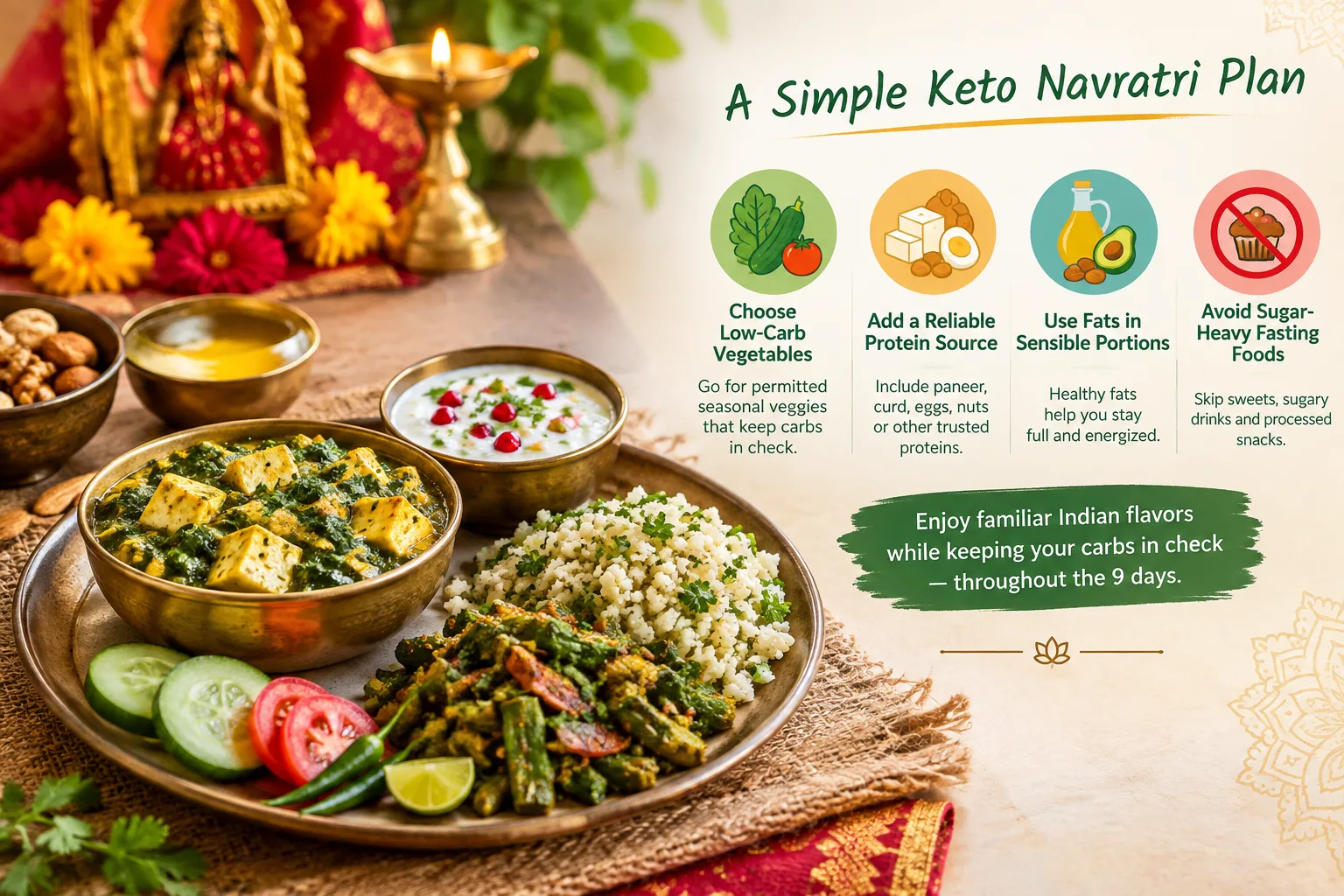
Navratri fasting does not have to mean surviving only on sabudana, potatoes, and fried snacks. With a few thoughtful substitutions, you can prepare a vegetarian, low-carb Navratri meal plan using paneer, yogurt, coconut, nuts, cauliflower, leafy greens, mushrooms, and healthy fats.
This 9-day keto Navratri diet plan is designed for people who want to observe the festival while reducing refined carbohydrates and avoiding sugar-heavy vrat foods.
Important: Fasting rules vary between families and regions. Some devotees avoid onion, garlic, grains, legumes, certain spices, or even dairy. Follow your family tradition and consult a qualified healthcare professional before beginning a restrictive diet, especially if you have diabetes, kidney disease, are pregnant, or take regular medication.
What To Eat During Keto Navratri
Traditional fasting foods such as sabudana, kuttu flour, singhara flour, potatoes, sweet potatoes, and large quantities of fruit can be high in carbohydrates. For a lower-carb approach, build your meals around:
- Paneer and tofu.
- Full-fat yogurt or hung curd.
- Cauliflower, cabbage, cucumber, spinach, mushrooms, zucchini, eggplant, and okra.
- Coconut, almonds, walnuts, chia seeds, flax seeds, and sesame seeds.
- Ghee, butter, coconut oil, and olive oil.
- Lemon, coriander, mint, cumin, rock salt, and permitted spices.
- Unsweetened herbal tea, lemon water, and adequate plain water.
Check packaged ingredients carefully. Some spice mixes, sauces, flavored yogurts, and ready-made chutneys may contain sugar, wheat flour, or other ingredients that are not suitable for your fasting rules.
9-Day Keto Navratri Meal Plan
The meal plan below offers three eating occasions each day. If you traditionally eat only once or twice during vrat, combine or skip meals according to your routine. Portion sizes should be adjusted according to your hunger, health goals, activity level, and personal carbohydrate target.
DayBreakfastLunchDinnerDay 1Chia porridge with Greek yogurt and almondsCapsicum and paneer cooked in gheeMushroom soup with broccoliDay 2Broccoli with cheese and butter saucePalak paneer with yogurtFried paneer with sautéed green beansDay 3Paneer bhurjiCucumber and flax-seed raitaPaneer tikkaDay 4Coconut-cinnamon chia bowlButter-roasted cauliflowerSpicy mushrooms with almonds and flaxDay 5Sugar-free chocolate mousseCrispy mushroom chipsPaneer in creamy tomato gravyDay 6Vegetarian keto club saladSesame tofu and eggplant stir-fryAlmond-sesame zucchini noodle bowlDay 7Cauliflower keto upmaKurkuri bhindiPaneer makhanwalaDay 8Crispy tofu and bok choy saladCauliflower riceCabbage stir-fryDay 9Keto dahi riceCauliflower pav bhajiBaingan bhartaThe original plan also highlights paneer, coconut, nuts, yogurt, cucumber, avocado, ghee, and herbal teas as useful low-carbohydrate ingredients for a vegetarian Navratri menu.
Easy Keto Vrat Recipes
Chia Yogurt Bowl
Soak 1–2 tablespoons of chia seeds in unsweetened coconut milk or water for several hours. Before serving, add full-fat Greek yogurt, chopped almonds, cinnamon, and an approved low-calorie sweetener if desired.
Chia seeds provide texture and fiber, while yogurt and almonds make the bowl more filling. Choose unsweetened dairy or coconut products because flavored versions may contain added sugar.
Ghee Paneer and Capsicum
Cut paneer and capsicum into strips. Heat ghee in a pan and add cumin seeds if permitted. Add the capsicum, paneer, salt, turmeric, coriander powder, and chilli powder, then cook until the vegetables soften and the paneer develops light browning.
For a stricter fasting version, omit ingredients that are not accepted in your household and use rock salt instead of regular salt.
Cucumber Flax Raita
Combine grated cucumber with beaten full-fat yogurt. Add roasted cumin powder, mint, rock salt, coriander, and 1–2 tablespoons of ground flax seeds.
Chill before serving. This raita can be eaten as a light meal, a side dish, or a cooling accompaniment to paneer and vegetable preparations.
Paneer Tikka
Cut paneer into cubes and marinate it in yogurt, ginger, permitted spices, lemon juice, and a little oil or ghee. Allow it to rest for several hours, then grill or pan-cook until lightly charred.
Serve with fresh mint and coriander chutney. Check that the chutney contains no sugar or grain-based thickener.
Butter-Roasted Cauliflower
Cut a cauliflower into large pieces or thick slices. Mix melted butter with salt, pepper, mustard, oregano, and permitted spices. Brush the mixture over the cauliflower and roast until tender and golden.
This makes a satisfying alternative to potato-based vrat dishes. It can be served with yogurt, paneer, or a small salad.
Creamy Paneer Tomato Gravy
Cook tomatoes with butter, cardamom, cinnamon, and dried fenugreek leaves if allowed. Blend the softened tomatoes into a smooth sauce, return it to the pan, and add paneer and a small quantity of cream.
Keep the tomato portion moderate if you are following a very strict low-carbohydrate plan. Avoid adding sugar to balance acidity; use a small amount of an appropriate sweetener if needed.
Cauliflower Keto Upma
Finely grate or process cauliflower into rice-sized pieces. Temper cumin and mustard seeds in ghee, then add curry leaves, ginger, green chilli, and cauliflower. Cook until the moisture evaporates and finish with coriander and a small quantity of peanuts if they fit your fasting rules.
This resembles upma in texture without using semolina. Portion control is important because peanuts can increase the calorie and carbohydrate content.
Keto Dahi Rice
Cook finely grated cauliflower until tender and allow it to cool slightly. Mix it with full-fat yogurt and prepare a tempering using ghee, mustard seeds, curry leaves, ginger, and dried red chilli.
Use ingredients permitted during your fast. Serve chilled or at room temperature.
Cauliflower Pav Bhaji
Steam cauliflower until soft and mash it. Cook it with capsicum, tomatoes, butter, permitted pav bhaji spices, coriander, and lemon juice.
For a keto-friendly serving, replace the pav with roasted cauliflower, paneer, or a low-carb flatbread made from ingredients allowed during your vrat. The original source presents cauliflower as the base for its low-carb pav bhaji variation.[ketoforindia]
Snacks and Drinks
When hunger appears between meals, choose a small portion rather than continuously grazing. Suitable options may include:
- Roasted makhana prepared with ghee, provided it fits your carbohydrate target.
- A few almonds or walnuts.
- Coconut pieces.
- Paneer cubes.
- Full-fat unsweetened yogurt.
- Cucumber slices with lemon and rock salt.
- Chia water or unsweetened herbal tea.
- Homemade coconut ladoos sweetened without sugar.
Makhana, fruit, and nuts can still contribute significant carbohydrates when eaten in large quantities. “Allowed during vrat” does not automatically mean “low carb,” so portions matter.
Keto Navratri Tips
Avoid Hidden Carbs
Common high-carbohydrate vrat foods include:
- Sabudana khichdi and sabudana vada.
- Potato fries and potato-heavy curries.
- Sugar-based sweets and sweetened lassi.
- Large portions of bananas, dates, and other sweet fruits.
- Kuttu or singhara flour dishes eaten in large quantities.
- Packaged sauces and flavored dairy products.
You do not necessarily need to eliminate every traditional fasting ingredient unless your health plan requires it. However, replacing the main carbohydrate source with cauliflower, cabbage, paneer, or other permitted vegetables can make the meal lower in carbs.
Prioritize Protein
A vegetarian keto plan can become too low in protein if it relies mainly on butter, ghee, coconut, and nuts. Include an appropriate protein source in your meals, such as:
- Paneer.
- Tofu.
- Greek yogurt or hung curd.
- Cheese in moderate portions.
- Nuts and seeds.
The exact amount depends on your body size, activity level, dietary goals, and medical needs.
Drink Enough Water
Fasting and carbohydrate restriction can both alter your fluid and electrolyte requirements. Drink water regularly and include permitted sources of sodium and potassium through foods or beverages, unless your doctor has advised you to restrict them.
Avoid assuming that dizziness, weakness, headache, or palpitations are simply normal fasting symptoms. Stop and seek medical advice if symptoms are severe, persistent, or unusual.
Respect Religious Rules
Keto substitutions should not override your spiritual practices. Before preparing a recipe, confirm whether your vrat permits:
- Onion and garlic.
- Regular salt or only rock salt.
- Turmeric, coriander powder, garam masala, or packaged spice blends.
- Soy sauce and vinegar.
- Tofu or processed cheese.
- Grains, legumes, peanuts, and certain vegetables.
You can easily modify most recipes by removing ingredients that your household avoids.
Final Note
A keto Navratri plan works best when it is simple: choose permitted low-carb vegetables, add a reliable protein source, use fats in sensible portions, and avoid sugar-heavy fasting foods. This approach can help you enjoy familiar Indian flavors while maintaining greater control over carbohydrate intake throughout the nine days.
The recipes and meal combinations in this article are adapted and reorganized from the referenced Keto for India Navratri plan, which contains day-wise meals, ingredients, preparation methods, nutrition tables, and fasting-related FAQs.
Frequently Asked Questions
Can I follow keto during Navratri?
Some people can follow a lower-carbohydrate vegetarian plan during Navratri by choosing paneer, yogurt, tofu, low-carb vegetables, coconut, nuts, and seeds. However, keto is not appropriate for everyone, particularly people with certain medical conditions or those taking glucose-lowering medication.
Can I eat paneer during Navratri?
Paneer is commonly used in vegetarian fasting menus, but fasting practices differ. If dairy is permitted in your tradition, paneer can provide protein and fat for a low-carb meal.
Is sabudana keto-friendly?
Sabudana is a concentrated source of carbohydrate and is generally not suitable for a strict ketogenic diet. If you choose to eat it for religious or cultural reasons, keep the portion controlled and account for it within your overall eating plan.
Can I eat fruit during a keto vrat?
Some fruits are lower in carbohydrate than others, but fruit portions can still affect ketosis. Small portions of berries, coconut, or avocado may fit some low-carb plans, while bananas, dates, mangoes, and large servings of grapes are much higher in sugar.
What can I use instead of sugar?
You may use a non-sugar sweetener that you tolerate and that fits your dietary requirements. Avoid assuming that honey, jaggery, dates, coconut sugar, or maple syrup are keto-friendly; they are still sources of sugar.
How can I make Navratri sweets low carb?
Use unsweetened coconut, paneer or cream, nuts, chia seeds, cocoa, and a suitable non-sugar sweetener. Keep portions small, since nuts, cream, and coconut are calorie-dense even when they contain relatively few carbohydrates.