
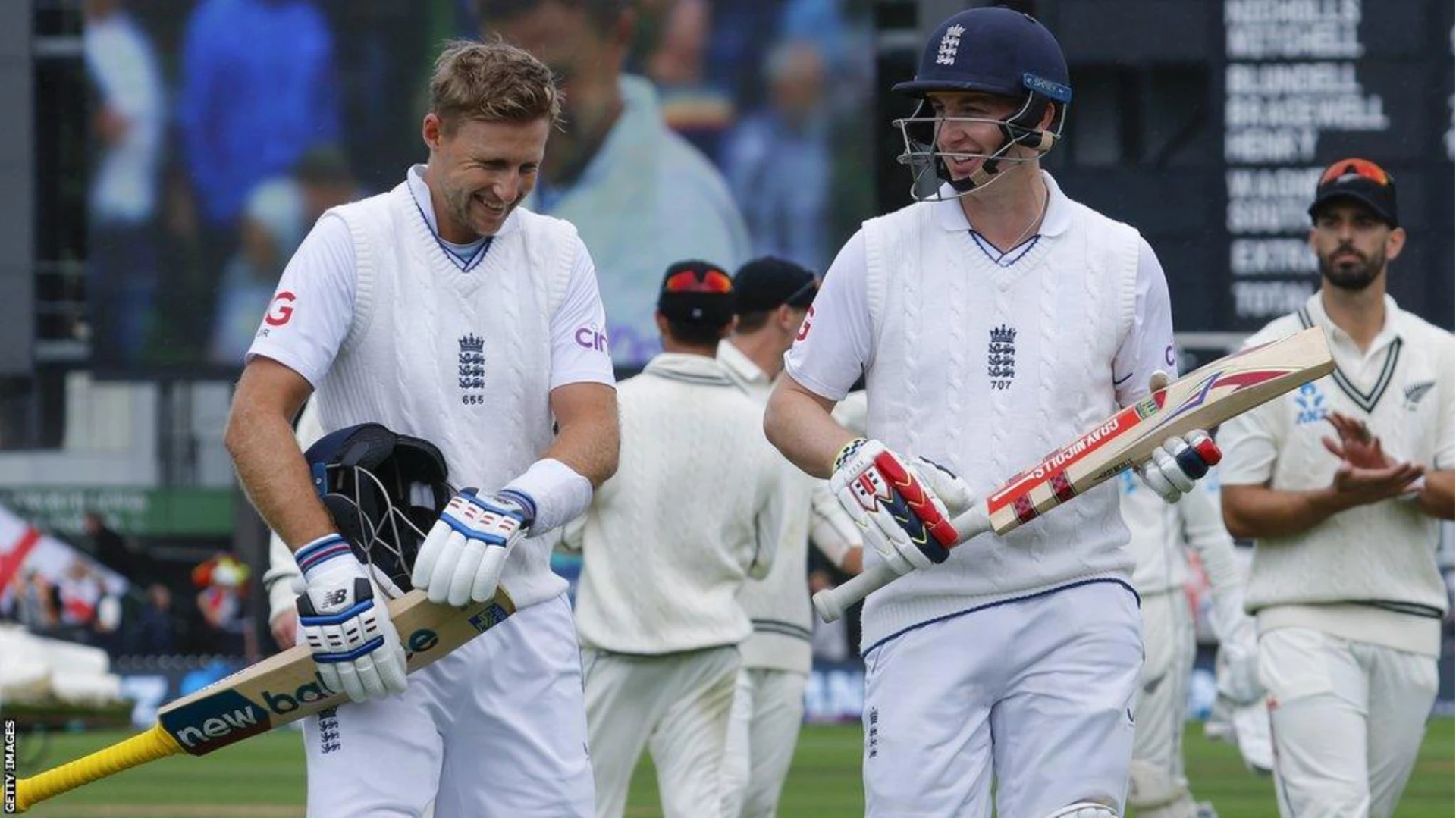
As we cruise into March 2026, the debate surrounding the "King" of English cricket has reached a fever pitch. On one side, we have Joe Root, the seasoned technician who seems destined to chase down Sachin Tendulkar’s all-time run record. On the other, there is Harry Brook, the explosive protégé who has redefined the "Bazball" era with a strike rate that looks more like a T20 video game than traditional Test cricket.
But as the dust settles on the recent Ashes series in Australia (2025–26) and England looks ahead to their home summer against New Zealand and Pakistan, the question remains: who is currently the best in the world?
The Statistical Breakdown: 2025–2026
To understand who holds the crown, we have to look at the cold, hard data from the last 12 months.
Joe Root: The Relentless Run Machine
Joe Root has been in sublime form. In the recently concluded Ashes, Root was the anchor that kept England’s ship from sinking. He finished the series with a massive 160 at the Sydney Cricket Ground (SCG) in January 2026, a knock that reminded everyone why he is currently the No. 1 ranked Test batter in the world.
- Current ICC Ranking: 1st (880 points)
- Recent Form: 160 vs. Australia (Jan 2026), 138 vs. Australia (Dec 2025), and 150 vs. India (July 2025).
- The Edge: Root’s ability to convert starts into massive hundreds is his greatest asset. At 35, he is playing with the wisdom of a veteran and the hunger of a debutant.
Harry Brook: The Aggressor
Harry Brook, currently ranked No. 2 in the world, offers a completely different aesthetic. Brook’s game is built on intimidation. While he had a slightly more turbulent Ashes averaging 39.77 with 358 runs across the five matches his impact is measured in momentum rather than just volume.
- Current ICC Ranking: 2nd (857 points)
- Career Average: A staggering 54.79, maintained over 25+ Tests.
The Edge: Brook’s strike rate of 86.83 in Test cricket is practically unheard of for a middle-order batter. When Brook is at the crease, he forces the opposition into defensive fields almost immediately.
The "King" Factor: Technique vs. Impact
Choosing between Root and Brook is like choosing between a master architect and a demolition expert.
Joe Root is the real king of Test batting if you value longevity and the ability to bat through difficult sessions. He is the only batter in the world right now who consistently finds a way to score on turning tracks in India, bouncy decks in Australia, and swinging conditions at Lord's. He is the "glue" that allows the rest of the lineup to play freely.
Harry Brook, however, is the king of the "New Age." He is arguably the most gifted natural ball-striker England has ever produced. Root himself famously said in late 2025 that Brook is "by far and away the best player in the world at the minute." Brook’s ceiling is higher than Root’s; if he stays fit and focused, he could potentially break every strike-rate record in the history of the format.
The Verdict for 2026
As of March 3, 2026, the crown still rests on Joe Root's head. While Brook is the more exciting player to watch, Root's consistency reclaiming the No. 1 spot after the India series and holding off a late charge from Travis Head proves he is the gold standard.
However, with the upcoming home series against New Zealand starting June 4, 2026, Brook has the perfect opportunity to leapfrog his mentor. If Brook can convert his explosive 80s and 90s into 150+ scores, the transition of power will be complete.
How Harry Brook’s Strike Rate Reshapes the Field
While Joe Root’s mastery lies in his ability to "defuse" a bowler over hours, Harry Brook’s impact is instantaneous. In 2026, he has become the fastest player to reach 3,000 Test runs (by balls faced), shattering records previously held by Adam Gilchrist and Virender Sehwag. This relentless scoring rate doesn't just add runs; it forces opposition captains into defensive "containment" modes that Root rarely triggers.
1. The "Automatic" Deep Protection
Against a traditional anchor, captains keep 7–8 fielders inside the circle to build pressure. Against Brook, this is a luxury they cannot afford.
- The "360-Degree" Spread: Because Brook utilizes the ramp, the scoop, and the reverse sweep (often taking them "Strictly" from his comfort zone), captains are forced to place a Deep Backward Square Leg and a Fine Leg almost immediately.
- The Vacuum Effect: By moving these fielders to the boundary, Brook creates massive gaps in the mid-wicket and cover regions. This allows him to "milk" easy singles even when he isn't hitting boundaries—a nightmare for captains trying to "dry up" the runs.
2. Neutralizing the "New Ball" Pressure
Traditionally, the first 10 overs of a new ball are for survival. Brook flips this script.
- Tactical Charge: As seen in the 2025–26 Ashes, Brook often charges the bowlers (like Scott Boland or Mitchell Starc) within his first five balls.
- Result: This forced the Australian captain to pull the Mid-Off and Mid-On back to the boundary just 15 minutes after the new ball was taken. Once those long-off and long-on fielders are back, the "fear factor" of the new ball vanishes, as the bowler no longer feels they have a "catch-at-the-wicket" protection.
Read More WPL 2026 Top 5 Players Who Delivered Maximum Points Daily
If Joe Root is the king of longevity, Harry Brook is the king of disruption. By forcing the field to spread out early in an innings, Brook actually makes it easier for his partner (often Root himself) to score at the other end. This "symbiotic relationship" is why their partnership at the SCG in January 2026 was so devastating Brook broke the field, and Root picked the gaps.