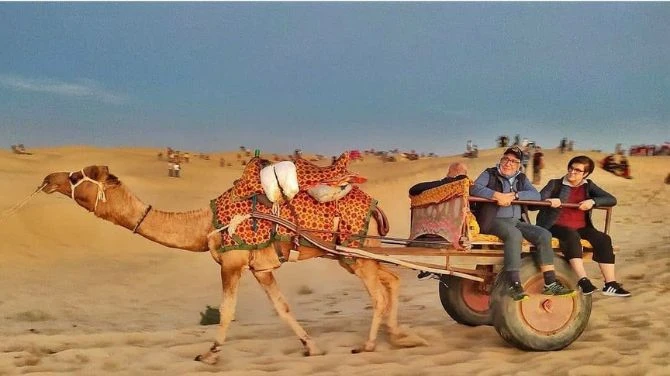
When exploring the vast, golden expanses of the Thar, one realizes that the true essence of Rajasthan isn't found just in its palaces, but in the heart of the dunes. For those seeking the ultimate escape, staying at a Jaisalmer desert camp offers a unique vantage point to witness how the "Golden City" has shaped the cultural and architectural identity of Northern India. This rugged landscape has not only dictated the lifestyle of the brave Rajput warriors but has also fostered a legacy of hospitality that remains unmatched in the modern world.
The Architectural Legacy of the Golden City
Jaisalmer stands as a testament to human ingenuity against the elements. The city’s impact on Rajasthan’s heritage is most visible in its "living fort"—one of the few in the world where a significant population still resides within ancient walls. Built from yellow sandstone, the architecture mirrors the surrounding desert, creating a seamless blend between man-made structures and nature. This "Golden City" aesthetic has influenced design across the state, emphasizing intricate jharokhas (balconies) and stone carvings that act as natural ventilation systems.
Cultural Vibrancy and Folk Traditions
The heritage of Jaisalmer is a rhythmic tapestry of music and dance. The Manganiyar and Langa communities have preserved oral histories through soulful melodies that echo across the dunes. These traditions are not merely performances; they are the lifeblood of the Thar. Visitors today can immerse themselves in this living history by choosing a curated 02 Night 03 Days Couple Package, which often includes intimate folk performances under the starlit sky. This preservation of art has ensured that Rajasthan remains the cultural capital of India, drawing global travelers to its dusty but vibrant corners.
The Gastronomic Identity of the Thar
Desert life requires resilience, and Jaisalmer’s culinary heritage reflects this. The local cuisine, featuring ingredients like Ker Sangri and Bajra, was born out of necessity in an arid climate but has since become a gourmet staple of Rajasthani identity. Perhaps the most iconic way to experience this is through a traditional Dinner at sand dunes jaisalmer, where the simplicity of the ingredients meets the grandeur of the landscape. This outdoor dining tradition celebrates the nomadic spirit of the ancestors while providing a luxurious touch for the modern explorer.
Strategic Importance and the Silk Route
Historically, Jaisalmer served as a vital crossroads for trade between India, Central Asia, and the Middle East. This strategic positioning brought immense wealth to the region, funded the construction of grand havelis, and introduced a blend of cultural influences that are still visible in the local attire and crafts. The city's ability to thrive as a hub of the Silk Route underscores its historical authority and its role in shaping the economic trajectory of Rajasthan.
Preservation in the Modern Era
Today, the impact of Jaisalmer is seen in the global shift toward sustainable and experiential tourism. By maintaining the integrity of its monuments and the authenticity of its desert experiences, Jaisalmer teaches us that heritage is not something to be kept in a museum but something to be lived. Whether it is through a camel safari or a night spent in a luxury tent, the city continues to impart the timeless charm of the desert to every guest who walks its sands.