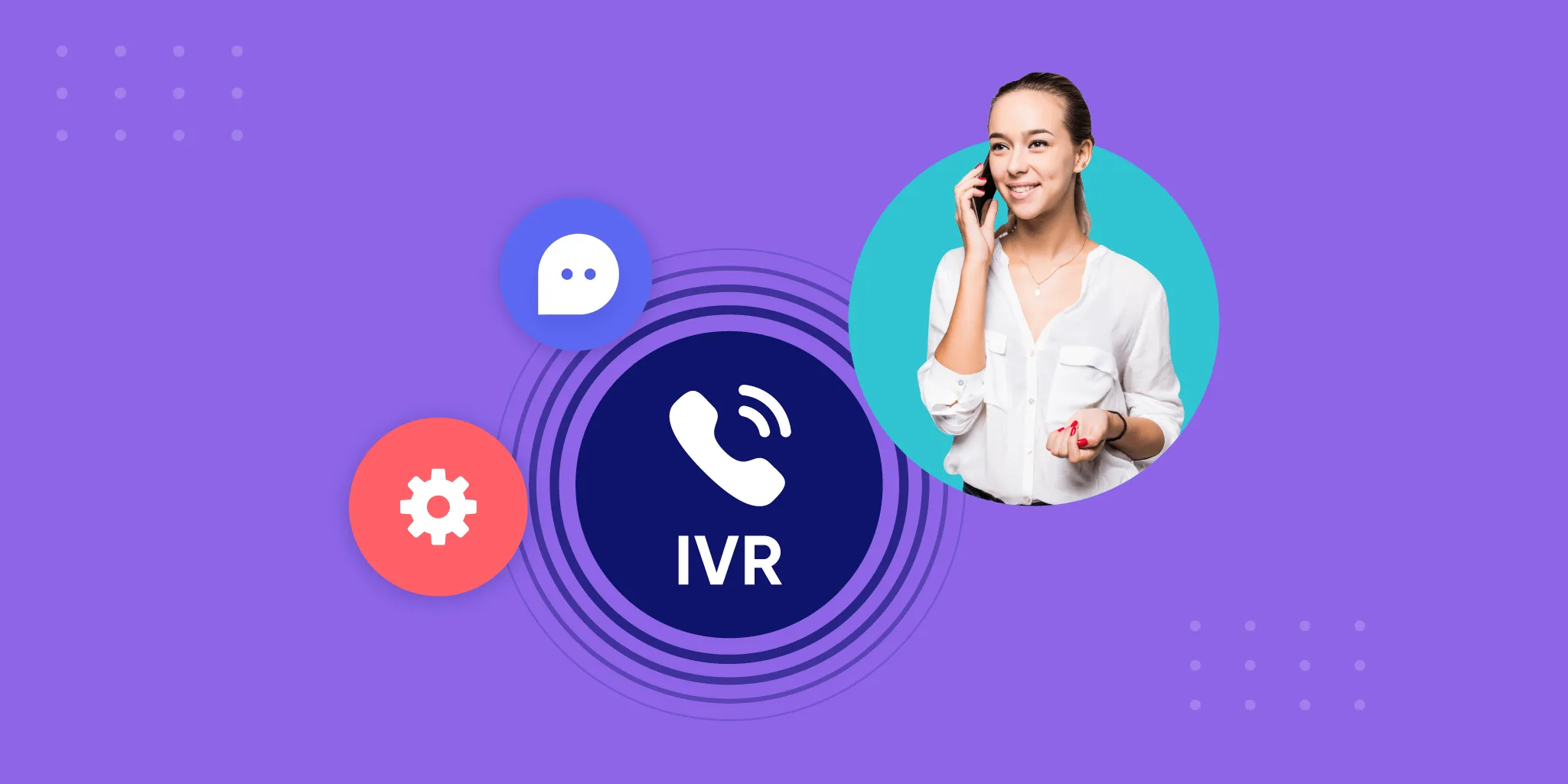
Every missed call is a missed opportunity. As businesses scale, call volumes spike unpredictably, and a single receptionist or small support team simply can't keep up. This is where IVR solutions step in — routing callers to the right department, answering common questions automatically, and keeping your phone line running smoothly 24/7. This guide breaks down how IVR works, what to look for, and how to pick the right IVR services provider for your growth stage.
How Do IVR Solutions Improve Call Handling for Growing Businesses?
IVR solutions improve call handling by automatically sorting incoming calls based on caller input, so customers reach the right team without waiting on hold or getting transferred multiple times. For growing businesses, this means fewer dropped calls, shorter queue times, and consistent service even during peak hours — all without hiring additional front-desk staff for every new customer surge.
Why Do Growing Businesses Need IVR Services?
Growing businesses need IVR services because manual call handling doesn't scale. As customer inquiries multiply, a human-only system creates bottlenecks, inconsistent responses, and lost sales. IVR services for growing businesses standardize the caller experience, handle repetitive queries (billing, hours, order status) instantly, and free up agents to focus on complex, high-value conversations.
Signs Your Business Needs an IVR Service Provider- Call volume regularly exceeds staff capacity
- Customers complain about long hold times or wrong transfers
- Support hours don't match customer expectations (after-hours calls)
- You're expanding to new regions or departments
- Missed calls are directly costing you leads or revenue
What Features Should You Look for in IVR Services for Growing Businesses?
The right features depend on your call volume and complexity, but most growing businesses benefit from multi-level menus, CRM integration, call recording, and analytics dashboards. These features let you track performance, personalize caller journeys, and continuously refine your call flow as your business and customer base evolve.
Must-Have IVR Features- Multi-level call routing — directs callers to the correct team or agent
- Speech recognition / DTMF input — supports voice and keypad responses
- CRM and helpdesk integration — pulls caller history automatically
- Call analytics and reporting — tracks drop-offs, wait times, resolution rates
- Multilingual support — serves diverse customer bases
- Voicemail-to-email or text — ensures no message is lost
How Does an IVR System Actually Work?
An IVR system works by playing a pre-recorded or text-to-speech menu that prompts callers to respond via keypad or voice. Based on the input, the system routes the call, triggers a backend action (like checking an order status), or connects the caller to a live agent. Cloud-based IVR platforms process this in real time, often pulling live data from connected business tools.
Cloud IVR vs Traditional IVR: Which Is Better?
Cloud IVR is generally better for growing businesses because it requires no hardware investment, scales instantly with call volume, and updates in real time. Traditional on-premise IVR still suits businesses with strict data residency requirements or existing legacy infrastructure, but it's costlier to maintain and slower to modify.
FactorCloud IVRTraditional IVRSetup costLow, subscription-basedHigh upfront hardware costScalabilityInstant, on-demandRequires physical upgradesMaintenanceHandled by providerIn-house IT team neededDeployment timeDaysWeeks to monthsRemote accessFullLimitedBest forGrowing/distributed teamsLarge enterprises with legacy systemsHow Do You Choose the Right IVR Services Provider?
Choosing the right IVR services provider comes down to matching their platform capabilities with your actual call patterns and growth plans. Evaluate uptime guarantees, integration options, pricing transparency, and customer support responsiveness before signing a contract — a provider that looks cheap upfront can become expensive if scaling or support is poor.
Questions to Ask Before Hiring an IVR Services Provider- What's your average system uptime, and is it guaranteed in writing?
- Which CRMs, helpdesks, or telephony systems do you integrate with?
- Can the IVR flow be customized without developer support?
- What does onboarding and migration from our current system look like?
- Are call recordings and data stored securely and compliant with regulations?
What Is the Cost of IVR Solutions for Small and Growing Businesses?
IVR solution costs typically range from a few hundred to a few thousand dollars per month, depending on call volume, number of lines, and feature complexity. Basic cloud IVR plans for small teams are often priced per user or per minute, while enterprise-grade systems with AI routing and deep CRM integration carry higher, usage-based pricing.
How Can IVR Solutions Improve Customer Experience and Reduce Wait Times?
IVR solutions improve customer experience by giving callers instant self-service options and predictable routing, which reduces perceived and actual wait times. Features like callback scheduling (instead of holding), skill-based routing, and proactive status updates let customers get answers faster without feeling stuck in a queue — a key driver of customer retention.
Can IVR Solutions Integrate with CRM and Helpdesk Tools?
Yes, most modern IVR solutions integrate directly with CRM and helpdesk platforms, pulling customer history, order details, or ticket status the moment a call connects. This integration lets agents greet callers by name and context, reducing call handling time and eliminating the need for customers to repeat information.
What Are Common Mistakes Businesses Make When Setting Up IVR?
The most common mistake is building overly complex menus with too many layers, which frustrates callers and increases abandonment rates. Other frequent errors include ignoring call analytics, failing to update menu options as the business changes, and not offering a quick path to a live agent for urgent issues. For context on consumer protections around automated call systems, the FCC's consumer guides (fcc.gov/consumer-guides) outline relevant telecommunications standards businesses should stay aware of.
Is IVR Still Relevant in the Age of AI Chatbots?
IVR remains highly relevant because phone calls are still a preferred channel for urgent, complex, or trust-sensitive interactions — especially in banking, healthcare, and logistics. Modern IVR solutions now incorporate AI-driven natural language understanding, effectively merging the reliability of phone systems with the intelligence of conversational AI.
Final Thoughts
For growing businesses, IVR solutions aren't just a cost-saving tool — they're a direct lever for customer satisfaction and operational scale. Whether you're evaluating IVR services for growing business needs or comparing providers for the first time, prioritize flexibility, integration, and measurable call analytics. The right IVR services provider should feel like an extension of your team, adapting as your call volume and customer expectations grow.