Accessing healthcare without travelling to a clinic has become increasingly convenient for people with busy schedules. Home healthcare services allow patients to receive certain treatments in a familiar environment, provided they are medically appropriate and administered by qualified healthcare professionals. One such option is intravenous (IV) therapy, which delivers fluids and other prescribed substances directly into the bloodstream.
What Is IV Drip Therapy?
IV drip therapy is a medical procedure in which fluids, electrolytes, vitamins or prescribed medications are delivered directly into a vein through a small intravenous catheter. Unlike oral supplements or medications, which pass through the digestive system, intravenous administration delivers substances directly into the bloodstream.
Healthcare professionals may recommend IV therapy when a patient requires fluid replacement or when a specific treatment is more appropriately administered intravenously. The type of solution and its contents depend on the individual's medical condition and clinical assessment.
Potential Benefits of IV Drip Therapy
IV therapy can serve specific medical purposes when recommended by a healthcare professional. Some potential benefits include:
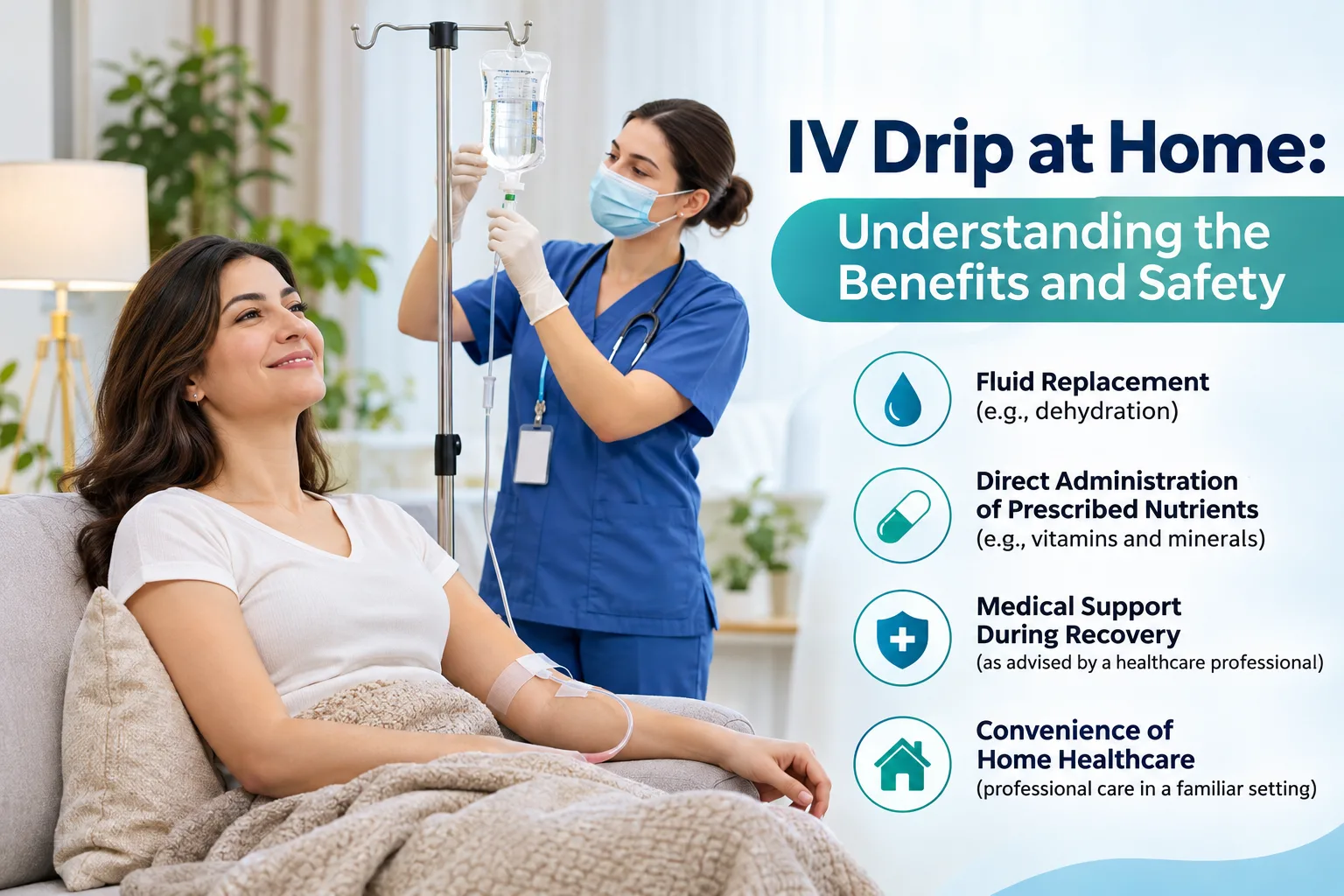
1. Fluid Replacement
Intravenous fluids can help replace lost fluids in certain situations, such as dehydration caused by vomiting, diarrhoea or inadequate fluid intake. The type and amount of fluid should be determined according to the patient's condition.
2. Direct Administration of Prescribed Nutrients
Certain vitamins and minerals can be administered intravenously when there is a medical reason to use this route. This may be considered for individuals who cannot adequately absorb or take specific nutrients orally.
3. Medical Support During Recovery
In some clinical situations, IV fluids or prescribed medications may form part of a patient's recovery plan. However, IV therapy is not a universal recovery treatment, and its suitability depends on individual medical needs.
4. Convenience of Home Healthcare
When clinically appropriate, receiving treatment at home can reduce the need to travel to a healthcare facility. It may be particularly convenient for people with mobility limitations or demanding schedules.
It is important to understand that IV therapy does not automatically improve energy, strengthen immunity or provide general wellness benefits. Its effectiveness depends on the treatment, the patient's health and the medical reason for administering it.
How Does Home IV Therapy Work?
A home IV therapy appointment should follow a structured medical process to protect patient safety.
Step 1: Initial Assessment
A qualified healthcare professional reviews the patient's medical history, current symptoms, medications and relevant health conditions. This assessment helps determine whether intravenous treatment is appropriate.
Step 2: Treatment Recommendation
If IV therapy is suitable, the healthcare professional determines the appropriate fluid or prescribed solution based on the patient's clinical needs. Not everyone requires IV treatment, and alternative options may be more appropriate.
Step 3: Preparation and Administration
The healthcare professional prepares the equipment using appropriate infection-control procedures. A small catheter is inserted into a suitable vein, allowing the prescribed solution to enter the bloodstream.
Step 4: Monitoring
The patient is monitored during the procedure for discomfort or possible adverse reactions. The healthcare professional also checks the IV site for signs of swelling, irritation or other complications.
Step 5: Aftercare Guidance
After the treatment, the healthcare professional provides relevant aftercare instructions and explains any symptoms that may require medical attention.
Safety Considerations Before Receiving IV Drip Therapy
Although IV therapy is commonly used in medical settings, it is not completely risk-free. Receiving treatment at home does not remove the need for professional assessment, proper equipment and clinical supervision.
Some possible risks include:
- Infection: Poor hygiene or incorrect catheter handling can introduce bacteria into the bloodstream or IV site.
- Vein irritation: The insertion site may become painful, red or inflamed.
- Fluid overload: Receiving excessive IV fluids can be dangerous, particularly for people with certain heart or kidney conditions.
- Allergic reactions: Some ingredients or medications may cause an adverse reaction.
- Electrolyte imbalance: Inappropriate fluid composition or administration can affect the body's electrolyte levels.
Patients should disclose existing medical conditions, allergies, pregnancy, current medications and previous reactions to IV treatments before the procedure.
If severe breathing difficulty, chest pain, facial swelling or another serious reaction occurs, seek emergency medical assistance immediately.
Who May Be Suitable for Home IV Therapy?
Home IV therapy may be considered for individuals who have a medical indication for intravenous treatment and are assessed as suitable for care outside a hospital or clinic.
Depending on the clinical situation, this may include people who:
- Require prescribed IV fluids for dehydration.
- Need medication that must be administered intravenously.
- Have difficulty taking certain treatments orally.
- Have been assessed by a healthcare professional and approved for home-based treatment.
However, people with severe dehydration, significant breathing difficulties, chest pain, confusion or other serious symptoms may require urgent hospital assessment rather than home treatment.
Choosing a Professional Home IV Drip Service in Dubai
When considering IV drip services in Dubai, patients should prioritise medical supervision and safety rather than convenience alone.
Before booking, consider whether the provider:
- Uses qualified and appropriately licensed healthcare professionals.
- Conducts a medical assessment before recommending treatment.
- Explains the ingredients and purpose of the prescribed IV solution.
- Follows proper hygiene and infection-control procedures.
- Monitors patients during treatment.
- Provides clear guidance about possible side effects and follow-up care.
For individuals considering iv drip at home, Dr Plus Home Health Care Services provides information about its IV drip service in Dubai. Patients should discuss their medical needs with the healthcare team to determine whether the service is appropriate for them.
Final Thoughts
IV drip therapy can be a useful medical treatment when there is a clear clinical reason for administering fluids, nutrients or prescribed medications intravenously. However, it is not necessary or suitable for everyone, and it should never be treated as a substitute for a proper medical assessment.
Whether considering treatment at a clinic or through a home healthcare provider, patients should prioritise qualified professionals, individual assessment and appropriate monitoring. Making an informed decision helps ensure that convenience does not come at the expense of safety.