
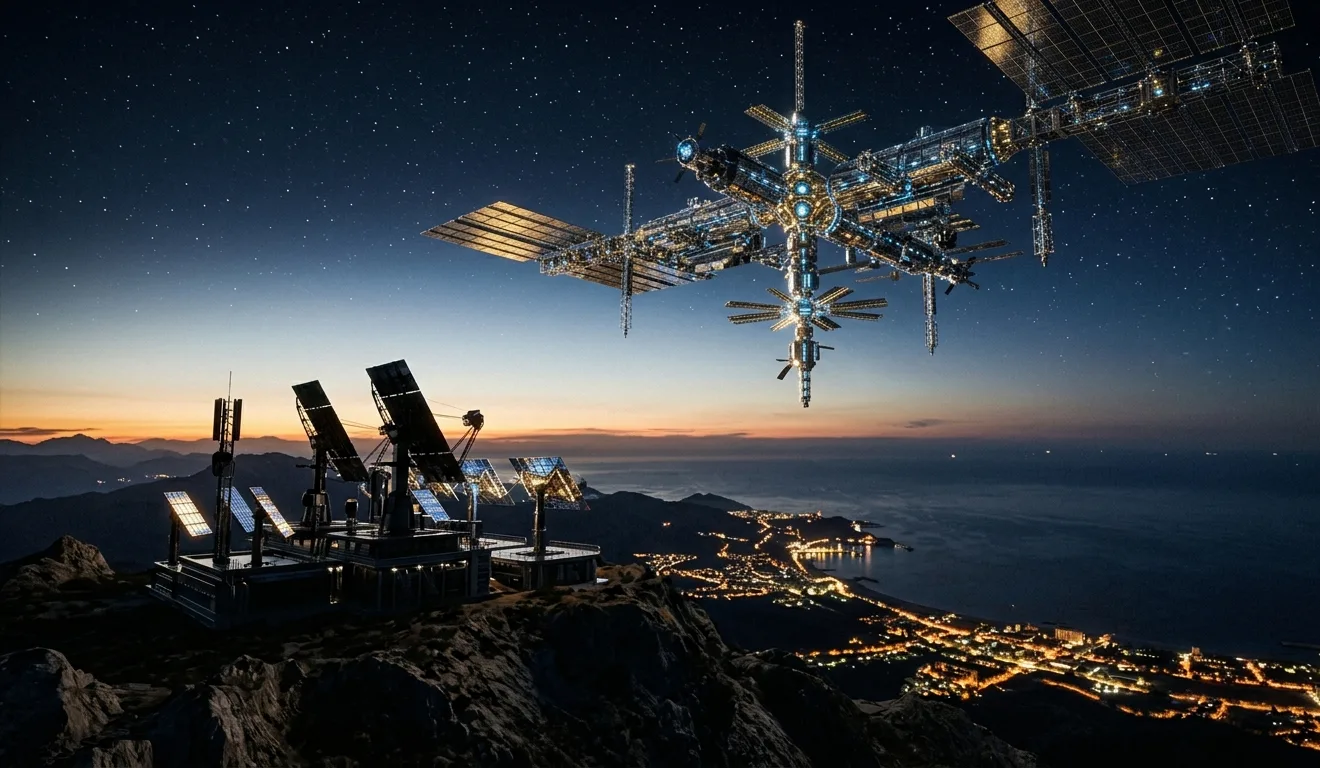
Science fiction has always evolved alongside humanity’s ambitions. As our understanding of technology grows and our reach extends beyond Earth, stories about the future become more grounded, more complex and more emotionally engaging. In recent years, one particular theme has gained significant attention in modern science fiction: the orbital space station as a central hub of survival, innovation and conflict.
Within this growing subgenre, ISS Stargraber by Nicolas Pollet stands out as a powerful example of how space exploration fiction can combine realism, suspense and cinematic storytelling into one unforgettable narrative. Rather than treating space as a distant fantasy, the novel brings it closer to human experience, where technology, politics and emotion collide in unexpected ways.
In this blog, we will explore why orbital space station stories are becoming increasingly popular, how ISS Stargraber contributes to this rise and why readers are drawn to the vision of a visionary sci-fi author like Nicolas Pollet.
The Growing Popularity of Orbital Space Station Stories
Over the last decade, science fiction has shifted from purely distant galaxies and alien civilizations to more grounded and realistic concepts. One of the strongest examples of this shift is the rise of stories centered around an orbital space station.
Why is this happening?
First, space stations already exist in real life. The International Space Station has shown humanity that long-term life in orbit is possible. As a result, readers find orbital settings more believable and relatable.
Second, space stations naturally create tension. They are enclosed environments floating in the vast emptiness of space. This isolation makes them perfect settings for suspense, political drama and survival stories.
Third, orbital infrastructure plays a growing role in real-world space exploration. From satellite networks to research stations, humanity is already relying on orbital systems more than ever.
Because of these factors, readers are increasingly drawn to stories that take place in orbit rather than distant planets. These narratives feel closer to reality while still offering imaginative possibilities.
This is where ISS Stargraber enters the conversation as a standout example of modern science fiction storytelling.
ISS Stargraber: A Bold Vision of the Future of Space Exploration
At the heart of ISS Stargraber lies a powerful idea. Humanity has built a massive orbital station designed to solve Earth’s energy crisis. This station collects solar energy in space and transmits it back to Earth, providing clean and unlimited power.
At first, this concept appears to represent the peak of human achievement in space exploration. It symbolizes unity, progress and scientific advancement.
However, as the story unfolds, this achievement begins to unravel.
A catastrophic incident occurs aboard the station, followed by strange electromagnetic disturbances affecting Earth. Suddenly, the system that once represented hope becomes a source of global uncertainty.
This shift is what makes the story so compelling. It shows that technological progress always carries hidden risks, especially when humanity becomes dependent on systems operating beyond Earth.
Rather than presenting space as a distant frontier, ISS Stargraber presents it as an integrated part of human survival.
This perspective reflects the future direction of real-world space development, where orbital infrastructure may play a key role in energy, communication and defense.
Nicolas Pollet: A Visionary Sci-Fi Author with a Cinematic Approach
A major reason ISS Stargraber resonates with readers is the creative vision of Nicolas Pollet. As a visionary sci-fi author, Pollet does not simply focus on technical accuracy or speculative science. Instead, he focuses on experience, emotion and immersion.
His storytelling style is deeply influenced by visual arts, photography and cinematic composition. This background allows him to build scenes that feel vivid, structured and emotionally engaging.
Rather than overwhelming readers with technical jargon, he uses clarity and movement. Each scene unfolds like a sequence in a film, making the reading experience highly immersive.
This cinematic storytelling approach is especially effective in a novel centered around an orbital space station, where visual imagination plays a key role in understanding scale and atmosphere.
Because of this, readers often feel as though they are watching events unfold rather than simply reading about them.
Why Orbital Space Stations Create Perfect Sci-Fi Settings
One of the reasons orbital space station stories are rising in popularity is their natural narrative potential. A station in orbit provides a unique combination of isolation, dependency and technological complexity.
In the case of ISS Stargraber, the station is not just a backdrop. It is a living system that affects the entire planet.
This creates multiple storytelling advantages:
1. Isolation Creates Tension
Characters are physically separated from Earth, which limits escape options and increases suspense.
2. Dependency Raises Stakes
When Earth depends on the station for energy, any malfunction becomes a global crisis.
3. Limited Space Intensifies Drama
Confined environments force characters into close interactions, increasing emotional and psychological pressure.
4. Technical Systems Introduce Mystery
Complex systems can fail, be manipulated or behave unpredictably, adding layers of intrigue.
In ISS Stargraber, all of these elements combine to create a high-stakes narrative that keeps readers engaged from beginning to end.
The Science Fiction Thriller Structure
Beyond its setting, ISS Stargraber succeeds because it functions as a strong sci-fi thriller. From the opening incident, the story introduces urgency and uncertainty.
A sudden disaster occurs on the orbital station. Lives are lost. Communication systems fail. And soon after, Earth begins experiencing unusual electromagnetic effects.
These events are not immediately explained, which creates curiosity and tension.
As the investigation progresses, layers of complexity are revealed:
- Possible sabotage within the station.
- Hidden scientific experiments.
- Political pressure from global organizations.
- Military involvement in orbital operations.
- Unexplained system behavior affecting Earth.
Each discovery leads to new questions rather than immediate answers. This structure keeps readers constantly engaged.
The pacing is carefully controlled. It balances fast-moving action with investigative depth, ensuring that the story never feels static.
This is a key reason why ISS Stargraber stands out in modern space exploration fiction.
Earth and Orbit: A Connected System
A central theme in ISS Stargraber is the relationship between Earth and its orbital systems. Instead of treating space as separate from human life, the novel shows how deeply interconnected both environments are.
The orbital station is not just an external structure. It directly influences Earth’s energy systems, political decisions and environmental stability.
This connection highlights an important idea: space exploration is no longer about distance. It is about integration.
As humanity expands into orbit, Earth becomes increasingly dependent on systems beyond its atmosphere. This dependency creates both opportunity and risk.
The novel uses this concept to explore how fragile global systems can become when centralized in space.
John Desmond: Humanity Inside a Technological Crisis
While the scale of ISS Stargraber is global, the emotional center of the story remains personal.
John Desmond, a former Interforce officer, represents the human side of technological progress. After experiencing personal loss, he withdraws from active service and isolates himself from the world.
However, when the crisis at the orbital station unfolds, he is forced back into action.
This return is not simple or heroic in a traditional sense. Instead, it is shaped by emotional struggle, hesitation and unresolved grief.
As Desmond investigates the events surrounding the station, he uncovers layers of truth that challenge both his understanding of the situation and his personal beliefs.
This dual narrative, external crisis and internal healing add emotional depth to the story.
It ensures that ISS Stargraber is not only about systems and technology but also about human resilience.
Cinematic Storytelling That Enhances Space Exploration
One of the most distinctive features of ISS Stargraber is its cinematic storytelling approach.
Instead of relying heavily on exposition, Nicolas Pollet focuses on visual clarity and scene construction. This makes complex environments like orbital stations easier to imagine.
Readers experience:
- Wide, atmospheric shots of Earth from orbit.
- Tight, intense interior scenes within the station.
- Fast-paced sequences during system failures.
- Emotional close-ups during character interactions.
This visual structure enhances immersion and makes the story feel dynamic.
It also strengthens the impact of space exploration as a theme. Readers can visualize humanity’s expansion into orbit in a way that feels both realistic and cinematic.
The Future of Space Exploration in Fiction
Modern science fiction is increasingly focused on realistic interpretations of space exploration. Instead of distant galaxies or abstract civilizations, writers are exploring near-future scenarios based on current technological trends.
ISS Stargraber fits perfectly into this movement.
It reflects ideas that are already being explored in real life:
- Orbital energy systems.
- Space-based infrastructure.
- Long-term space habitation.
- Satellite dependency.
- Global coordination in orbit.
By building on these concepts, the novel creates a future that feels possible rather than purely imaginary.
This realism is one of the reasons readers connect so strongly with the story.
Why Readers Are Drawn to ISS Stargraber
There are several reasons why ISS Stargraber continues to attract attention among science fiction readers:
- It features a believable orbital space station concept.
- It combines emotional storytelling with high-stakes tension.
- It uses cinematic storytelling for strong immersion.
- It explores the future of space exploration in a grounded way.
- It delivers suspense through its sci-fi thriller structure.
- It is written by a visionary sci-fi author with a unique style.
Together, these elements create a reading experience that feels both entertaining and thought-provoking.
Final Thoughts
The rise of orbital space station stories marks an important shift in science fiction. Readers are no longer only interested in distant futures; they want stories that feel connected to real-world possibilities.
ISS Stargraber by Nicolas Pollet represents this shift perfectly.
Through its gripping narrative, cinematic storytelling and emotionally grounded characters, the novel explores what happens when humanity reaches beyond Earth and builds systems that shape its survival.
As both a visionary sci-fi author and a storyteller focused on immersion, Pollet delivers a novel that stands at the intersection of imagination and realism.
Ultimately, ISS Stargraber is more than a space station story. It is a reflection on the future of space exploration, the risks of technological dependence and the human emotions that remain constant even in the vast silence of orbit.
For readers seeking a powerful, modern science fiction experience, this is a journey worth taking.