
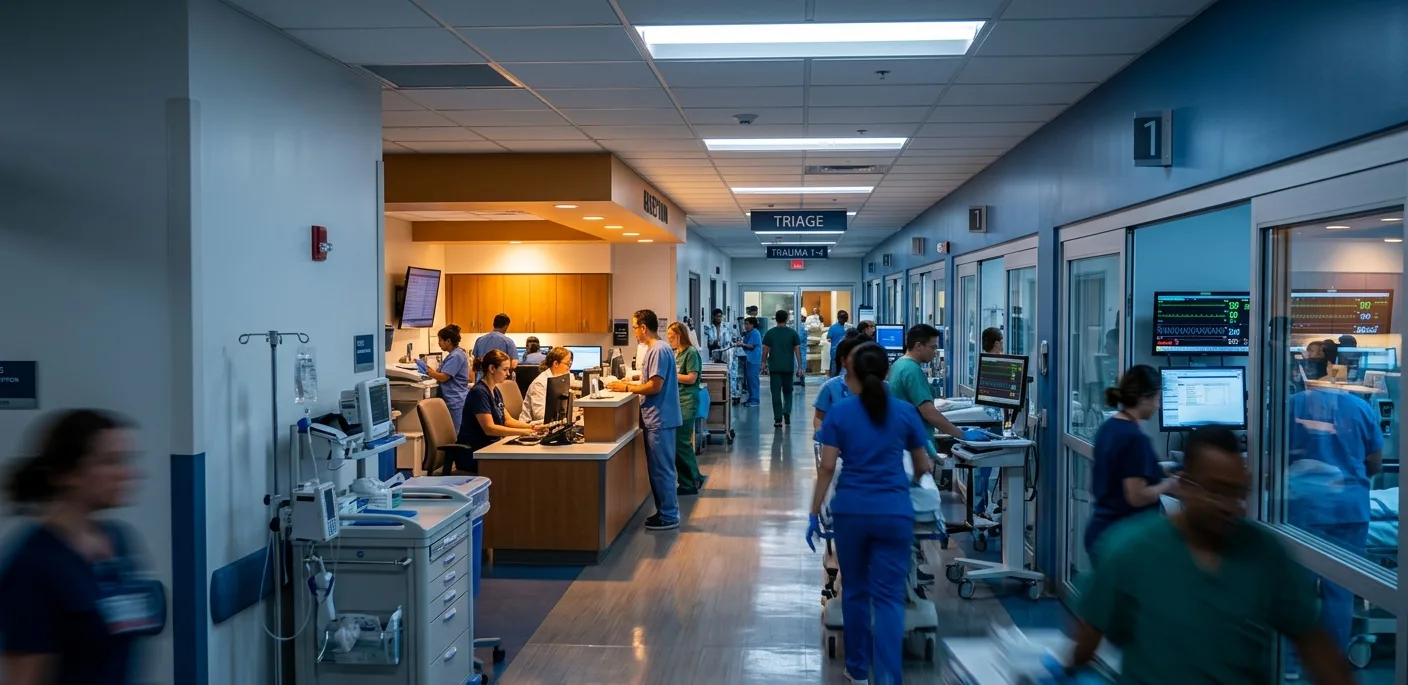
If you have ever stepped into a hospital emergency department or even seen one on television, you may think you understand what happens there. However, the truth is far more complex, unpredictable and emotionally layered than most people realize. Life in the emergency room is not simply about treating injuries or stabilizing patients. Instead, it is a constant flow of human experiences, decisions made under pressure and moments that shift between humor, tension, tragedy and relief in the span of seconds.
In modern medicine, the emergency room has become one of the most important and demanding environments in healthcare. It is where uncertainty arrives first, where chaos is managed in real time and where physicians must think, act and adapt without hesitation.
That reality is vividly captured in There Is A Bomb In My Vagina, the compelling book by Craig Troop, M.D. Based on 45 years of clinical experience, the book presents real medical stories drawn directly from emergency medicine and anesthesiology practice. Through these stories, readers gain an unfiltered understanding of what life in the emergency room truly feels like from the inside.
Understanding Life in the Emergency Room Today
Modern emergency rooms are far more advanced than they were decades ago. Technology has improved. Medical protocols have evolved. Diagnostic tools are faster and more precise.
However, despite these advancements, one thing has not changed: unpredictability.
Life in the emergency room still revolves around the unexpected. Patients do not arrive on a schedule. Conditions do not follow predictable patterns. Emergencies do not wait for convenient timing.
Instead, emergency departments function as the frontline of healthcare. Everything from minor injuries to life-threatening trauma passes through their doors.
As a result, physicians must constantly shift focus. They move from one case to another, often with little time to process the emotional or clinical weight of each situation.
This environment creates a unique rhythm, fast, intense and emotionally charged.
And within that rhythm, countless stories unfold every day.
The Human Side of Emergency Medicine
While modern medicine is highly technical, life in the emergency room remains deeply human.
Every patient brings more than just symptoms. They bring fear, confusion, urgency and sometimes hope. Families arrive anxious. Staff members work under pressure. Decisions must be made quickly, often with incomplete information.
Because of this, emergency medicine is not just about science; it is about human connection under stress.
Doctors must:
- communicate clearly in high-pressure situations
- make rapid decisions with limited data
- manage emotional responses from patients and families
- and maintain focus despite constant interruptions
This balance between technical precision and emotional awareness defines modern emergency care.
In There Is A Bomb In My Vagina, Dr. Craig Troop captures this balance through real medical stories that reflect both the clinical and emotional sides of emergency medicine.
Why Life in the Emergency Room Feels So Unpredictable
One of the most defining features of life in the emergency room is unpredictability.
Unlike scheduled medical visits, emergency care operates without structure. Anything can happen at any time.
For example, a routine shift might include:
- a minor injury case
- followed by a critical trauma
- followed by a confusing or unusual patient complaint
- followed by a sudden life-saving emergency
These rapid transitions require physicians to adapt instantly.
There is no time to prepare emotionally. Instead, doctors rely on training, experience and instinct.
This constant unpredictability is what makes emergency medicine both challenging and unforgettable.
It is also what creates the foundation for many of the real medical stories shared in Dr. Troop’s book.
Medical Humor in a Serious Environment
At first glance, humor may seem out of place in emergency medicine. However, in reality, it plays an important role.
Within life in the emergency room, humor often emerges naturally, not as entertainment, but as a coping mechanism.
Medical teams may use humor to:
- release emotional tension after stressful cases
- maintain mental resilience during long shifts
- strengthen teamwork under pressure
- and navigate emotionally difficult situations
Importantly, this humor is not directed at patients. Instead, it arises from the unexpected nature of medical situations and human behavior.
For example, misunderstandings, unusual patient descriptions or unpredictable events can create moments that feel absurd in hindsight.
In There Is A Bomb In My Vagina, these moments are presented honestly as part of real clinical life. They show that even in high-pressure environments, humanity finds ways to cope.
The Tragic Side of Emergency Medicine
While humor exists in emergency rooms, it always coexists with serious and sometimes heartbreaking moments.
Emergency physicians regularly encounter:
- life-threatening trauma
- sudden illness
- critical interventions
- and emotionally charged family situations
These experiences are emotionally demanding and often leave lasting impressions on medical professionals.
Modern emergency medicine requires doctors to manage not only patients but also their own emotional responses.
They must remain composed during crisis situations while processing outcomes that can be deeply affecting.
This emotional duality is a defining characteristic of life in the emergency room.
It is also why real medical stories often carry both emotional weight and complexity.
The Evolution of Emergency Medicine in Modern Healthcare
Over the past several decades, emergency medicine has evolved significantly.
Advancements include:
- improved imaging technology
- faster diagnostic tools
- better trauma protocols
- enhanced communication systems
- and more specialized emergency care teams
Despite these improvements, the core experience of life in the emergency room remains unchanged.
Patients still arrive unexpectedly. Emergencies still require immediate action. Emotional intensity still defines the environment.
What has changed is the efficiency and capability of medical response.
However, no technology can remove unpredictability from human health.
That is why emergency medicine remains one of the most dynamic fields in healthcare.
Real Medical Stories From Decades of Practice
One of the most powerful aspects of There Is A Bomb In My Vagina is its foundation in real medical stories.
Craig Troop M.D., draws from 45 years of experience across emergency medicine and anesthesiology to share moments that are:
- unexpected
- emotional
- humorous
- and deeply human
These are not fictionalized accounts. They are real experiences that reflect the unpredictable nature of life in the emergency room.
What makes these stories compelling is their authenticity. Readers are not simply entertained; they are invited into real clinical environments where decisions have real consequences.
Each story offers a glimpse into what healthcare professionals actually experience behind closed doors.
Why Readers Are Fascinated by Emergency Room Life
There is a natural curiosity about hospitals and emergency care. Most people experience healthcare only during moments of vulnerability, so they rarely see the full picture.
This creates a strong interest in life in the emergency room.
Readers are drawn to these stories because they:
- reveal hidden aspects of healthcare
- show how doctors think under pressure
- highlight emotional resilience
- and expose the unpredictability of medical situations
At the same time, these stories often reflect broader human truths about fear, courage and adaptability.
This is why medical storytelling continues to resonate with both healthcare professionals and general audiences.
Dr. Craig Troop’s Perspective on Emergency Medicine
The credibility of these stories comes from experience.
Dr. Craig Troop spent decades working in emergency medicine before transitioning into anesthesiology, giving him a rare dual perspective on clinical care.
Across 45 years of practice, he witnessed thousands of real medical stories that shaped his understanding of medicine and humanity.
His perspective reflects:
- the urgency of emergency care
- the precision of anesthesia practice
- and the emotional depth of long-term patient interactions
This combination allows him to tell stories that feel both medically accurate and emotionally real.
The Emotional Rhythm of Emergency Rooms
Modern emergency rooms operate on a unique emotional rhythm.
Within a single shift, physicians may experience:
- urgency during trauma cases
- relief after successful treatment
- stress during critical decisions
- humor during unexpected moments
- and emotional weight after difficult outcomes
This constant emotional fluctuation defines life in the emergency room.
Doctors learn to move through these emotions quickly while maintaining focus on patient care.
Over time, this rhythm becomes second nature but it never becomes easy.
Dr. Troop captures this emotional flow in his storytelling, showing how medicine is as much about emotional endurance as it is about clinical skill.
Why “There Is A Bomb In My Vagina” Stands Out
Among medical memoirs, There Is A Bomb In My Vagina stands out because it does not attempt to sanitize or dramatize reality.
Instead, it presents real medical stories exactly as they were experienced, complex, unpredictable, emotional and sometimes humorous.
The book reflects:
- the unpredictability of emergency medicine
- the emotional complexity of patient care
- the humor found in unexpected situations
- and the seriousness of life-saving decisions
Most importantly, it captures the humanity at the center of modern medicine.
Readers are not just observing stories; they are experiencing life in the emergency room alongside the physician.
The Lasting Impact of Emergency Medicine Stories
Stories from emergency medicine often stay with physicians for life.
This is because they represent:
- moments of high emotional intensity
- rapid decision-making under pressure
- and encounters with the extremes of human experience
These experiences shape how doctors view medicine, patients and even life outside the hospital.
In There Is A Bomb In My Vagina, these lasting impressions are shared in a way that allows readers to understand the emotional reality behind medical practice.
Each story becomes more than an account; it becomes a reflection of human resilience.
Final Thoughts
Modern emergency medicine is a world defined by unpredictability, urgency and emotional depth. Life in the emergency room is not just about treating illness; it is about navigating human experience at its most intense moments.
Through decades of practice, Craig Troop M.D., has captured these moments in the form of real medical stories that form the foundation of There Is A Bomb In My Vagina.
The book offers readers a rare opportunity to step inside the emergency room and experience medicine as it truly is: fast, unpredictable, emotional and deeply human.
Ultimately, it reminds us that behind every medical case is a story and behind every story is a human being.