Organizations implementing an Environmental Management System (EMS) aligned with ISO 14001:2026 should ensure that audit processes are conducted by competent and trained auditors. Auditor training is not only a compliance requirement but also a strategic function that supports environmental performance, risk management, and continual improvement. A structured approach to ISO 14001:2026 auditor training helps organizations maintain audit consistency and readiness for certification assessments.
What ISO 14001:2026 Auditor Training Should Include
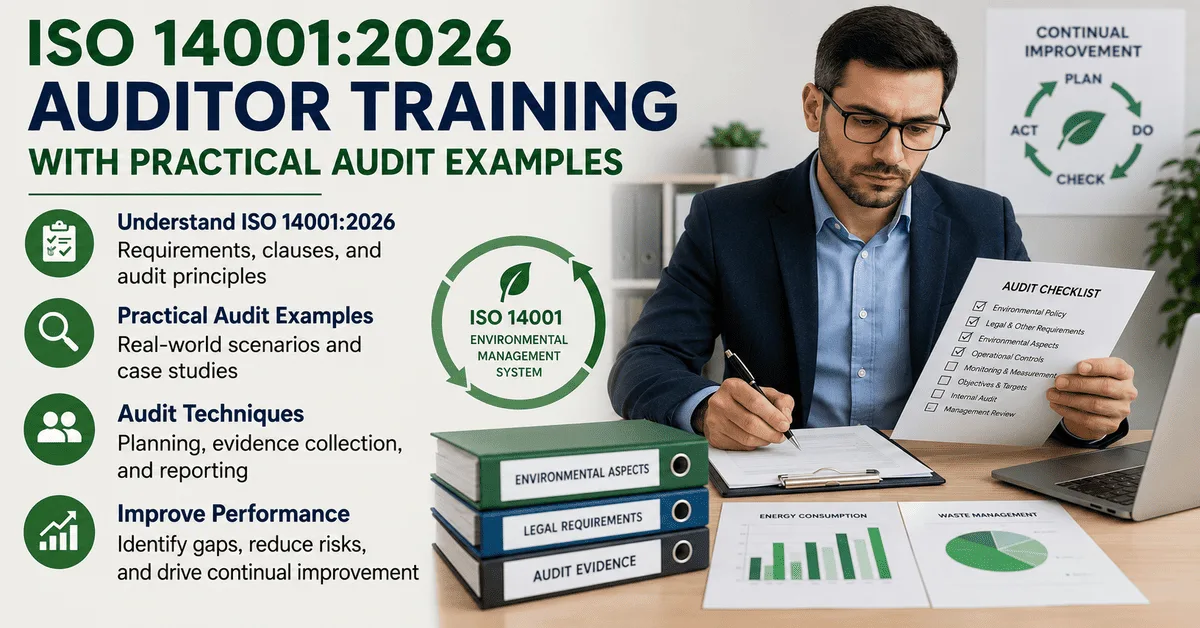
An effective auditor training program should provide a clear understanding of audit principles, ISO clause interpretation, and evidence-based assessment techniques. It should include audit planning, checklist preparation, conducting audits, reporting findings, and follow-up verification.
Training should also include interpretation of environmental aspects, lifecycle perspective, and compliance obligations. In addition, it should incorporate practical elements such as case-based scenarios where learners evaluate operational controls and environmental risks. This ensures that auditors can apply knowledge in real audit situations rather than relying only on theoretical understanding.
Practical Audit Examples Included in Training
One of the major advantages of advanced Auditor Training is the use of practical audit examples and case studies. These examples help participants understand how audits are performed in real workplace situations.
For example, during an internal audit of a manufacturing facility, auditors may verify whether hazardous waste is stored according to documented procedures. They may review waste disposal records, interview employees, inspect storage areas, and evaluate whether spill control measures are properly implemented.
Another practical example involves evaluating environmental objectives. Auditors may check whether the organization has measurable targets for reducing energy consumption, water usage, or emissions. Evidence such as monitoring reports, KPI records, and management review minutes is examined to confirm implementation.
Training programs also include examples of identifying nonconformities. For instance, if calibration records for emission monitoring equipment are missing, auditors learn how to document the issue, classify the nonconformity, and recommend corrective actions.
These practical audit scenarios improve auditor confidence and help professionals perform audits more effectively by enabling them to collect objective audit evidence and support reliable audit conclusions.
These types of real audit situations highlight why structured auditor training is essential for developing practical auditing skills.
What to Consider When Choosing Training
When selecting a training program, it should include:
- Comprehensive coverage of ISO 14001:2026 requirements
- Practical audit examples and case-based learning
- Assessment and certification components
- Supporting resources such as templates and audit checklists
At this stage, professionals typically look for a structured ISO 14001:2026 Auditor Training program that combines practical audit examples, certification, and industry-relevant content. Such programs are designed to build audit competency and support real-world implementation, making them suitable for both beginners and experienced professionals.
Why Organizations Should Focus on Auditor Training
Organizations should invest in ISO 14001:2026 auditor training to improve audit effectiveness and ensure compliance readiness. Trained auditors help identify gaps early, reduce environmental risks, and support regulatory compliance. This contributes to better environmental performance and strengthens the organization’s credibility during external audits.
From a professional perspective, individuals who complete structured auditor training are better prepared for roles in environmental management, compliance, and sustainability. This makes training both a technical requirement and a valuable career development pathway.
Learning Approach and Application
Auditor training should follow a progressive learning approach. It should begin with understanding ISO 14001 requirements and move toward audit techniques, evidence collection, and reporting. A structured program ensures that learners can confidently conduct audits and contribute to continual improvement initiatives within their organizations.
For a step-by-step understanding of audit execution, professionals can learn the complete process in this guide on ISO 14001:2026 audit process.
These competencies are typically developed through structured environmental auditor training programs that focus on practical audit execution.
Conclusion
ISO 14001 auditor training with practical audit examples is an essential component of effective EMS implementation. It supports compliance, enhances audit capability, and strengthens professional competency. By focusing on structured learning and real-world application, organizations and individuals can achieve consistent and effective audit outcomes.