Introduction
The furniture industry in India has witnessed significant growth over the last decade, driven by increasing demand from corporate offices, educational institutions, government departments, healthcare facilities, and residential workspaces. Among the most widely used furniture products are work chairs, which play an important role in supporting comfort, productivity, and workplace ergonomics.
As quality expectations continue to rise, manufacturers are required to ensure that their products comply with the applicable Indian standards before entering the market. Compliance not only demonstrates product reliability but also helps businesses meet regulatory obligations and customer expectations.
For manufacturers of office seating solutions, obtaining the required approval is an important step toward establishing credibility and expanding market reach.
Understanding the Certification Requirement
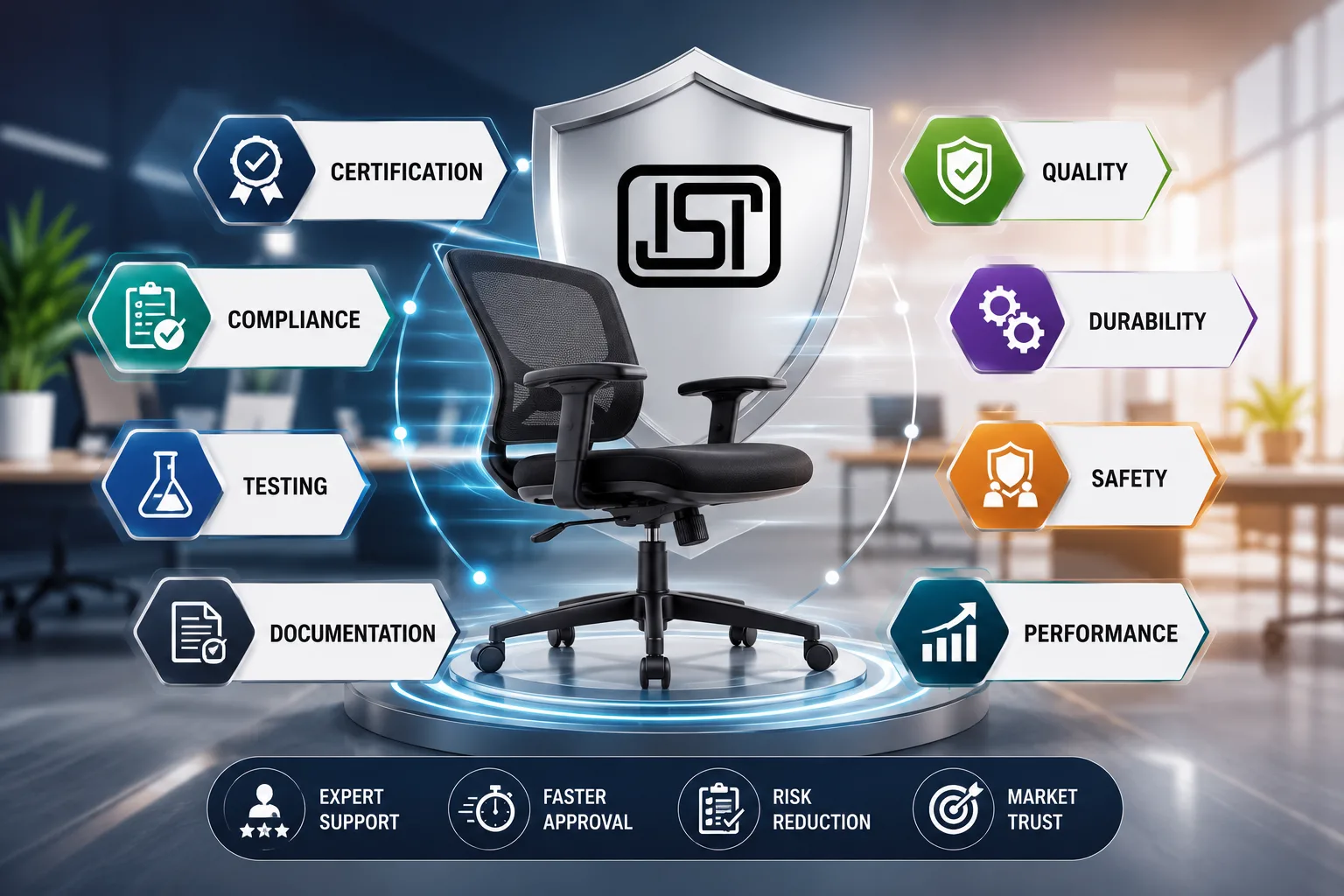
The Bureau of Indian Standards (BIS) is responsible for developing and implementing quality standards for products sold in India. Products that successfully comply with prescribed requirements become eligible to bear the ISI Mark, a symbol recognized for quality, safety, and reliability.
For work chairs, the applicable standard is IS 17631:2022, which specifies performance, durability, strength, and safety requirements for workplace seating products.
The objective of this standard is to ensure that furniture products are capable of withstanding regular use while maintaining user safety and structural integrity.
Overview of IS 17631:2022
The standard establishes various technical and performance requirements that manufacturers must satisfy before approval can be granted.
Important areas covered include:
- Stability requirements
- Structural strength
- Durability performance
- Safety evaluation
- Functional characteristics
- Load-bearing capability
These requirements ensure that office seating products deliver consistent performance throughout their intended lifespan.
Importance of Quality Compliance
Quality-certified furniture products offer numerous advantages to both businesses and consumers.
For manufacturers, compliance helps increase brand reputation and demonstrates commitment to quality standards. It also enhances acceptance among institutional buyers, government procurement agencies, and commercial organizations.
For consumers, certified products provide confidence that the furniture has been independently evaluated for safety, durability, and performance.
In today's competitive market, quality assurance has become a key factor influencing purchasing decisions.
Benefits for Furniture Manufacturers
Obtaining certification provides several commercial and operational benefits.
Some key advantages include the following:
- Increased customer confidence
- Better market acceptance
- Enhanced product credibility
- Improved brand value
- Compliance with regulatory requirements
- Access to institutional procurement opportunities
Product Testing Requirements
Before approval is granted, representative samples must undergo testing according to the applicable standard.
The assessment generally includes:
- Seat durability testing
- Backrest strength verification
- Stability evaluation
- Static load assessment
- Armrest performance testing
- Mobility and caster testing
- Safety inspection
Documentation Requirements
Accurate documentation is a critical component of the approval process. Manufacturers are generally required to provide detailed information regarding their products and manufacturing operations.
Typical documentation may include:
- Company registration details
- Manufacturing facility information
- Product specifications
- Quality control procedures
- Production process records
- Test reports
- Brand authorization documents
Proper documentation helps ensure a seamless review process.
Role of Certification Experts
Many businesses rely on professional regulatory advisors to manage approval requirements efficiently.
Compliance specialists typically assist with:
- Standard identification
- Technical document preparation
- Product evaluation guidance
- Laboratory coordination
- Audit preparation
- Application management
- Regulatory communication
Professional support helps minimize delays and build overall project efficiency.
Common Challenges During Approval
Manufacturers often face challenges due to incomplete documentation, testing failures, regulatory observations, or unfamiliarity with technical requirements.
International manufacturers may encounter additional challenges related to local representation and regulatory coordination.
By addressing these issues proactively, businesses can significantly improve approval timelines and reduce compliance risks.
Future of the Furniture Industry
India's furniture industry keeps growing as regulations on quality become more stringent. The increased consciousness about the safety and performance of the products leads organizations to choose certified furniture items.
Those manufacturers that consider compliance and quality control will be in a better position to take advantage of the increasing market opportunities.
Conclusion
Approval of work chairs is an essential part of obtaining high-quality furniture products in India. Compliance with IS 17631:2022 means that the products meet established safety, durability, function, and performance criteria.
The proper approach to certification, including documentation, testing, quality management, and regulations coordination, helps companies to achieve positive results and maintain compliance with relevant requirements.
EVTL India is one of the top BIS consultants in India, which helps manufacturing companies get their BIS licenses easily. With the help of strong technical inspection capabilities and full-fledged compliance assistance, businesses can effectively deal with the certification procedures and improve their positions in the developing furniture market.