When planning a corporate event, company picnic, or annual conference, nothing is more crucial than ensuring guests are served food that is both delicious and safe. In large corporate catering, food safety and hygiene are not just behind-the-scenes details; they are the foundation of a successful event.
Whether you are coordinating a gala for 1,000 employees or a multi-day business conference, understanding the safety standards behind professional corporate catering helps you make informed choices and protect everyone at your event.
What Food Safety Really Means in Large Corporate Catering
Food safety in large corporate catering involves far more than wearing gloves or cleaning surfaces. It is an integrated process of temperature control, allergen management, sanitation, and staff training.
Leading caterers follow internationally recognized systems such as HACCP (Hazard Analysis and Critical Control Points) and ServSafe guidelines, ensuring that every meal is prepared and served in compliance with health regulations like the FDA Food Code.
What are the Key Certifications and Compliance Standards for Large Corporate Catering?
Professional corporate catering companies are expected to maintain industry-standard certifications to guarantee food safety and legal compliance. These include:
- ServSafe Manager Certification for staff and supervisors
- A documented HACCP plan outlining risk control points during prep and service
- Regular inspections under the FDA Food Code or local health department
Before hiring a catering service, always ask to see up-to-date compliance records. They reflect the caterer’s commitment to consistency and professionalism.
How Important is Safe Sourcing and Supply Chain Management?
Food safety begins with sourcing. Reputable caterers only partner with suppliers who follow strict sanitation and quality protocols. Ingredients are traced from certified vendors, with documentation on storage temperatures and expiration tracking.
Maintaining the cold chain by keeping food at safe temperatures during storage and transport is especially critical for corporate catering for large events where service spans multiple hours.
Kitchen Hygiene and Allergen Controls
Inside a professional catering kitchen, cross-contamination prevention is key. Teams use color-coded cutting boards, separate prep zones for raw and cooked foods, and EPA-approved sanitizers.
Caterers also implement strict allergen management systems to safely serve guests with dietary restrictions. Proper labeling, allergen-specific utensils, and training help eliminate risks during large events with diverse menus.
Temperature Control and Safe Food Handling
Maintaining correct food temperatures is one of the most vital aspects of large corporate catering. Here are standard safety benchmarks used by professionals:
- Hot foods: at least 135°F (57°C) or above
- Cold foods: 41°F (5°C) or below
- Reheating: 165°F (74°C) or higher before service
- Cooling: from 135°F to 70°F within 2 hours, and 70°F to 41°F within 4 hours
Temperature logs are maintained from prep to delivery, ensuring compliance and minimizing the risk of foodborne illness.
Hygiene Standards at the Event Venue
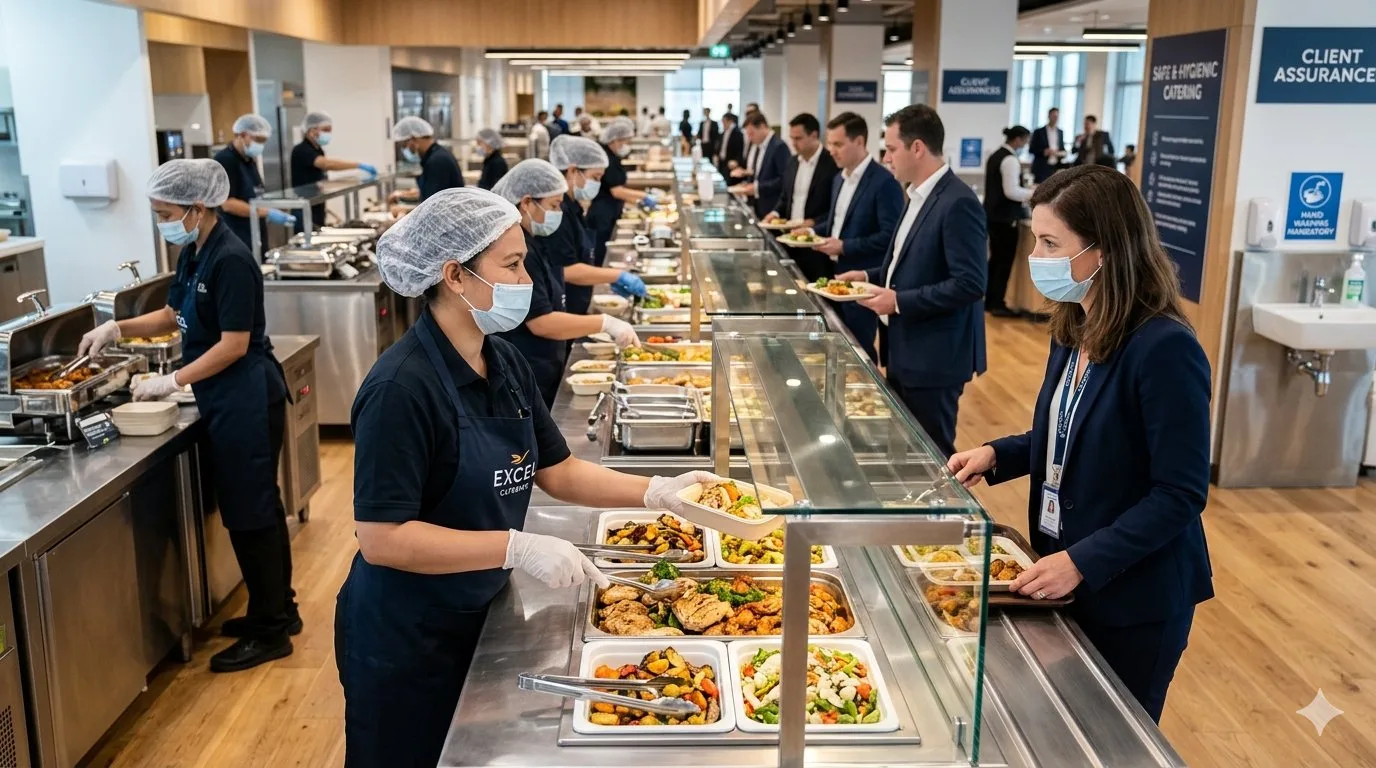
Even the cleanest kitchen cannot guarantee food safety if hygiene breaks down at the event site. Responsible corporate catering companies set up mobile handwashing stations, use gloves and PPE, and manage waste and pest control efficiently.
The catering team should coordinate with venue staff to ensure sanitary service areas, safe food displays, and timely waste removal throughout the event.
Service Styles and Safety in Corporate Catering for Large Events
From buffets to plated dinners and boxed lunches, each service format presents unique food safety challenges.
- Buffets: require sneeze guards, utensil rotation, and portion control
- Action stations: must cook small batches at safe temperatures
- Boxed meals: should be sealed, labeled, and stored under refrigeration
Professional caterers plan for these logistics in advance, preventing contamination while keeping food fresh and appealing.
Sanitation and Environmental Monitoring
To maintain consistent hygiene, catering teams rely on ATP surface testing, sanitizer concentration checks, and documented cleaning schedules. Surfaces, utensils, and food contact points are sanitized between tasks to prevent bacterial spread.
EPA List N sanitizers and routine equipment inspections are also essential to ensure a safe and compliant operation.
Food Safety in Practice: Real-World Event Example
To visualize how these standards work in action, consider a regional company picnic or large corporate meeting managed by a professional catering service like RH Events & Catering.
For company events across the Southeast, Midwest, Texas, and Virginia, this team applies safety-first planning, from verifying suppliers to setting up temperature-controlled buffet stations. Their process demonstrates how large-scale events can run smoothly while maintaining the highest hygiene and food safety standards.
This example highlights the importance of partnering with experienced corporate catering providers who can scale safely and efficiently across multiple locations.
What Clients Should Ask Before Booking a Large Company Picnic?
Before signing a catering contract, clients should ask key questions such as:
- Are your staff ServSafe certified?
- How do you manage temperature control during transport and service?
- Can you provide documentation of your HACCP plan and recent inspections?
- How are allergens handled during preparation and plating?
Asking these questions helps ensure that your caterer can maintain food safety across every stage of your event.
Frequently Asked Questions
How can I ensure food safety at my next large corporate event?
Choose a caterer certified in HACCP and ServSafe, with proven temperature control and sanitation systems in place.
Are buffets safe for corporate events?
Yes, when properly managed with sneeze guards, temperature monitoring, and strict utensil changes.
What does a food safety audit include?
It verifies ingredient sourcing, prep cleanliness, staff certification, and equipment sanitation to ensure full compliance.
Final Thoughts
In large corporate catering, food safety and hygiene are essential to delivering a successful event. A professional corporate catering company ensures that every step of meal preparation, storage, and service meets the highest standards.
Whether your next event is a company picnic, conference luncheon, or gala dinner, working with an experienced team such as RH Events & Catering, which manages corporate events across the Southeast, Midwest, Texas, and Virginia, helps guarantee a smooth, safe, and memorable dining experience for every guest.