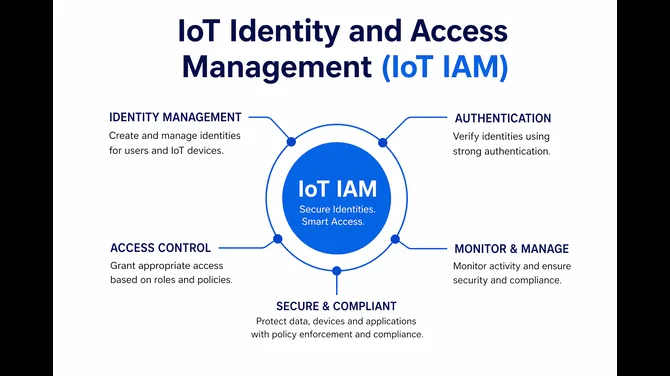
As the Internet of Things (IoT) continues to reshape industries, organizations are connecting millions of devices, sensors, machines, and applications to improve operational efficiency and deliver smarter services. However, this rapid expansion has also created a larger attack surface, making IoT Identity and Access Management (IoT IAM) an essential component of modern cybersecurity strategies.
As IoT adoption accelerates, the IoT IAM market is growing with AI-driven security, Zero Trust, and cloud-native technologies. Scalable, interoperable identity management solutions help organizations secure connected devices, automate access control, and strengthen cybersecurity across diverse IoT ecosystems.
Click here for more information : https://qksgroup.com/market-research/market-forecast-iot-identity-and-access-management-iot-iam-2026-2030-worldwide-2733
Organizations across manufacturing, healthcare, energy, automotive, retail, and smart cities are investing in advanced IoT IAM solutions to secure connected environments while supporting innovation. With the integration of Artificial Intelligence (AI), Machine Learning (ML), Zero Trust principles, and cloud-native technologies, the global IoT Identity and Access Management market is experiencing significant growth.
Why Innovation Matters in the IoT Identity and Access Management Market
The increasing number of connected devices has introduced complex identity management challenges. Unlike traditional IT environments, IoT ecosystems include devices with different operating systems, communication protocols, and security capabilities. Managing identities for millions of devices while maintaining security requires continuous innovation.
Leading IoT IAM providers are investing heavily in research and development to build intelligent security platforms capable of:
- Automatically identifying connected devices
- Assigning secure digital identities
- Managing authentication and authorization policies
AI and Machine Learning are Transforming IoT IAM
Artificial Intelligence and Machine Learning have become major drivers of innovation within IoT Identity and Access Management solutions. Traditional authentication methods alone are no longer sufficient for protecting highly dynamic IoT environments.
AI-powered IoT IAM platforms continuously analyze device behavior, user activities, network traffic, and access patterns. Instead of relying solely on predefined security rules, machine learning models identify unusual behavior that may indicate compromised devices, credential theft, insider threats, or malware attacks.
Collaboration is Accelerating Market Growth
The success of IoT Identity and Access Management (IoT IAM) depends on collaboration across technology vendors, cloud providers, cybersecurity companies, device manufacturers, and industry regulators.
Click here for market share report : https://qksgroup.com/market-research/market-share-iot-identity-and-access-management-iot-iam-2025-worldwide-2804
Organizations increasingly prefer integrated security ecosystems instead of isolated security tools. As a result, IoT IAM vendors are building partnerships to improve interoperability with:
- Cloud security platforms
- Identity providers
- Privileged Access Management (PAM) solutions
- Security Information and Event Management (SIEM) platforms
These collaborations simplify identity governance across complex digital infrastructures while improving operational efficiency.
Scalability Supports Expanding IoT Deployments
Modern enterprises often manage thousands or even millions of connected devices distributed across multiple geographic locations. As IoT deployments continue to expand, scalability has become one of the most important characteristics of an effective IoT IAM solution.
Cloud-native architectures enable organizations to securely onboard, authenticate, monitor, and manage large numbers of connected devices without increasing administrative complexity.
Scalable IoT IAM platforms support:
- Automated device provisioning
- Certificate-based authentication
- Identity lifecycle management
- Centralized policy administration
Interoperability Improves Security Across Diverse Environments
IoT environments typically include devices from multiple manufacturers using different communication standards and operating systems. Without interoperability, managing identities across these heterogeneous ecosystems becomes extremely difficult.
Advanced IoT Identity and Access Management solutions support open APIs, industry standards, and flexible integration capabilities that allow organizations to manage identities through a unified security framework.
Emerging Trends in the Global IoT IAM Market
Several technology trends are influencing the future of the IoT Identity and Access Management market, including:
- AI-driven identity intelligence
- Passwordless authentication
- Decentralized digital identities
- Zero Trust architecture adoption
- Identity orchestration platforms
These innovations are helping organizations build more adaptive, intelligent, and resilient cybersecurity infrastructures.
Future Outlook
The future of the IoT Identity and Access Management (IoT IAM) market will be defined by continuous innovation, intelligent automation, and industry-wide collaboration. As organizations deploy larger connected ecosystems, the demand for scalable, interoperable, and AI-powered IAM solutions will continue to rise.