Straightening teeth is not only about improving the appearance of a smile. Properly aligned teeth can be easier to clean, while a well-positioned bite can make chewing more comfortable. For people considering orthodontic treatment, Invisalign and traditional braces are two common options. Both aim to move teeth into better positions, but they work differently and may suit different dental needs.
Understanding how these treatments compare can help patients have a more informed conversation with their dentist or orthodontic provider.
How Invisalign Works
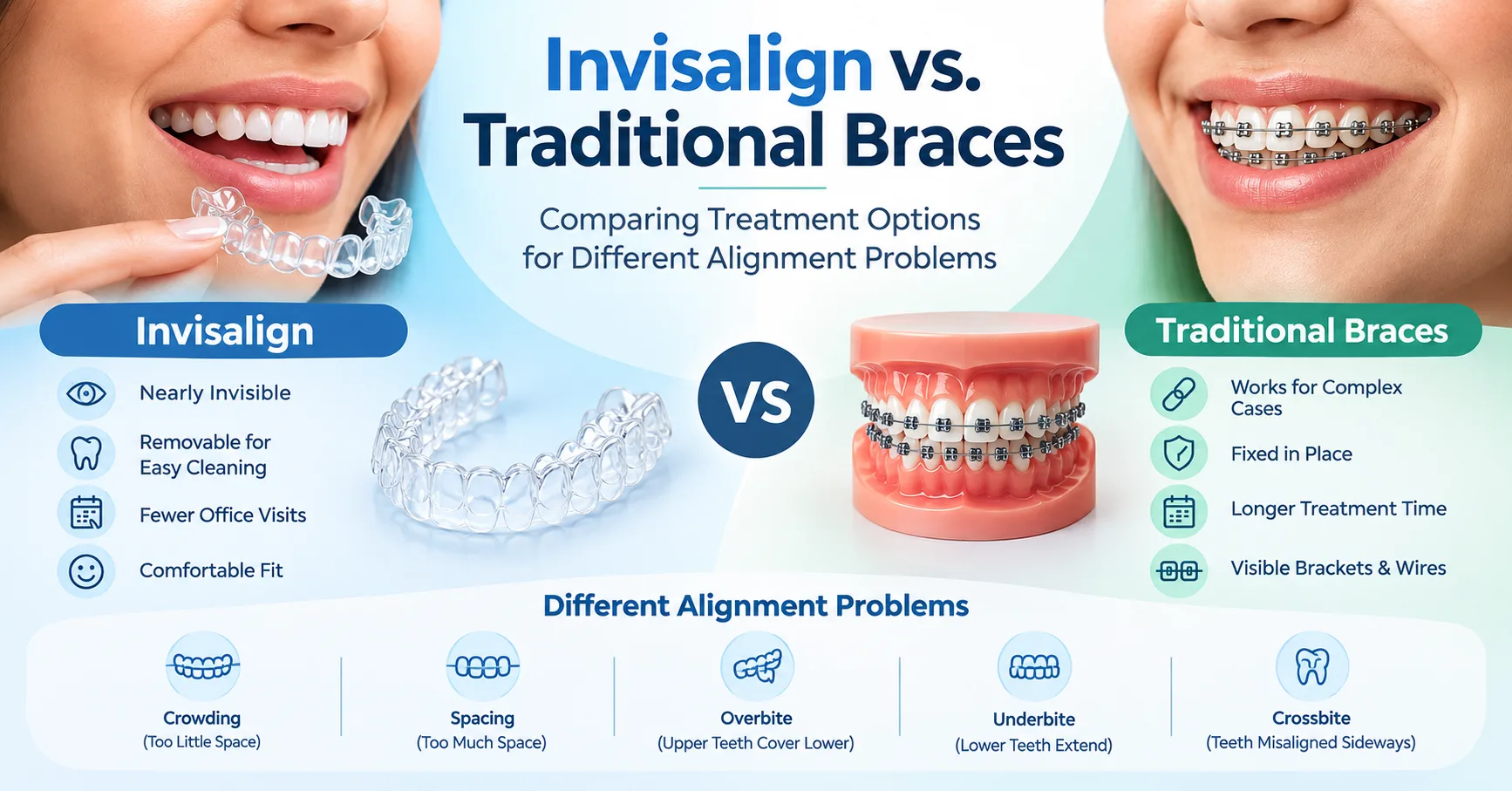
Invisalign uses a series of custom-made, clear plastic aligners to gradually move teeth. Each set is designed to make small adjustments, with patients progressing through their aligners according to their treatment plan.
One of the main advantages of clear aligners is that they can be removed for eating, drinking, brushing, and flossing. Their transparent appearance also makes them less noticeable than traditional metal braces.
However, Invisalign requires consistent use to achieve the planned results. Patients generally need to wear their aligners for around 20 to 22 hours each day, following the instructions provided by their dental professional. Removing them too frequently or forgetting to wear them can affect treatment progress.
How Traditional Braces Work
Traditional braces use brackets attached to the teeth and a wire that applies controlled pressure to move them gradually. The dental professional adjusts the system during regular appointments as treatment progresses.
Unlike removable aligners, braces remain attached to the teeth throughout treatment. This means patients do not have to remember to put them back in after meals. Braces can also provide effective control over a wide range of tooth movements, including some complex alignment and bite problems.
The main considerations include cleaning around the brackets and wires, avoiding certain hard or sticky foods, and attending scheduled adjustment appointments. Some patients may also experience temporary soreness after adjustments.
For people with significant crowding, complicated bite concerns, or more involved tooth movements, braces may be worth discussing as part of a broader orthodontic treatment plan.
Invisalign vs. Traditional Braces: Key Differences
Although both treatments aim to improve tooth alignment, several practical differences may influence a patient's decision.
Appearance
Invisalign aligners are transparent and generally less noticeable during everyday activities. This can appeal to adults and teenagers who prefer a discreet treatment option.
Traditional braces are more visible because of their brackets and wires. Some patients, however, are comfortable with their appearance and prefer a treatment that stays in place without requiring daily removal.
Eating and Drinking
With Invisalign, patients remove their aligners before eating and drinking anything other than water. They should clean their teeth before putting the aligners back in to help prevent food debris and plaque from becoming trapped against the teeth.
Traditional braces require more care with food choices. Hard, sticky, and chewy foods can damage brackets or wires, so patients need to follow their dental professional's dietary recommendations.
Oral Hygiene
Removable aligners make brushing and flossing easier because patients can clean their teeth as usual. The aligners themselves also need regular cleaning.
Braces require additional attention because food and plaque can collect around brackets and wires. Special brushes or flossing tools may help patients clean these areas more effectively.
Regardless of the treatment selected, good oral hygiene remains essential throughout orthodontic care.
Comfort and Daily Routine
Both treatments can cause temporary pressure or soreness as teeth move. Invisalign may feel smoother against the cheeks and lips because it does not use metal brackets or wires, although some patients experience irritation or temporary speech changes when beginning treatment.
Braces can cause irritation inside the mouth, particularly after placement or adjustments. Patients generally adapt over time, but comfort varies from person to person.
Treatment Time and Results
Treatment duration depends on the complexity of the alignment problem, the amount of tooth movement required, and how closely patients follow their treatment instructions.
Some Invisalign cases can be completed within several months, while others require a year or longer. Traditional braces also vary in duration, with more complicated cases often needing extended treatment.
Neither option is automatically faster. A dental professional can estimate the likely treatment period after examining the teeth and bite.
Which Option Is Better for Different Alignment Problems?
The right treatment depends on the condition being corrected rather than appearance alone.
Invisalign may be suitable for certain cases involving mild to moderate crowding, gaps between teeth, and some bite irregularities. Its success depends on the specific movements required and the patient's ability to wear the aligners consistently.
Traditional braces may be recommended when greater control over tooth movement is needed or when the alignment problem is more complex. They can address many issues involving crowded teeth, spacing, and bite relationships.
Some cases can be treated effectively with either option. Others may require a particular approach or additional treatment. An examination helps determine which method is likely to provide a predictable result.
What Should Patients Consider Before Choosing?
Before deciding between Invisalign and traditional braces, patients should consider their dental needs, daily habits, and treatment expectations.
A few important questions include:
- How complex are the crowding or bite issues?
- Can the patient commit to wearing removable aligners consistently?
- Which option fits their eating, work, school, and social routines?
- What cleaning and maintenance steps will each treatment require?
- How long is treatment likely to take, and what will it cost?
Patients should also ask about retainers. Once orthodontic treatment is complete, retainers are generally needed to help keep teeth in their new positions. Without appropriate retention, teeth can gradually shift over time.
The Importance of an Orthodontic Assessment
Choosing between Invisalign and traditional braces begins with an assessment of the teeth, gums, bite, and overall oral health. The dental professional can identify the type of alignment problem, explain the available options, and discuss the benefits and limitations of each approach.
Patients should not assume that clear aligners are suitable for every case or that traditional braces are necessary for every complicated-looking smile. Individual assessment is the best way to understand which treatment fits the situation.
For anyone considering straighter teeth, learning about available orthodontic treatment options and discussing personal goals with a qualified dental professional can make the decision easier.
Conclusion
Invisalign and traditional braces can both help improve tooth alignment, but they differ in appearance, maintenance, and how they fit into everyday life. Clear aligners offer removability and discretion, while traditional braces remain fixed in place and can provide precise control for a wide range of tooth movements.
The best choice depends on the individual's dental condition, lifestyle, and treatment goals. A professional assessment can help determine the most appropriate option and establish a treatment plan for a healthier, better-aligned smile
Frequently Asked Questions
1. Is Invisalign better than traditional braces?
Invisalign may be preferable for patients who want a discreet, removable option, while traditional braces can be suitable for a wide range of alignment problems, including complex cases. The best choice depends on the patient's dental needs and treatment goals.
2. How long does Invisalign treatment take compared with braces?
Treatment time varies depending on the severity of the alignment problem and the planned tooth movements. Some cases take several months, while others may require a year or longer. A dental professional can provide a more realistic estimate after an examination.
3. Can Invisalign fix crowded or crooked teeth?
Invisalign can correct many cases of crowded or crooked teeth, as well as certain spacing and bite issues. However, not every case is suitable for clear aligners, so an individual assessment is necessary.
4. Are traditional braces more effective than Invisalign?
Neither treatment is universally more effective. Both can produce good results when used for appropriate cases. Traditional braces may offer better control for some complex tooth movements, while Invisalign can be effective for many mild to moderate alignment problems.
5. Do teeth stay straight after Invisalign or braces?
Teeth can gradually shift after either treatment. Wearing retainers as directed by the dental professional helps maintain the results and reduces the risk of teeth returning toward their original positions.