Introduction to Air Diffusers in Aeration Tanks
Air diffusers play a critical role in wastewater treatment systems by ensuring efficient oxygen transfer inside aeration tanks. In modern sewage treatment plants and industrial effluent treatment systems, aeration is one of the most important biological processes. Without proper oxygen supply, microorganisms cannot effectively break down organic contaminants.
We use air diffusers in aeration tanks to create fine air bubbles that maximize oxygen dissolution into wastewater. These diffusers improve biological treatment efficiency, reduce operational costs, and maintain stable dissolved oxygen levels. Their performance directly influences treatment quality, sludge stability, and overall plant productivity.
Air diffusers are designed to distribute compressed air uniformly throughout the tank. By producing millions of tiny bubbles, they increase the contact area between air and water, resulting in superior oxygen transfer efficiency.
Understanding the Function of Aeration Tanks
Aeration tanks are engineered chambers used in activated sludge processes where microorganisms consume organic pollutants. The main objectives of aeration tanks include:
- Supplying oxygen to bacteria
- Maintaining biological activity
- Keeping solids suspended
- Reducing biochemical oxygen demand (BOD)
- Stabilizing wastewater before secondary clarification
The success of the treatment process largely depends on the efficiency of oxygen delivery. This is where air diffusers become indispensable.
Major Roles of Air Diffusers in Aeration Tanks
1. Oxygen Transfer Enhancement
The primary role of air diffusers is to transfer oxygen from compressed air into wastewater. Aerobic bacteria require sufficient dissolved oxygen to metabolize organic matter efficiently.
Fine bubble diffusers create extremely small bubbles that remain suspended longer in water. This increases oxygen contact time and improves oxygen transfer rates significantly.
Benefits include:
- Higher dissolved oxygen concentration
- Faster biological degradation
- Improved treatment efficiency
- Reduced organic loading
Efficient oxygen transfer also minimizes energy consumption because blowers do not need to work excessively to maintain oxygen levels.
2. Proper Mixing of Wastewater
Air diffusers help maintain continuous movement inside the aeration tank. This mixing action prevents sludge settlement and ensures uniform distribution of microorganisms throughout the tank.
Proper mixing provides several operational advantages:
- Prevents dead zones
- Maintains homogeneous conditions
- Enhances microbial contact with pollutants
- Avoids sludge accumulation at the bottom
Consistent mixing is essential for maintaining biological stability and treatment reliability.
3. Supporting Biological Activity
Aerobic microorganisms are the heart of biological wastewater treatment. Air diffusers ensure these microbes receive adequate oxygen to survive and multiply.
With sufficient oxygen supply:
- Bacteria grow actively
- Organic pollutants degrade rapidly
- Ammonia oxidation improves
- Nitrification becomes more efficient
A healthy microbial population results in superior wastewater purification and compliance with environmental discharge standards.
4. Energy Efficiency Improvement
Modern air diffuser systems are engineered for maximum energy savings. Since aeration consumes a substantial portion of wastewater treatment plant energy, efficient diffusers are essential for reducing operational costs.
Fine bubble diffuser systems offer:
- Lower blower pressure requirements
- Reduced power consumption
- Improved oxygen utilization
- Lower maintenance costs
Energy-efficient aeration systems significantly improve the economic performance of treatment facilities.
5. Reduction of Odors and Toxic Gases
Poor aeration leads to anaerobic conditions inside the tank, resulting in foul odors and harmful gas production such as hydrogen sulfide and methane.
Air diffusers help maintain aerobic conditions that:
- Eliminate unpleasant odors
- Prevent septic conditions
- Reduce toxic gas accumulation
- Improve workplace safety
Proper oxygenation creates a cleaner and healthier operating environment.
Types of Air Diffusers Used in Aeration Tanks
Fine Bubble Diffusers
Fine bubble diffusers produce extremely small air bubbles, offering high oxygen transfer efficiency. These are commonly used in municipal sewage treatment plants.
Advantages
- High oxygen transfer rate
- Lower energy consumption
- Better process efficiency
- Reduced operating costs
Applications
- Municipal wastewater treatment
- Industrial effluent treatment
- Activated sludge systems
Coarse Bubble Diffusers
Coarse bubble diffusers generate larger air bubbles and provide strong mixing action.
Advantages
- Excellent mixing capability
- Lower clogging tendency
- Durable operation
- Suitable for harsh environments
Applications
- Equalization tanks
- Grit chambers
- Industrial wastewater systems
Disc Diffusers
Disc diffusers are circular membrane devices mounted on pipe systems. They are highly popular because of their compact design and efficient bubble distribution.
Features
- Flexible membrane construction
- Uniform airflow distribution
- Easy maintenance
- Long service life
Tube Diffusers
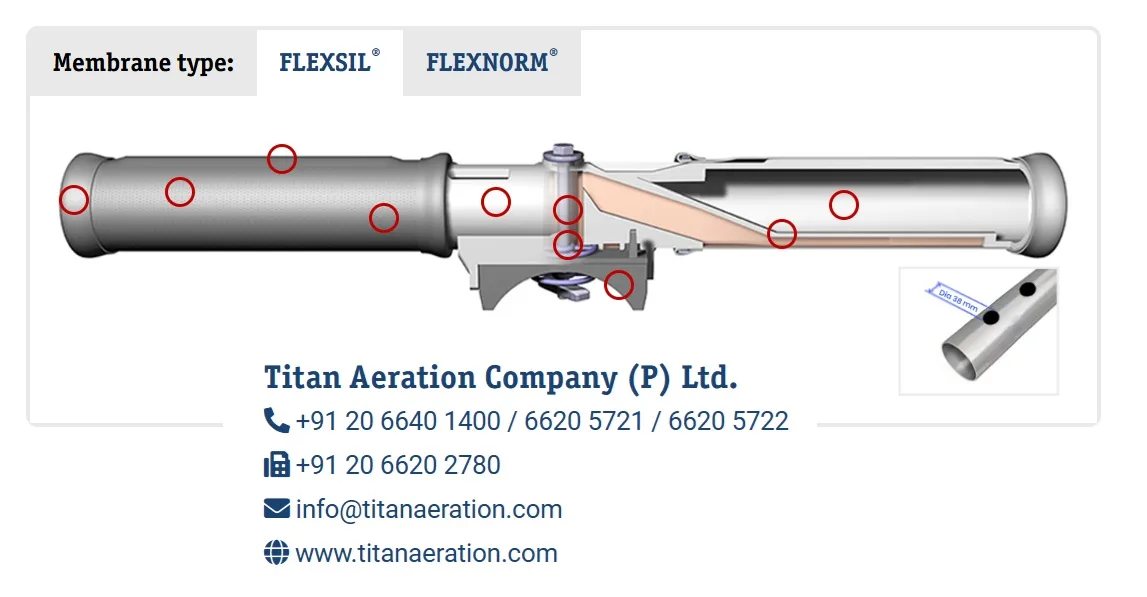
Tube diffusers use elongated membrane tubes to release air bubbles uniformly across large tank surfaces.
Benefits
- High oxygen transfer efficiency
- Suitable for deep tanks
- Large coverage area
- Strong aeration performance
Components of an Air Diffuser System
A complete aeration diffuser system consists of several interconnected components.
Air Blowers
Blowers supply compressed air to the diffuser network. They are responsible for maintaining required airflow and pressure.
Air Piping Network
The piping system distributes compressed air evenly throughout the aeration tank.
Diffuser Membranes
Membranes release air into the wastewater in the form of fine or coarse bubbles.
Control Valves
Valves regulate airflow to different tank zones for optimized oxygen management.
How Air Diffusers Improve Wastewater Treatment Efficiency
Enhanced Organic Matter Removal
Efficient aeration accelerates the decomposition of organic pollutants. This lowers BOD and COD levels significantly.
Improved Nitrification
Air diffusers support nitrifying bacteria responsible for converting ammonia into nitrate.
Proper oxygen levels are crucial for:
- Ammonia removal
- Nitrogen reduction
- Water quality improvement
Stable Sludge Characteristics
Uniform aeration maintains healthy sludge floc formation, improving sedimentation in secondary clarifiers.
Benefits include:
- Better sludge settling
- Reduced sludge bulking
- Improved effluent clarity
Factors Affecting Air Diffuser Performance
Bubble Size
Smaller bubbles provide greater surface area for oxygen transfer, increasing aeration efficiency.
Tank Depth
Deeper tanks improve oxygen transfer because bubbles remain in contact with water longer.
Airflow Rate
Correct airflow ensures adequate oxygen supply without excessive energy consumption.
Diffuser Cleanliness
Dirty or clogged diffusers reduce oxygen transfer efficiency. Regular maintenance is essential for optimal operation.
Maintenance of Air Diffusers in Aeration Tanks
Proper maintenance extends diffuser lifespan and ensures stable performance.
Routine Inspection
Operators should inspect:
- Membrane condition
- Airflow consistency
- Pressure drop
- Bubble distribution
Cleaning Procedures
Diffusers may accumulate:
- Biological fouling
- Mineral deposits
- Solid particles
Periodic cleaning restores efficiency and prevents airflow blockage.
Replacement of Damaged Components
Worn membranes and damaged parts should be replaced promptly to maintain aeration effectiveness.
Advantages of Modern Air Diffuser Technology
Modern diffuser systems offer several technological improvements.
High Oxygen Transfer Efficiency
Advanced membrane materials create ultra-fine bubbles for superior oxygen dissolution.
Reduced Energy Consumption
Optimized airflow systems minimize power usage and operating expenses.
Long Operational Life
Durable materials resist corrosion, chemical attack, and mechanical wear.
Easy Installation and Maintenance
Modern diffuser designs simplify installation and reduce maintenance downtime.
Industrial Applications of Air Diffusers
Air diffusers are widely used across multiple industries.
Municipal Sewage Treatment Plants
Used for biological wastewater treatment and nutrient removal.
Food Processing Industries
Treat high-organic wastewater generated during food production.
Chemical Manufacturing Plants
Support treatment of industrial effluents containing biodegradable contaminants.
Textile Industries
Assist in removing dyes, chemicals, and suspended pollutants from wastewater.
Importance of Air Diffusers in Environmental Protection
Efficient aeration systems contribute significantly to environmental sustainability.
They help:
- Reduce water pollution
- Improve discharged water quality
- Protect aquatic ecosystems
- Meet environmental regulations
By improving wastewater treatment efficiency, air diffusers support cleaner rivers, lakes, and groundwater systems.
Choosing the Right Air Diffuser for Aeration Tanks
Selecting the proper diffuser depends on several factors.
Tank Design
Tank depth and dimensions influence diffuser selection.
Wastewater Characteristics
Industrial wastewater may require specialized diffuser materials resistant to chemicals.
Oxygen Demand
Systems with high biological loading require higher oxygen transfer capacity.
Energy Considerations
Energy-efficient diffusers lower operational expenses over the long term.
Future Trends in Air Diffuser Technology
The wastewater treatment industry continues advancing toward smarter and more efficient aeration systems.
Emerging trends include:
- Smart oxygen control systems
- Energy-optimized aeration
- Advanced membrane materials
- Automated monitoring technologies
- AI-based airflow management
These innovations improve efficiency while reducing operational costs and environmental impact.
Conclusion
Air diffusers are essential components in aeration tanks, playing a major role in oxygen transfer, biological treatment efficiency, wastewater mixing, and energy optimization. Their ability to maintain aerobic conditions directly impacts the success of wastewater treatment operations.
Modern air diffuser systems provide superior oxygen transfer efficiency, reduced power consumption, and improved environmental performance. Whether in municipal sewage treatment plants or industrial effluent facilities, air diffusers remain indispensable for achieving high-quality wastewater treatment results.
Choosing the correct diffuser system and maintaining it properly ensures long-term operational reliability, cost savings, and environmental compliance.