
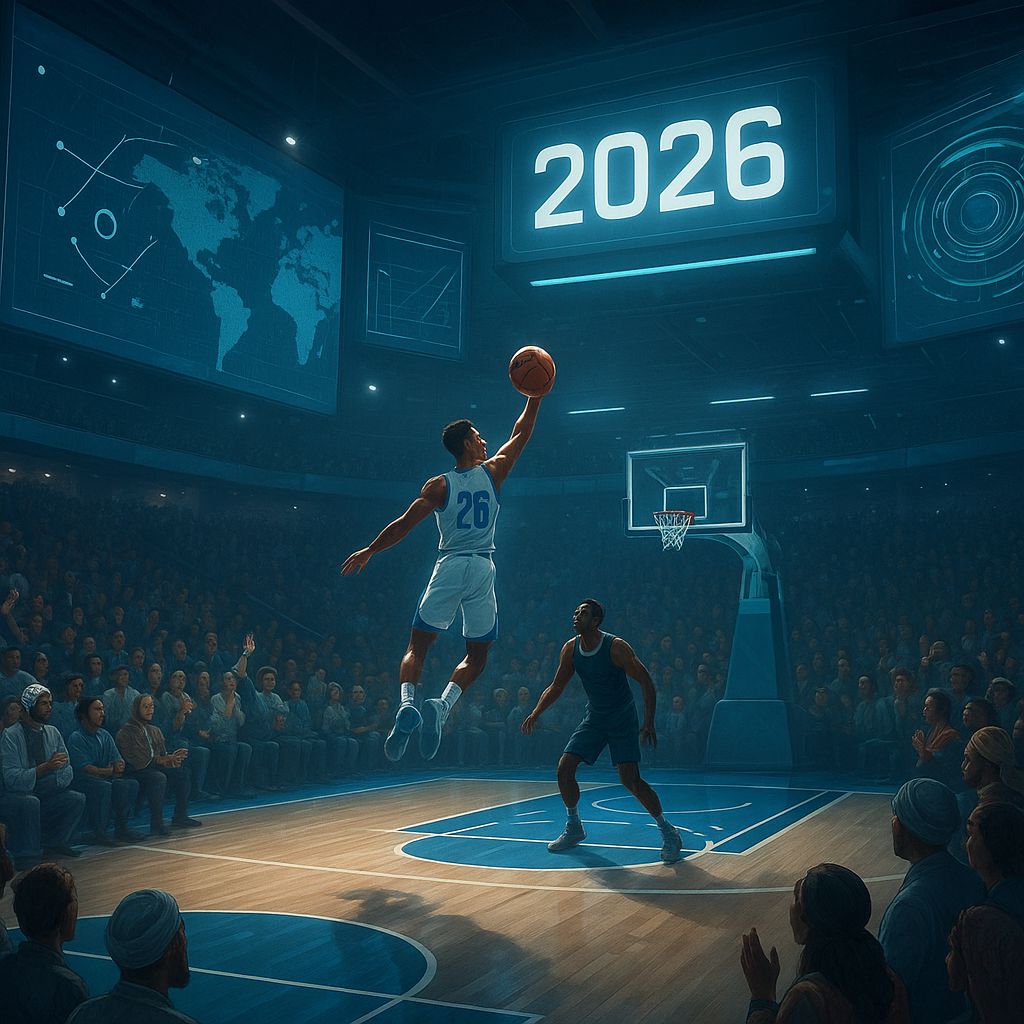
Setting the Stage: A New Era Unfolds on NBA Courts
As the 2026 NBA season unfolds, the league stands at a crossroads of innovation and tradition, reflecting profound shifts that have redefined professional basketball’s competitive, technological, and cultural dimensions. The opening night witnessed a record attendance at the new state-of-the-art arena in Seattle, marking the long-awaited return of the Seattle SuperSonics—an event emblematic of the league’s broader resurgence and expansion. This revival isn’t merely symbolic; it epitomizes the NBA’s strategic growth across North America and globally.
On the court, fans and analysts alike have noted the emergence of faster-paced, more versatile playstyles that leverage cutting-edge analytics and player tracking technologies. The 2026 season is already shaping up to be one of the most dynamic in recent memory, blending historic franchises' legacies with the fresh vigor of rising stars empowered by unprecedented access to sports science and analytics.
“The 2026 season is not just about who wins or loses. It’s a showcase of how basketball is evolving — technologically, strategically, and culturally. The NBA is becoming a blueprint for modern sport.” — Avery Patel, Sports Analyst
The Evolutionary Journey: How the NBA Reached This Moment
The NBA’s transformation in 2026 is rooted in a decade-long trajectory of strategic changes that began in the early 2020s. The league’s commitment to embracing technology, from advanced biometric monitoring to AI-driven game strategy, has steadily shifted the paradigm of player development and game management. These innovations were bolstered by the NBA’s aggressive global marketing campaigns, especially in emerging markets such as India, Africa, and Southeast Asia, where basketball’s popularity has surged.
By 2024, the NBA had integrated comprehensive player health data into coaching decisions, leading to more nuanced load management and injury prevention. This was coupled with the adoption of the “Next Gen Stats” platform, which gave teams granular insights into player movement, efficiency, and fatigue. Such data allowed for tailored training regimens and in-game adjustments that have now become standard practice.
Off the court, the NBA’s collective bargaining agreements increasingly emphasized player empowerment, enabling stars to influence team-building and league policies. This shift has contributed to a more fluid talent distribution, visible in the rise of mid-market teams who compete fiercely with traditional powerhouses.
“The league’s willingness to innovate and adapt has been pivotal. It’s no longer just about athleticism but how teams harness data and technology to gain an edge.” — Dr. Elena Morales, Sports Technology Researcher
Data-Driven Dynamics: Analyzing 2026’s Statistical Landscape
Data from the first half of the 2026 season reveals several compelling trends underscoring the NBA’s tactical evolution. The average pace of play has increased by 7% compared to 2023, fueled by a league-wide emphasis on transition offense and three-point shooting. Teams are deploying smaller, more versatile lineups that prioritize spacing and rapid ball movement.
According to official NBA statistics, the league-wide three-point attempt rate has climbed to an all-time high of 44.5%, reflecting a strategic consensus on the value of perimeter shooting. Additionally, player efficiency ratings (PER) have become more contextually nuanced, incorporating defensive impact metrics derived from real-time tracking technologies.
In terms of player demographics, the average age of starters has decreased slightly to 26.1 years, highlighting the league’s increasing reliance on young talent groomed in elite development programs and international circuits.
Here are key statistical highlights from the 2026 season so far:
- Top three-point shooting teams: Denver Nuggets, Boston Celtics, and the newly restored Seattle SuperSonics
- Average assists per game: 27.8, a 5% increase from 2025, illustrating enhanced ball movement
- Defensive metrics: Teams utilizing AI-based defensive schemes report a 9% decrease in opponent shooting percentages
- Player workload: Average minutes per game down 4% due to data-informed rest protocols
These numbers reflect a league increasingly shaped by advanced analytics, which is also influencing player contracts and scouting processes, as teams seek multifaceted athletes who fit complex strategic frameworks.
2026 Developments: Innovation Beyond the Court
Off the court, the NBA’s 2026 season has witnessed transformative developments in fan engagement and sustainability efforts. The integration of immersive augmented reality (AR) experiences at arenas and through broadcast platforms has revolutionized how fans interact with games. Fans can now access personalized real-time stats and player perspectives via AR headsets, enhancing the viewing experience both in arenas and at home.
The league has also doubled down on environmental responsibility. The NBA Green Initiative launched in 2024 has expanded to include all 30 franchises, focusing on renewable energy use, waste reduction, and sustainable merchandising. This movement resonates strongly with younger fans, aligning the league with broader social values.
Furthermore, the NBA’s digital presence continues to grow with innovative partnerships in the metaverse, offering virtual courts and collectible digital assets that deepen fan loyalty and create new revenue streams. These strategic moves have positioned the NBA at the forefront of sports entertainment innovation.
- Implementation of AI-driven referee assistance technology, reducing game officiating errors by 15%
- Launch of the NBA Global Academy’s expanded international scouting programs, tapping into untapped talent pools
- Introduction of a mid-season international tournament, boosting global viewership by 12%
These developments illustrate the NBA’s holistic approach to evolving the sport, blending technology, sustainability, and globalization to enhance its brand and competitive edge.
Expert Insights: Industry Voices on the NBA’s Trajectory
Experts across sports science, analytics, and management converge on the view that the NBA’s 2026 season represents a watershed moment. Avery Patel, a leading sports analyst, notes that “the integration of technology and player empowerment has created an ecosystem where innovation drives performance and fan engagement simultaneously.”
From a coaching perspective, veteran NBA coach Marcus Liu highlights how tactical flexibility has become paramount: “We’re no longer just teaching plays; we’re optimizing every possession with real-time data. It challenges coaches to be both strategists and data interpreters.”
Players have also embraced these changes. Emerging star guard Jalen Thompson credits the league’s analytics programs with accelerating his development: “The feedback I get from AI tools and biomechanical analysis has refined my game like nothing before. It’s a new way to understand basketball.”
Financially, the NBA is benefiting from diversified revenue streams. According to reports, league-wide sponsorship deals have increased by 20%, buoyed by technology and sustainability partnerships. The NBA’s global media rights agreements reached new heights in 2025, reflecting the sport’s expanding international footprint.
“The NBA’s model today is a fusion of sport, technology, and culture. It’s a blueprint for leagues worldwide.” — Marcus Liu, NBA Coach
Future Outlook: What Lies Beyond 2026
Looking ahead, the NBA appears poised to deepen its technological integration, expand its global reach, and cultivate the next generation of players and fans. The league’s ongoing investment in AI and machine learning is expected to further refine player health management, scouting, and in-game decision-making.
One anticipated change is the potential introduction of a 4-point line, long debated among analysts and executives, which could further accelerate offensive innovation. Meanwhile, the NBA’s commitment to diversity and inclusion initiatives continues to shape team cultures and league policies.
In addition, the continued growth of international talent pipelines—highlighted by the success of players from Africa, Asia, and Latin America—will diversify playing styles and fan demographics. This global expansion is underscored by the recent addition of new franchises and international games, which have elevated the NBA’s worldwide profile.
Key takeaways for stakeholders include:
- Embrace of technology: Teams and players must continue integrating data-driven approaches to remain competitive.
- Global engagement: Expanding markets and fan bases will drive league growth and financial stability.
- Cultural evolution: Emphasizing diversity and innovation will sustain the NBA’s relevance.
- Strategic experimentation: Rule changes and format innovations may redefine the game’s future.
The 2026 NBA season, as explored in depth in Inside the NBA’s 2026 Revolution and How the NBA’s 2026 Season Signals a New Era, is a vivid testament to the league’s capacity for reinvention. It blends the spirit of basketball with the power of modern technology and cultural resonance, setting a new standard for professional sports in the 21st century.