
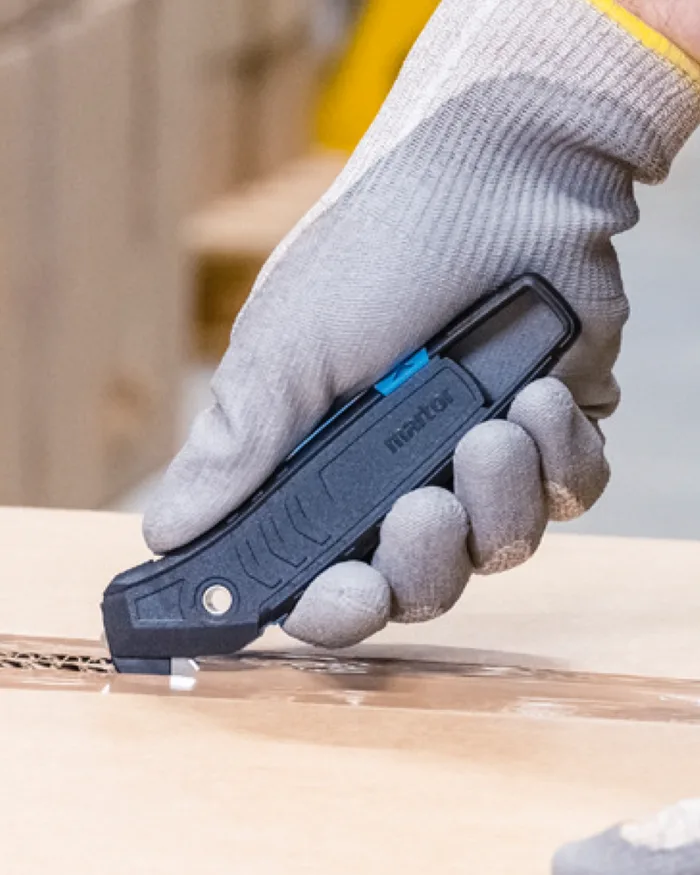
Box cutter knives are essential tools in warehouses, manufacturing facilities, distribution centres, and construction environments. While they are commonly associated with opening cardboard boxes, their applications extend far beyond packaging. From trimming industrial materials to cutting protective films and preparing products for dispatch, box cutter knives support a wide range of everyday industrial operations.
Choosing the right utility knife can improve cutting precision, workplace efficiency and operator safety. Businesses that handle packaging, textiles, plastics, insulation and other materials can benefit from selecting suitable blades and using appropriate cutting techniques.
What Are Box Cutter Knives?
Box cutter knives, also known as utility knives or safety cutters, are hand tools designed for controlled cutting. They typically feature a handle and a replaceable or retractable blade. Depending on the design, the blade may be fixed, retractable or automatically retracting.
Industrial box cutter knives are available in different configurations to suit specific tasks. Some feature snap-off blades for maintaining a sharp cutting edge, while others use enclosed blades or guarded designs to help reduce the risk of accidental injuries.
The most suitable knife depends on the material being cut, the frequency of use and the working environment. Selecting the correct tool helps employees complete repetitive cutting tasks efficiently without compromising safety.
1. Trimming Plastic Films and Protective Wraps
Plastic films and protective wraps are widely used to secure products during storage and transportation. Industrial facilities regularly handle stretch wrap, shrink film, protective sheeting and plastic packaging materials.
Box cutter knives can help workers trim these materials during packaging, repacking and product preparation. They are also useful for removing protective films from equipment, components and finished products.
However, the blade must be suitable for the thickness and type of plastic. Excessive blade exposure can damage the product underneath or increase the likelihood of cuts.
Best practice: Use a guarded or film-specific safety cutter when working with thin plastic wrapping, particularly when products are tightly wrapped or positioned close to the cutting surface.
2. Cutting Corrugated Cardboard and Packaging Materials
Although opening boxes is the most familiar application, industrial cutting knives perform several other packaging-related tasks. Workers use them to trim corrugated cardboard, resize cartons, remove excess packaging material and prepare cardboard inserts.
Manufacturing and distribution facilities may also need to adjust packaging to accommodate different product dimensions. A suitable utility knife allows employees to make controlled cuts when preparing cartons for packing or dispatch.
For thicker corrugated cardboard, a sharp blade and appropriate cutting technique are essential. Dull blades can require greater force, making cuts less predictable.
Best practice: Use a stable cutting surface, keep the supporting hand away from the cutting path and select a blade appropriate for the cardboard thickness.
3. Trimming Rubber, Foam and Flexible Materials
Manufacturing operations frequently involve rubber sheets, foam inserts, flexible gaskets and cushioning materials. These materials may need to be trimmed to size or adjusted during assembly and product preparation.
Utility knives can be useful for light-duty trimming of suitable foam and flexible materials. They can help workers remove excess material, shape simple edges and prepare cushioning components for packaging.
The blade design is important because soft materials can compress or deform during cutting. A blade that is too short, dull or unsuitable for the material may produce uneven edges.
For thick rubber sheets, dense foam or specialised industrial materials, dedicated cutting equipment may be more appropriate than a standard box cutter.
Best practice: Match the blade to the material and use a cutting guide when consistent dimensions or clean edges are required.
4. Removing Adhesive Tapes, Labels and Residue
Industrial workplaces handle large quantities of labelled products, taped cartons, protective films and adhesive-backed materials. Box cutter knives can assist with removing labels, cutting adhesive tapes and separating materials during repackaging or maintenance work.
They may also be used to lift or trim stubborn packaging layers, provided the blade does not damage the underlying surface.
Care is necessary when working with painted surfaces, finished components, electronics or delicate products. An exposed blade can leave scratches or cut through protective coatings.
For adhesive residue, a purpose-designed scraper or suitable cleaning product may be safer and more effective than a sharp utility knife.
Best practice: Choose a controlled cutting or scraping tool based on the surface material, and avoid directing the blade towards the body.
5. Cutting Textiles and Industrial Fabrics
Textile manufacturers, upholstery workshops and industrial sewing operations often work with fabric rolls, woven materials, liners and protective covers. Utility knives may be used for cutting suitable synthetic fabrics, trimming excess material and preparing packaging textiles.
In some industrial settings, workers also need to cut fabric-based insulation coverings, straps or flexible liners. A suitable knife can support these tasks when the material and cutting requirements are compatible with the blade.
However, ordinary box cutter knives are not ideal for every textile. Loose fibres, thick layered fabrics and materials requiring precise patterns may be better handled with fabric shears, rotary cutters or specialised cutting machinery.
Best practice: Use a tool designed for the textile and required finish, particularly where dimensional accuracy and minimal fraying are important.
6. Preparing Insulation and Construction Materials
Construction and maintenance teams may use utility knives for trimming certain insulation boards, flexible insulation materials, underlay and protective membranes. These tools can also help with cutting suitable vapour barriers and other thin construction sheets.
The main advantage is portability. Workers can carry a utility knife between work areas and complete small trimming tasks without setting up larger equipment.
Nevertheless, insulation materials differ considerably in density, composition and thickness. Some materials require specialised insulation knives, powered cutters or other purpose-built equipment.
When cutting insulation, workers should also follow the material manufacturer's guidance regarding protective equipment. Fibres, dust and other airborne particles may present additional hazards.
Best practice: Check the material specifications, use appropriate personal protective equipment (PPE) and select a dedicated tool when a standard utility knife cannot provide a safe, clean cut.
7. Supporting Manufacturing and Assembly Operations
Box cutter knives can assist with several light-duty tasks on manufacturing and assembly lines. These may include trimming excess packaging, removing protective coverings, cutting suitable flexible components and preparing materials for subsequent production stages.
In electronics and equipment manufacturing, workers may use specialised safety cutters to open protective packaging without damaging the contents. Similar tools can support inspection, rework and product preparation activities.
However, utility knives should not replace dedicated industrial cutting equipment where precise tolerances, repeatable dimensions or high-volume cutting are required.
Best practice: Establish clear procedures that identify which cutting tasks employees may perform with utility knives and which require specialised equipment.
8. Handling Materials in Warehouses and Distribution Centres
Beyond individual cutting tasks, utility knives contribute to warehouse workflows. Employees may use them to separate bundled materials, trim packaging straps where appropriate, remove protective coverings and prepare products for inspection or dispatch.
A suitable safety cutter can reduce unnecessary tool changes during routine operations. Ergonomic handles and easy blade replacement may also help support frequent use.
Strapping requires particular care because tensioned bands can spring back when cut. Workers should use tools designed for the specific strapping material and follow established procedures rather than relying on an exposed utility blade.
Best practice: Keep cutting tools accessible in designated locations, inspect them regularly and train staff to select the correct tool for each task.
How to Choose the Right Industrial Box Cutter Knife
Selecting an appropriate box cutter involves more than choosing a blade that fits the handle. Businesses should consider the following factors:
- Material compatibility: Determine whether the knife is suitable for cardboard, plastic film, foam, textiles or other intended materials.
- Safety features: Consider retractable blades, enclosed cutting edges, blade guards and automatic-retraction mechanisms.
- Blade quality: Choose blades that maintain a suitable cutting edge and can be replaced according to manufacturer instructions.
- Ergonomics: Look for a comfortable grip and a design that supports controlled handling during repetitive tasks.
- Cutting depth: Select a blade with an appropriate cutting depth to minimise damage to underlying products.
- Maintenance: Establish procedures for inspecting handles, replacing damaged blades and disposing of used blades safely.
For businesses with several work areas, standardising approved cutters by task can make training, maintenance and replacement easier to manage.
Essential Safety Tips for Industrial Cutting Tasks
Even a small utility knife can cause serious injuries when used incorrectly. Employers should incorporate cutting-tool safety into workplace procedures and employee training.
Key precautions include:
- Inspect the handle and blade before use. Do not use damaged or loose components.
- Keep hands and fingers outside the cutting path.
- Cut away from the body whenever the task and tool design allow.
- Use a stable work surface and secure the material before cutting.
- Retract or cover the blade immediately after use.
- Replace blunt blades safely and dispose of used blades in an approved sharps container.
- Wear suitable PPE and follow site-specific risk assessments.
- Store knives securely and restrict access where required.
Employers should also consult relevant workplace safety requirements and manufacturer instructions when selecting tools for industrial environments.
Conclusion
Industrial box cutter knives offer much more than a convenient way to open cardboard boxes. They can support plastic film trimming, packaging preparation, adhesive removal, textile cutting, selected insulation tasks, manufacturing operations and warehouse activities.
The key is to match the knife to the material, the task and the working environment. Safety features, blade quality, ergonomic design and employee training all contribute to effective tool selection.
By choosing suitable industrial cutting tools and establishing consistent safety procedures, businesses can improve workflow efficiency while reducing avoidable cutting hazards.
Frequently Asked Questions (FAQs)
What are box cutter knives used for in industrial settings?
Box cutter knives are used for trimming packaging, cutting suitable plastic films, preparing materials, removing labels, and completing light-duty cutting tasks in warehouses, manufacturing facilities and construction environments.
Can industrial box cutter knives cut materials other than cardboard?
Yes. Depending on the blade design, utility knives can cut suitable plastic films, foam, textiles, flexible sheets and certain insulation materials. Always check the tool's specifications before use.
What is the difference between a utility knife and a safety cutter?
A utility knife is a general-purpose cutting tool that may have an exposed, fixed or retractable blade. A safety cutter typically incorporates features such as an enclosed blade, guard or automatic retraction to help reduce injury risks.
How often should industrial box cutter blades be replaced?
Replace blades when they become dull, damaged or unsuitable for the task. The frequency depends on the material, cutting volume and manufacturer's recommendations.
How can businesses improve safety when using box cutter knives?
Businesses can improve safety by selecting task-specific cutters, training employees, inspecting tools, maintaining sharp blades, providing suitable PPE and establishing safe blade storage and disposal procedures.