Sofia sells wellness snacks on her own web shop, and customers keep emailing the same question: do you have a sweetener? She doesn’t. Picture her at the kitchen table at midnight, typing “make my own sugar substitute” into a search bar and hoping for a miracle. What she needs is an industrial sweetener partner who’ll do private label, not just sell a bag.
She isn’t the only one in that spot. Edulcodiet’s homepage, written by a sweetener manufacturer in Spain, mentions private label development for companies that sell on marketplaces or through their own online shop. Sofia read that line and sat up a little straighter.
What private label really involves
Sofia assumed private label meant slapping a sticker on someone else’s bag. The page describes something broader: turnkey development of the composition and the packaging for distributors and retail chains that want their own range of sugar substitutes. For a first order of bulk industrial sweetener, that’s a lot more hand holding than she expected.
She isn’t a distributor or a chain, strictly speaking. Still, the page names brands and marketplace sellers as part of who it serves, so she decided the question was worth sending. Worst case, she’d get told it didn’t fit her volume. Fair enough.
Which sweetener goes on the labelSix zero calorie options sit in the catalogue. Stevia is the plant based one with a mild taste, and monk fruit is the innovative pick. Sucralose is the high intensity choice for people watching cost. Then three erythritol versions: Plus for stronger sweetening, Gold for baking, and Date, which mixes in date for a different angle.
Sofia’s snacks include cookies, so Erythritol Gold caught her eye. Her best customers, though, love anything that sounds a bit new, which pointed her toward Erythritol Date. She couldn’t choose from a web page. Neither could you, honestly. That’s what the sample step is for, and she’d already decided to ask for one.
Why a sweetener manufacturer in Spain fits small brands
A small brand lives or dies on its supplier’s reliability. Edulcodiet says it produces at its own plant in Perafort, Tarragona, so production and packaging stay in one place, and it isn’t a middleman. Sofia liked that one contact would own her whole project, because she doesn’t have a purchasing department. She has a laptop.
There’s also the paperwork side. Each batch comes with technical documentation for the home market and for export, and nobody enjoys being asked for a document they don’t have. Sofia’s own checklist was blunt. No documents, no deal. The page made it sound like documents weren’t an extra she’d have to beg for.
Formats for shelves and online shopsHer options run from sachets for single servings to boxes and doypacks meant for shelf sales and ecommerce. At the industrial end there are bags or boxes of about 20 kg and 500 kg Big Bags, more for manufacturers and repackers than for a web shop. The table is refreshingly clear about who each format suits. Sofia stared at it and quietly crossed off the Big Bag.
Minimums were her real worry. As a guide the page says standard solutions often start at 1,000 kg, while some blend or high intensity projects allow less, depending on formulation, raw material, format and process. Sofia’s cash flow isn’t built for pallets of anything. Nobody warns you about that part until the invoice shows up. So she asked for a quote for a small industrial sweetener project and kept it short.
Samples first, always
Edulcodiet works in four steps: analysis, proposal with samples, fine tuning, then production and delivery. Sofia tells her friends the second step is the one that matters. Samples go out for lab tests or internal validation, and terms are agreed with the sales team, while the customer can arrange shipping.
Her test batch was small and slightly chaotic. A neighbour tried the cookies, a cousin tried the coffee, and a sceptical uncle said “it tastes like sugar, mostly.” That’s a decent review for a sugar substitute. Sofia wrote it down, since real people had said it, not a lab.
Customer proof, with a pinch of saltThe site shows reviews from three companies. They praise speed, supply capacity, personal service and traceability, and one mentions solutions for hospitality as well as distribution and retail. Sofia read them as reasons to keep going, not as guarantees. Anyone can write nice things about a supplier on the supplier’s own page.
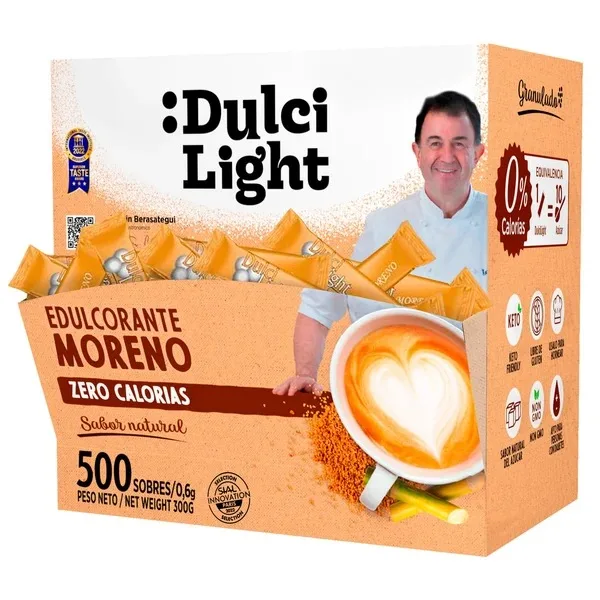
The brand behind the page matters too. Edulcodiet also owns DulciLight, a sweetener brand sold in supermarkets and on marketplaces, and the page says its products took the Superior Taste Award and the SIAL Innovation Award in 2022. For Sofia, a manufacturer that sells to shoppers itself has felt the same pain she’s about to feel.
Looking past the home market
More than 35 countries get bulk industrial sweetener from Edulcodiet, and the team works in more than 10 languages. Sofia ships only within Spain for now. Still, a customer in Portugal asked last month if she ships there, and the thought stuck in her head.
For export, the page says Edulcodiet prepares product and documents for B2B operations and checks the commercial and documentation requirements of each market in advance. That suits a small seller who’s never filled in an export form. Sofia isn’t there yet, honestly, but she likes knowing the road isn’t closed.
What Sofia put in the briefHer brief was one page. The product she wanted, the format for web orders, the rough volume, the market, and a note that she’d like samples before anything else. Edulcodiet says it needs that kind of information to size up a project, and a proposal follows with product, format and terms. Short and clear beats long and vague.
Nothing dramatic happened after that, which is exactly how these things should go. A sweetener manufacturer in Spain that runs its own plant and develops private label isn’t a bad place to start for a brand her size. Sofia’s launch date is still open. The sample box, though, is already on its way.
What to remember before you launch
An online brand doesn’t need a factory of its own. It needs samples and a clear brief. A supplier that treats a small first order seriously helps too. If you’re weighing an industrial sweetener partner or a bulk industrial sweetener quote, ask who makes it, which formats fit your channel, and what the minimum really is.
Quick questions from brand owners
Can an online brand get private label sweetener?
Yes. The company offers private label sweetener manufacturing, with composition, presentation and packaging depending on the commercial needs and feasibility of the project.
What’s the minimum order for bulk industrial sweetener?
For certain standard solutions it often starts at 1,000 kg. Some blends or high intensity projects allow smaller quantities.
Which formats suit ecommerce?
Boxes and doypacks are listed for shelf sales and ecommerce, and sachets work for single servings.
Is it a sweetener manufacturer in Spain or a reseller?
It manufactures at its own plant in Perafort, Tarragona.
Do they give samples?
Yes, for lab tests, development and validation, with terms agreed with sales.