
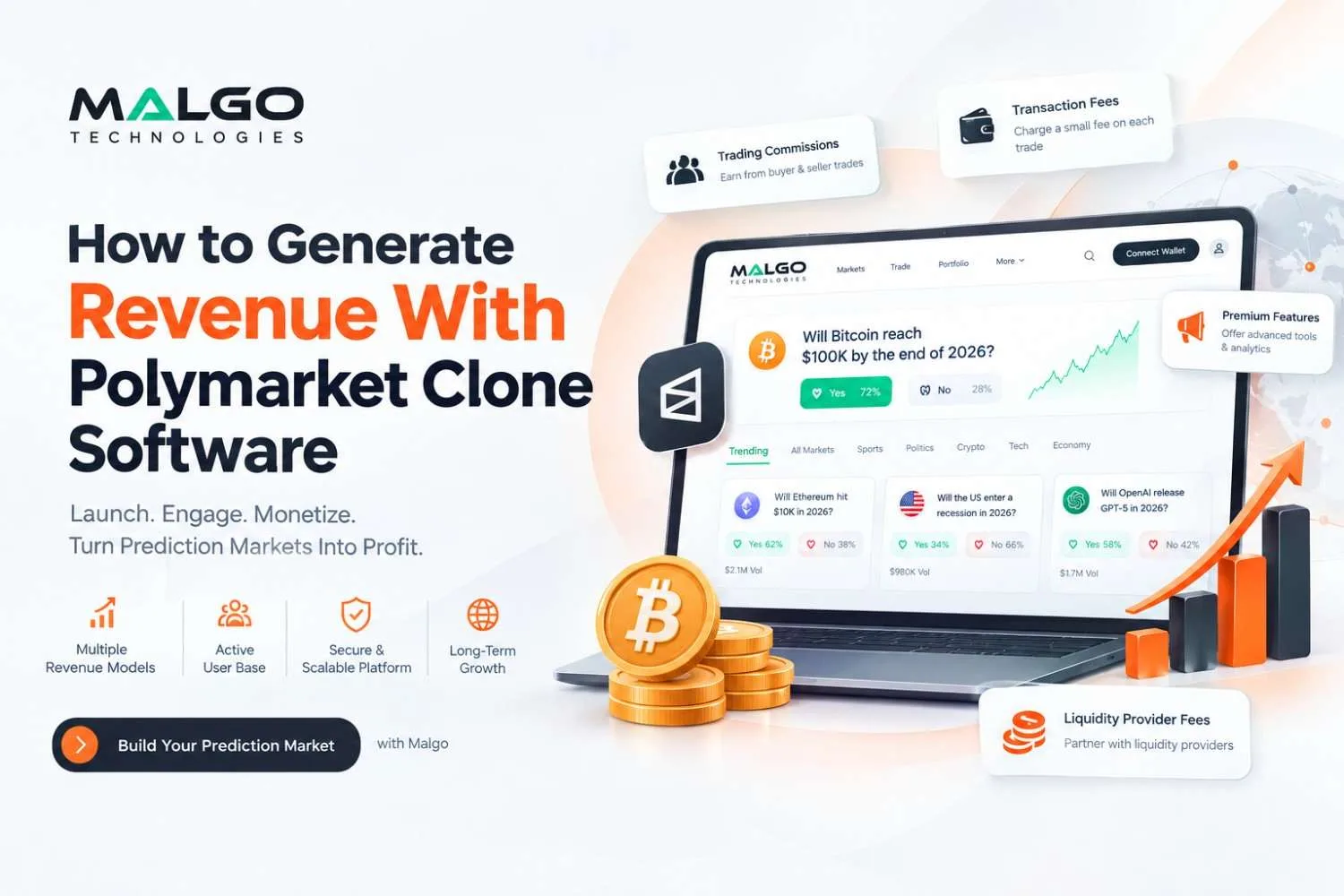
Prediction markets are transforming how people interact with real-world events, financial trends, sports outcomes, politics, and cryptocurrency movements. Platforms inspired by Polymarket have gained attention because they allow users to trade shares based on the probability of future events. As interest in this business model grows, entrepreneurs and businesses are exploring the development of their own prediction market platforms.
However, launching a successful prediction market involves more than replicating an existing platform's interface. The underlying technology, trading functionality, blockchain infrastructure, security architecture, and regulatory requirements all influence the development process.
Understanding the factors that influence the cost of a Polymarket clone script helps businesses make informed technical decisions, prioritize essential features, and plan a scalable platform. Let's explore the major considerations that shape the overall development investment.
1. Platform Features and Functional Requirements
The feature set is one of the primary factors influencing the development investment of a Polymarket clone script. A basic prediction market platform and an advanced trading ecosystem require different levels of engineering effort.
Essential features generally include:
- User registration and authentication: Secure account creation, login, identity verification, and profile management.
- Market creation: Options for creating prediction markets around different real-world events.
- Trading functionality: Buy and sell positions based on users' expectations.
- Order management: Support for managing orders, trade execution, and transaction history.
- Wallet integration: Enable users to connect cryptocurrency wallets and manage digital assets.
- Admin dashboard: Manage users, markets, transactions, disputes, and platform activities.
Additional features such as advanced analytics, automated market making, portfolio tracking, and personalized notifications introduce further technical requirements.
Businesses should identify their core functionality before development begins to avoid unnecessary complexity.
2. Blockchain Network Selection
Blockchain infrastructure plays an important role in determining how a Polymarket clone platform operates. The selected network influences transaction speed, scalability, smart contract compatibility, and integration requirements.
Popular blockchain options include Ethereum, Polygon, Arbitrum, and other EVM-compatible networks.
Each network offers different technical advantages. Ethereum provides an established ecosystem and strong developer support, while Layer 2 networks can offer faster transactions and reduced network congestion.
The development team must evaluate:
- Transaction throughput and confirmation times.
- Smart contract deployment requirements.
- Network security and decentralization.
- Wallet compatibility.
- Cross-chain integration possibilities.
- Long-term scalability.
Selecting the appropriate blockchain from the beginning helps establish a reliable foundation and prevents expensive architectural changes later.
3. Smart Contract Development and Integration
Smart contracts are fundamental to decentralized prediction market platforms. They automate important operations, including market creation, position management, trade settlement, and fund distribution.
A Polymarket clone script may include several smart contract modules depending on the platform's architecture.
For example, conditional token functionality can represent different possible market outcomes. Automated market maker contracts can support liquidity and trading, while settlement contracts handle the distribution of funds after an event is resolved.
The complexity of these contracts depends on:
- Market outcome structures.
- Trading and liquidity mechanisms.
- Collateral management.
- Settlement conditions.
- Fee distribution logic.
- Contract upgradeability.
Smart contracts also require comprehensive testing and independent security audits. Since blockchain transactions can be irreversible, contract reliability should remain a development priority rather than an optional enhancement.
4. UI/UX Design and Frontend Development
User experience directly influences how easily participants understand and interact with a prediction market platform.
A complicated interface can discourage new users, even when the underlying technology is powerful. Therefore, frontend development should focus on simplicity, accessibility, and intuitive navigation.
Important interface components include market discovery pages, probability charts, trading interfaces, user portfolios, wallet connection screens, and transaction histories.
The development scope also depends on whether the business requires a responsive website, a mobile application, or both.
Custom dashboards, interactive charts, real-time market updates, and personalized interfaces require additional frontend engineering.
A well-designed platform should make complex prediction market activities understandable to beginners while providing sufficient functionality for experienced traders.
5. Liquidity Management and Trading Engine
Liquidity is essential for creating an engaging prediction market environment. Without sufficient liquidity, users may experience difficulties executing trades at desirable prices.
A Polymarket-inspired platform can implement different trading mechanisms depending on its business objectives.
Common approaches include:
- Automated Market Makers (AMMs): Use predefined mathematical models to facilitate trades and manage liquidity.
- Order Book Systems: Match buy and sell orders based on available market demand.
- Hybrid Trading Models: Combine automated liquidity mechanisms with order-based trading functionality.
Each approach requires different technical architecture, execution logic, and integration capabilities.
Advanced trading engines may also require price calculations, slippage management, liquidity monitoring, and transaction optimization.
Consequently, the selected trading model has a significant influence on the platform's development complexity.
6. Third-Party API and External Integrations
Prediction markets frequently depend on external services to deliver accurate information and improve platform functionality.
For example, an event-based prediction platform may require reliable data feeds to determine whether a particular outcome has occurred.
Important integrations include:
- Blockchain RPC providers.
- Oracle services for external event verification.
- Cryptocurrency wallet providers.
- KYC and identity verification solutions.
- Payment gateways, where legally permitted.
- Analytics and notification services.
Oracle integration deserves particular attention because incorrect event data can lead to disputed or inaccurate market settlements.
The number of integrations, API limitations, service reliability, and maintenance requirements all affect the development scope.
7. Security, Testing, and Regulatory Compliance
Security and compliance are critical considerations when developing a prediction market platform.
The application may handle user accounts, digital assets, sensitive information, and financial transactions. This makes comprehensive security planning essential.
Development teams should consider smart contract audits, penetration testing, API security, encryption, access controls, and protection against common vulnerabilities.
Regulatory requirements also vary depending on the operating jurisdiction and the platform's market categories.
Depending on applicable laws, businesses may need to address licensing, KYC, AML procedures, user eligibility, data privacy, and transaction monitoring.
Sports, political, financial, and other event-based prediction markets may face different regulatory treatment.
Working with qualified legal professionals helps businesses determine which markets they can operate and what compliance measures are necessary.
8. Scalability, Maintenance, and Future Enhancements
A prediction market platform should be designed to accommodate business growth. Increasing user registrations, trading activity, and market listings can create additional infrastructure demands.
Scalable architecture may involve cloud hosting, load balancing, database optimization, caching, and blockchain infrastructure monitoring.
Ongoing maintenance is equally important. Blockchain networks evolve, third-party APIs change, and security vulnerabilities can emerge over time.
Businesses should account for continuous improvements, including:
- Performance optimization.
- Smart contract upgrades.
- Bug fixes and security patches.
- New blockchain integrations.
- Feature enhancements.
- Technical support and monitoring.
Building with scalability in mind helps avoid major architectural limitations as the platform expands.
Conclusion
Developing a Polymarket clone script involves several interconnected technical and business considerations. Platform functionality, blockchain selection, smart contract architecture, liquidity mechanisms, UI/UX design, third-party integrations, security, and regulatory compliance all influence the overall development investment.
Rather than focusing exclusively on launching quickly, businesses should prioritize a secure architecture, reliable market settlement, transparent trading mechanisms, and an intuitive user experience.
Choosing an experienced prediction market development company can help streamline the development process, reduce technical risks, and establish a foundation for future expansion.
Ultimately, a successful Polymarket clone platform is not simply about reproducing an existing interface. It is about creating a trustworthy, scalable, and technically sound prediction market ecosystem that delivers long-term value to its users.