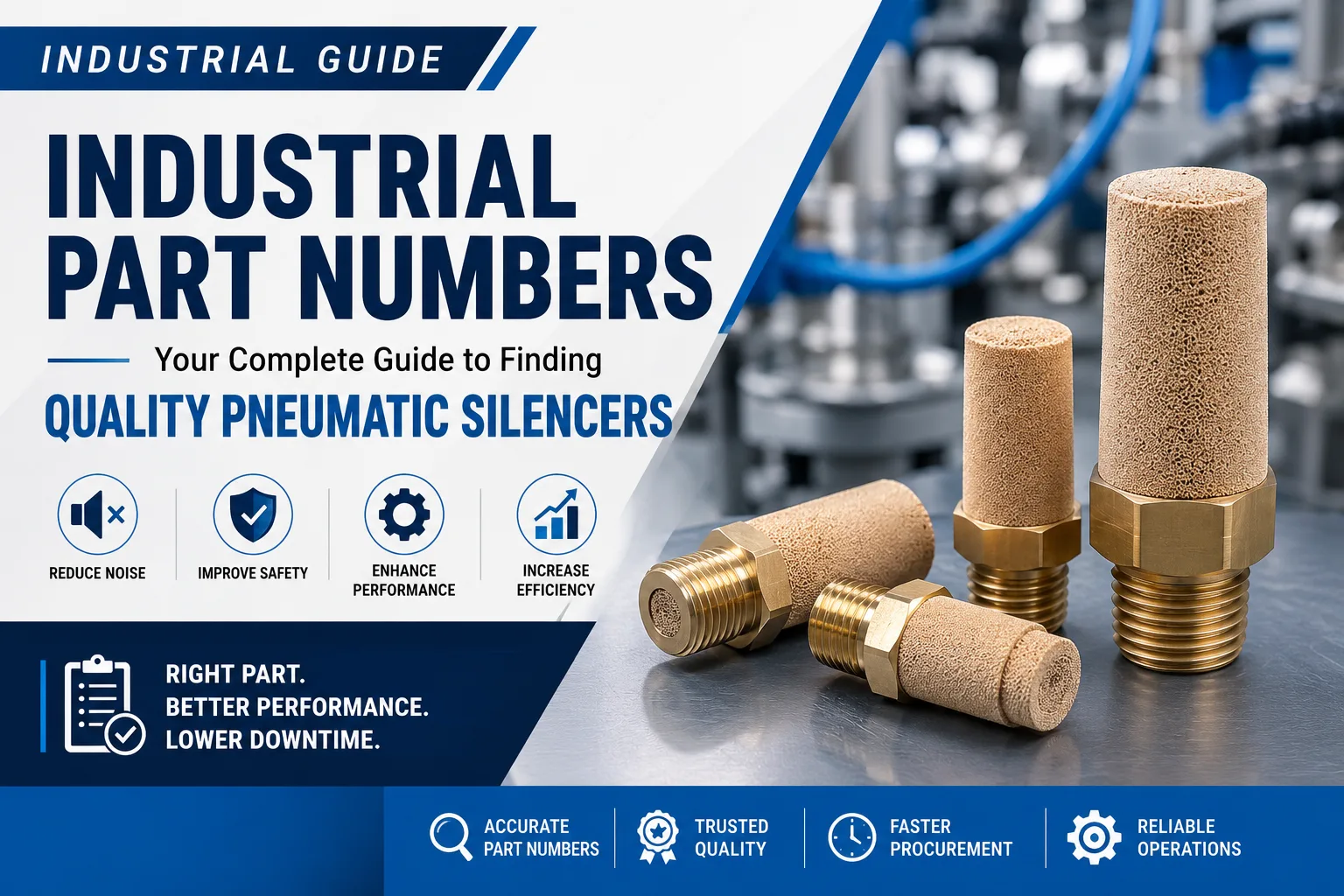
Among these components, pneumatic silencers play an essential role in reducing exhaust noise, protecting workers, and improving overall system performance. However, identifying the correct replacement part can be challenging without the right industrial part number.
Industrial part numbers simplify sourcing, eliminate compatibility issues, and ensure that businesses receive the exact component required for their pneumatic systems. Whether you're maintaining manufacturing equipment, upgrading automation systems, or replacing worn-out components, understanding industrial part numbers can save valuable time and reduce operational costs.
What Is an Industrial Part Number?
An industrial part number is a unique identifier assigned by a manufacturer to distinguish a specific product from thousands of similar components. This identification system contains valuable information about the product's specifications, dimensions, materials, and compatibility.
When purchasing pneumatic silencers, using the correct industrial part number helps buyers avoid ordering incompatible products that may reduce efficiency or require costly replacements.
Why Pneumatic Silencers Are Important
Pneumatic systems release compressed air through exhaust ports, often generating significant noise levels. Pneumatic silencers are designed to reduce this exhaust noise while maintaining optimal airflow.
Key advantages include:
- Lower workplace noise levels
- Improved employee safety and comfort
- Better compliance with industrial noise regulations
- Protection against contaminants entering pneumatic valves
- Increased efficiency of compressed air systems
- Extended equipment service life
These benefits make pneumatic silencers an important component in factories, assembly lines, automation systems, packaging facilities, and process industries.
The Importance of Using Accurate Industrial Part Numbers
Every manufacturer designs pneumatic components according to specific engineering standards. Even products with similar appearances may have different thread sizes, airflow capacities, pressure ratings, or materials.
Using the correct industrial part number provides several advantages:
- Ensures perfect product compatibility
- Reduces downtime caused by incorrect orders
- Speeds up procurement processes
- Simplifies inventory management
- Minimizes maintenance expenses
- Improves equipment reliability
Industrial maintenance teams rely heavily on part numbers to streamline replacement and repair activities.
Common Applications of Pneumatic Silencers
Pneumatic silencers are used across numerous industrial sectors, including:
- Manufacturing plants
- Factory automation systems
- Packaging machinery
- Robotics
- Food and beverage processing
- Pharmaceutical production
- Automotive manufacturing
- Chemical processing facilities
- Textile industries
- Material handling equipment
Because these systems often operate continuously, selecting the correct replacement silencer is critical for maintaining productivity.
How to Choose the Right Pneumatic Silencer
Before purchasing a replacement, verify the following specifications:
- Manufacturer's industrial part number
- Thread type and size
- Airflow capacity
- Operating pressure
- Temperature range
- Material (brass, stainless steel, plastic, or sintered bronze)
- Installation requirements
- Equipment compatibility
Matching these specifications helps ensure long-lasting performance and reliable operation.
Best Practices for Industrial Parts Procurement
Businesses can improve procurement efficiency by following these recommendations:
- Always verify the industrial part number before ordering.
- Purchase from trusted industrial parts suppliers.
- Compare technical specifications carefully.
- Maintain organized inventory records.
- Keep documentation for previous purchases.
- Replace damaged pneumatic silencers during scheduled maintenance.
- Source genuine OEM or equivalent high-quality replacement parts.
These practices reduce procurement errors and improve maintenance planning.
Why Industrial Part Numbers Matter
Industrial part numbers eliminate uncertainty during the purchasing process. Instead of relying solely on product descriptions, buyers can identify the exact component required for their machinery.
For high-demand products like pneumatic silencers, accurate part identification leads to faster sourcing, improved operational efficiency, and reduced equipment downtime. Whether supporting preventive maintenance or emergency repairs, industrial part numbers provide confidence that the correct component will arrive the first time.
Conclusion
Understanding industrial part numbers is essential for maintaining reliable industrial operations. From identifying compatible replacement components to reducing procurement delays, these unique identifiers simplify every stage of the purchasing process.
When sourcing pneumatic silencers, always reference the correct industrial part number to ensure proper fit, optimal performance, and long-term equipment reliability. Investing time in accurate part identification ultimately reduces maintenance costs, enhances workplace safety, and keeps production systems operating at peak efficiency.
Visit Website-https://www.industrialpartnumbers.com/blog/what-are-pneumatic-silencers-and-how-do-they-work/