Introduction
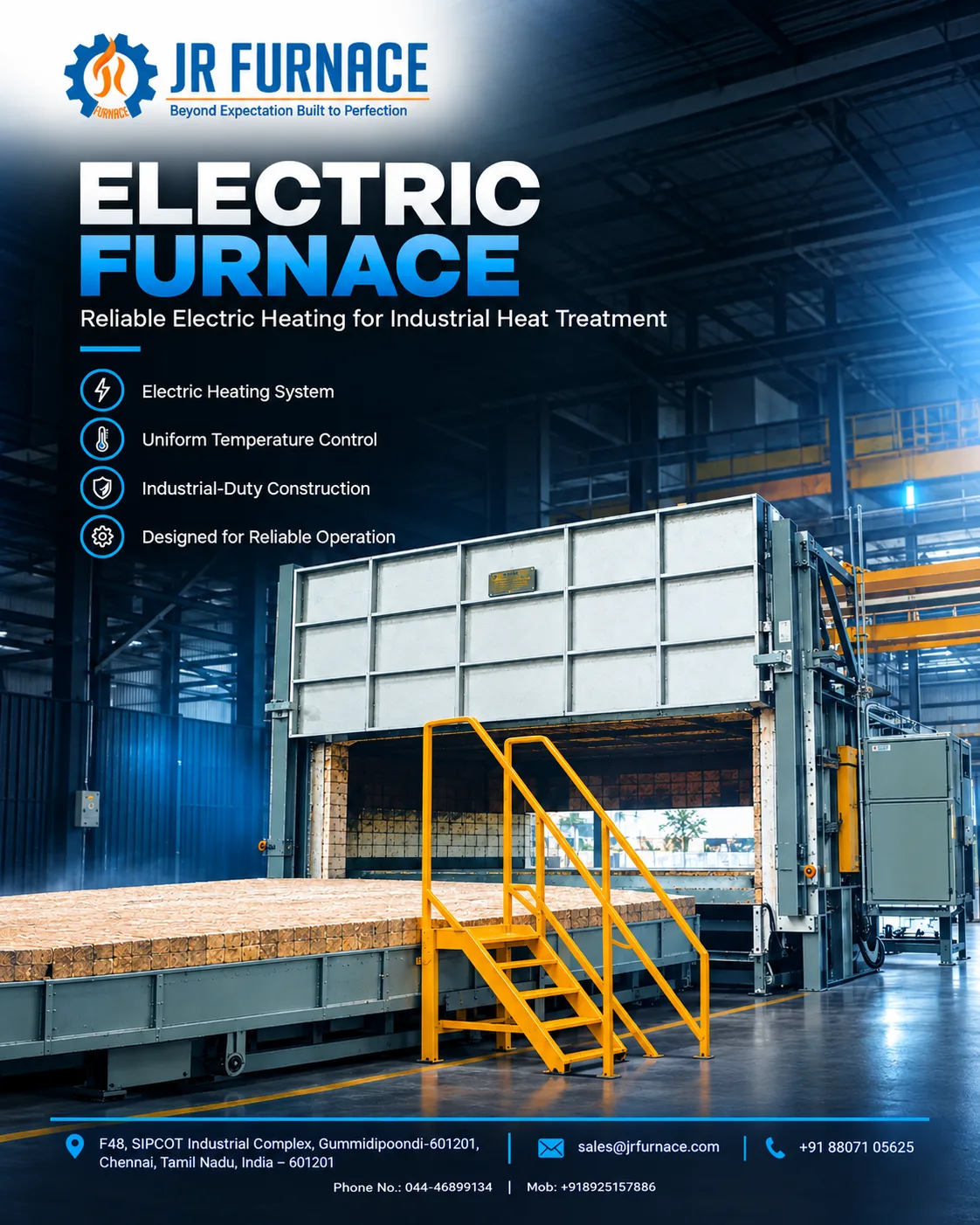
Temperature control is a critical factor in modern manufacturing, particularly when working with metals and engineering components. Processes such as annealing, hardening, tempering, and stress relieving require carefully managed heating conditions to achieve the desired material properties. An industrial electric furnace provides a controlled heating environment that helps manufacturers maintain consistent processing conditions and improve production quality.
As industries focus on product reliability, process repeatability, and efficient operations, electric heating systems have become an important option for many thermal processing applications. Selecting suitable equipment depends on the material, operating temperature, production capacity, and specific requirements of the manufacturing process.
What Makes an Industrial Electric Furnace Different?
An industrial electric furnace uses electrical energy to generate heat through heating elements or other electrical heating technologies, depending on the furnace design. The generated heat is transferred to the material inside the heating chamber through radiation, convection, or a combination of heat transfer methods.
Unlike combustion-based heating systems, resistance-heated electric furnaces do not require fuel combustion inside the heating chamber. This can make them suitable for applications where controlled heating and avoiding combustion gases are important. However, overall energy efficiency and operating costs depend on electricity prices, insulation, furnace loading, and production conditions.
Modern electric furnaces can incorporate programmable temperature controllers, thermocouples, automated control systems, and monitoring instruments. These features help operators manage heating cycles according to established process requirements.
Important Factors That Influence Furnace Performance
1. Temperature Accuracy and Uniformity
Maintaining the required temperature throughout the working chamber is essential for many industrial heat treatment operations. Uneven heating can lead to inconsistent material properties, distortion, or additional processing requirements.
Suitable heating element placement, insulation design, airflow management, and temperature sensor positioning all contribute to furnace performance. Manufacturers should evaluate temperature uniformity requirements according to the components and processes involved.
2. Heating Elements and Insulation
Heating elements convert electrical energy into thermal energy. Their selection depends on factors such as maximum operating temperature, operating atmosphere, expected service life, and maintenance requirements.
Insulation also plays an important role by limiting heat loss through the furnace walls and doors. Appropriate insulation materials can help maintain stable chamber temperatures and reduce unnecessary energy consumption.
3. Automated Temperature Control
Programmable controllers and industrial automation systems allow operators to establish heating rates, holding periods, and process sequences. Depending on the equipment, PLC systems, HMI interfaces, and data recording capabilities can support monitoring and process documentation.
These features are particularly useful when manufacturers need repeatable heating cycles across multiple production batches.
4. Furnace Capacity and Loading Arrangement
The furnace should be designed around the size, weight, and quantity of components being processed. An unsuitable loading arrangement can restrict heat circulation or create temperature differences within the load.
Before selecting equipment, manufacturers should consider chamber dimensions, maximum batch weight, production frequency, and loading and unloading methods.
Industrial Applications of Electric Furnaces
Industrial electric furnaces support different manufacturing processes, depending on their temperature range and configuration.
Annealing: Suitable electric furnaces can heat metals under controlled conditions to achieve the required changes in hardness, ductility, or microstructure.
Hardening and tempering: Selected steel components undergo controlled heating and subsequent cooling to develop the required mechanical properties. The furnace must match the material grade and treatment specification.
Stress relieving: Components affected by welding, machining, or forming may require a controlled thermal cycle to reduce residual stresses. The appropriate temperature and holding period depend on the material and application.
Aluminium heat treatment: Certain aluminium alloys require carefully controlled solution treatment, ageing, or other thermal processes to achieve specified properties.
Tool and engineering component manufacturing: Electric heating systems can support the thermal processing of dies, tools, machine parts, and other engineering components when the furnace configuration meets the required process conditions.
Benefits of Using Industrial Electric Heating Systems
Choosing a suitable electric furnace can offer several operational advantages.
- Controlled heating: Electrical heating systems can provide precise control when equipped with appropriate sensors and instrumentation.
- Repeatable production: Programmable cycles help operators reproduce established processing conditions.
- Clean heating environment: Resistance-heated systems avoid combustion gases within the chamber, which can be beneficial for suitable applications.
- Automation compatibility: Modern control systems can support automated operation, monitoring, and process records.
- Flexible configurations: Furnace dimensions, heating arrangements, and control features can be selected according to specific manufacturing requirements.
These advantages are not automatic. Actual performance depends on furnace design, operating practices, maintenance, insulation quality, and the requirements of each application.
How to Choose the Right Industrial Electric Furnace
Choosing a furnace involves more than comparing purchase prices or maximum temperature ratings. Manufacturers should begin by identifying the material to be processed and the exact thermal treatment required.
The next step is to establish the working temperature, heating rate, soaking time, cooling requirements, and acceptable temperature variation. Component dimensions and batch weight will help determine the necessary chamber size and loading arrangement.
Energy consumption and maintenance should also be considered. Heating element replacement, insulation condition, control system reliability, and access to technical support can influence long-term operating costs.
For applications involving protective atmospheres or specific surface-quality requirements, the furnace may need additional atmosphere control or specialized construction. Discussing these requirements with an experienced manufacturer can help identify an appropriate solution.
Why Manufacturer Experience Matters
Industrial heating equipment must be designed around the actual production process. A furnace intended for small precision components may require a different configuration from one designed for heavy engineering parts or large production batches.
An experienced manufacturer can assess temperature requirements, chamber capacity, heating element selection, insulation, instrumentation, and automation before recommending a suitable design. Proper commissioning, operator guidance, and maintenance support are also important for achieving dependable long-term performance.
Businesses evaluating equipment options can explore this guide to an industrial electric furnace to learn more about furnace configurations and their applications in industrial heat treatment.
Conclusion
Industrial electric furnaces play an important role in manufacturing processes that require controlled heating and repeatable thermal cycles. Their effectiveness depends on suitable heating elements, reliable temperature instrumentation, proper insulation, and a configuration matched to the material being processed.
By evaluating production requirements carefully and working with a knowledgeable furnace manufacturer, businesses can select equipment that supports consistent product quality, efficient operations, and long-term manufacturing performance.
Frequently Asked Questions
1. What is an industrial electric furnace used for?
It is used for industrial heating and thermal processing applications, including annealing, hardening, tempering, stress relieving, and selected aluminium heat treatment operations.
2. How does an industrial electric furnace generate heat?
Depending on the design, electrical energy is converted into heat through resistance heating elements or another electrical heating technology. The heat is then transferred to the workpiece inside the furnace.
3. What factors affect industrial electric furnace efficiency?
Important factors include insulation quality, heating element performance, temperature settings, loading practices, operating cycles, maintenance, and the energy source.
4. How can manufacturers select a suitable electric furnace?
They should assess the material, required temperature, component dimensions, batch capacity, heating cycle, temperature uniformity, automation needs, and long-term maintenance requirements before selecting a furnace.