
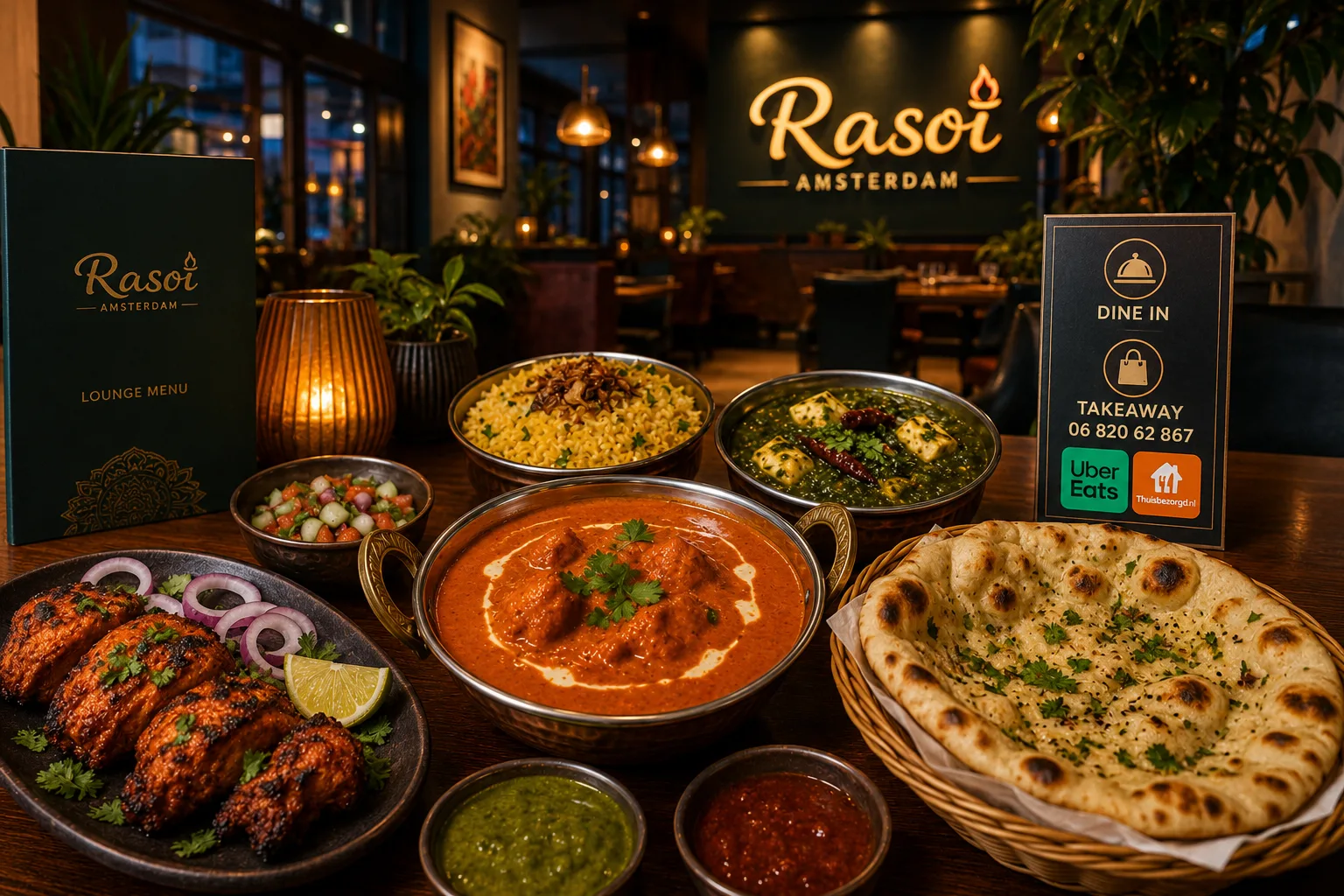
Three ways to get the same food out of the same kitchen. Do they actually give you the same meal?
No, and the differences are bigger than most people expect. If you are ordering indian takeaway amsterdam side of the city, the route you choose changes the food more than the dish you pick does.
The three routes at a glance
There are three ways to order your food, and each has its own advantages. Delivery apps require the least effort because you simply place your order and wait for it to arrive, but the food may not be in its best condition after transit. Phone orders take a little more effort, but they let you ask questions, explain your preferred spice level more clearly, and are a good option if you plan to collect your order. Collection requires you to travel to the restaurant, but it usually gives you the best food quality, especially for breads and grilled dishes that taste best when eaten fresh. If you're ordering curries and rice, delivery works well, while phone ordering or collection is ideal when you want more control over your order or are picking up freshly prepared items.
Why the same dish arrives differently on each route
This is not about the restaurant. It is physics, and it applies to any Indian kitchen anywhere.
Food cooked dry or over direct heat comes out of the kitchen with a surface. Put it in a sealed container and it starts steaming itself immediately, trapped in its own moisture. Fifteen minutes later that surface is gone. Bread that left the kitchen crisp arrives pliable.
Gravies do the opposite. A sealed container is close to ideal for them, and most curries genuinely taste better the following day. Rice holds up fine too.
So the honest split is this. If your order is curry heavy, delivery costs you almost nothing. If it leans toward breads, grilled things and anything described as dry, every minute in transit takes something off it.
Delivery: what you gain and what you give up
Delivery here runs through UberEats and Thuisbezorgd. Both are straightforward, both handle payment and tracking, and neither requires you to speak to a human.
That last part is the trade. An app is a transaction, and a transaction cannot answer a question. If you want to know what came in fresh today, whether a dish can be made milder, or how the kitchen would build an order for three people, an app has no mechanism for that.
The spice dropdown is the clearest example. It gives you maybe three settings. A conversation gives you an actual answer.
Phone ordering: the underrated middle option
Calling the restaurant does two things an app cannot.
First, you can explain rather than select. Dietary needs, heat preference, what you are in the mood for. Second, you can ask for a recommendation from someone who knows the kitchen's day, and that recommendation will usually beat whatever you would have chosen from photographs.
A thirty second conversation is the single highest return thing you can do when ordering Indian food. It costs nothing and it changes the meal.
Worth noting there is also a dedicated online ordering site for takeaway, separate from the delivery apps, if you would rather not call.
Collection: the option most people skip
If you are anywhere near Maasstraat, this is the best version of takeaway, and it is not close.
The food is handed to you minutes after it leaves the pan. Nothing sits waiting for a courier to be assigned, nothing rides across the neighbourhood in a bag. You get the version of the meal the kitchen actually intended.
Rivierenbuurt sits between De Pijp and Zuidas, so for a lot of people in the south of the city this is a short detour rather than a trip. If you are heading home past that stretch anyway, collecting turns a compromise meal into a proper one.
What to order, whichever route you choose
One rule, and it applies everywhere. Order across textures rather than across names you recognise. One dry or grilled item, one gravy based main, one vegetable preparation, and bread for at least part of the table.
Three gravies and a pile of rice is the standard mistake. Same kitchen, same night, completely different meal depending on how you assembled it.
The menu runs across a Lounge Menu, Appetizers, Main Dishes and Desserts, with an extensive vegetarian and vegan range alongside 100% Halal chicken, mutton and seafood. For a mixed order that removes both of the usual difficulties at once.
Timing, because it decides whether any of this is available
The kitchen opens at 4PM Monday to Wednesday, and at noon Thursday to Sunday, closing at 10PM every day.
Which means a Tuesday lunchtime takeaway search will come up empty, and a Thursday one will not. Straightforward once you know it, frustrating if you do not.
If anything else is unclear before you order, the questions people ask before ordering cover most of the practical ground.
One question worth answering
Is collection really worth the walk over delivery? For a curry and rice order, no. For anything involving bread or grilled items, yes, and noticeably so. That is the only variable that matters.
Practical tip to finish on: split your order by route. Curries delivered on a night you cannot move, breads and grills collected on a night you can. Same kitchen, both times done properly.