
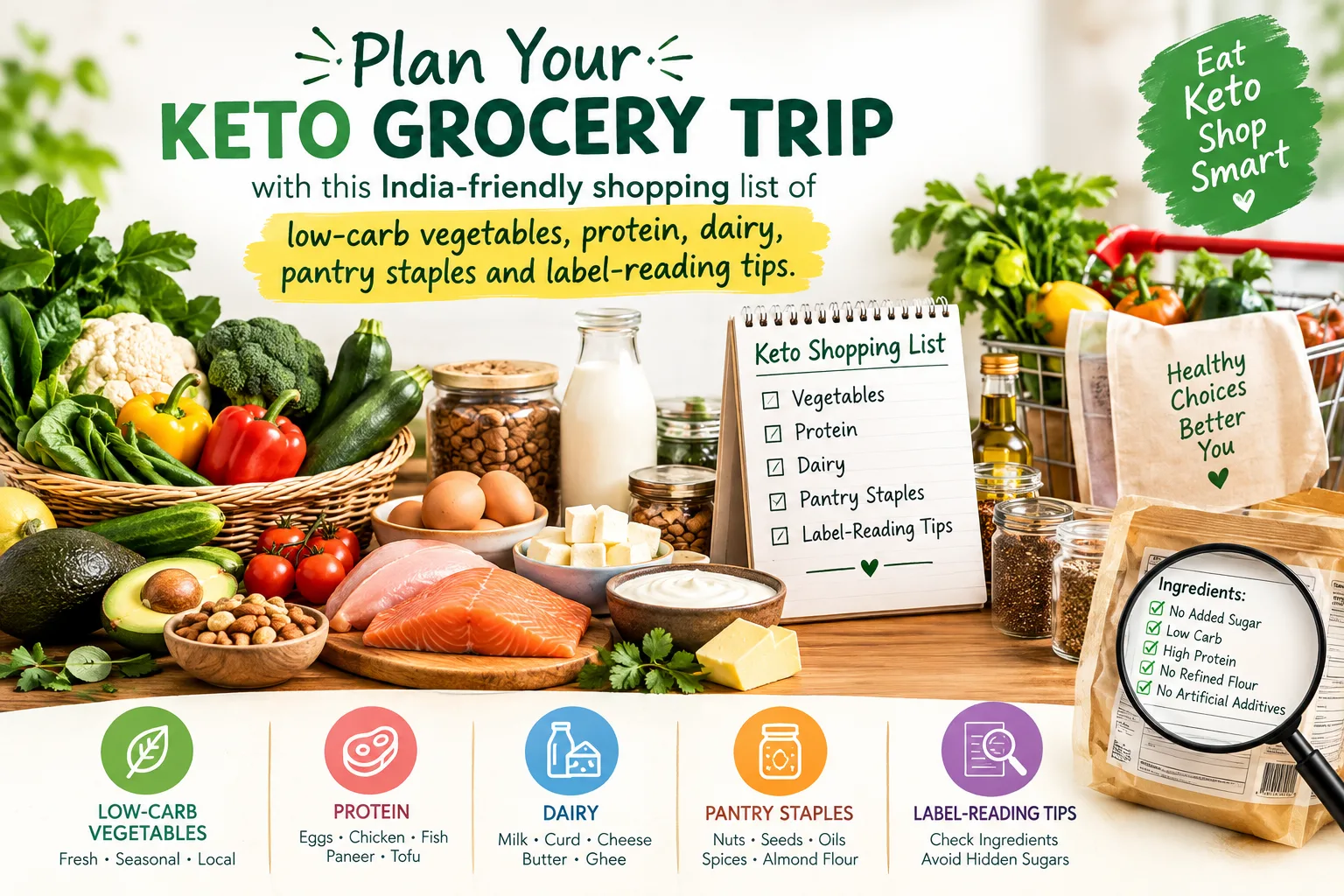
Navigating Indian Grocery Stores
Indian grocery stores are full of fresh produce, dairy, spices and pantry staples—but when you’re following keto, it can be hard to tell what belongs in your basket. The good news is that you don’t need imported “keto” products to get started. Many everyday Indian foods can work; the trick is checking portions, reading labels and planning meals before you shop.
A ketogenic diet is a very low-carbohydrate eating pattern, usually with moderate protein and higher fat. Some clinical plans set carbohydrates at roughly 20–50 grams a day, but individual targets vary. Keto can also be restrictive and isn’t suitable for everyone, so treat this list as a shopping guide—not a personal prescription.
Start With Fresh Vegetables
Fresh vegetables make meals more satisfying and add variety, but many Indian staples—such as potatoes, sweet potatoes and corn—are relatively high in carbohydrates. Keto shoppers generally build meals around non-starchy vegetables instead.
Pick up
- Spinach, methi, mustard greens and other leafy greens.
- Cauliflower and broccoli.
- Cabbage.
- Cucumber.
- Capsicum.
- Bottle gourd, ridge gourd and zucchini.
- Brinjal.
- Mushrooms.
- Green beans, in measured portions.
- Radish.
- Tomatoes and onions, used thoughtfully because their carbohydrates can add up.
- Fresh coriander, mint, curry leaves, green chillies, ginger and garlic.
Cauliflower can stand in for rice or potatoes in some dishes, while cabbage works well in stir-fries and paratha-style fillings. Greens can go into omelettes, paneer bhurji or a quick sauté.
Shopping tip: Buy vegetables you already enjoy and know how to cook. A bag of unfamiliar produce is less useful than spinach, cauliflower and cucumber you’ll actually use.
Choose Protein Foods
Protein helps make meals more substantial. Choose foods that suit your preferences, budget and overall nutrition needs.
Vegetarian options
- Eggs, if you eat them.
- Paneer.
- Tofu.
- Plain, unsweetened Greek-style yoghurt or hung curd, if available.
- Regular plain curd, with the carbohydrate count checked against your daily target.
- Nuts and seeds as additions rather than your main protein source.
Non-vegetarian options
- Chicken.
- Fish, including locally available fresh or frozen varieties.
- Eggs.
- Meat and seafood without sweet marinades or carb-heavy coatings.
For paneer, check the ingredient list and compare nutrition labels where available. Paneer is low in carbohydrate for many meal plans, but serving size still matters. Choose plain versions rather than products with added starches or flavouring mixes.
If you buy packaged or processed meats, check for added sugar, starch and other fillers. “No added sugar” does not automatically mean “zero carbohydrate.”
Add Fats With Care
Keto often includes more fat than a standard eating pattern, but that doesn’t mean every meal needs to be drenched in ghee or butter. Fats are energy-dense, and the type and amount can matter for overall health.
Useful choices
- Mustard, groundnut, sesame or olive oil.
- Avocado, when available and within budget.
- Almonds, walnuts and peanuts.
- Chia, flax, sesame and pumpkin seeds.
- Unsweetened coconut, in suitable portions.
- Ghee or butter, used in measured amounts.
Use oils and fats to cook satisfying meals rather than treating them as a goal to hit at every meal. A recent clinical review notes potential concerns with ketogenic diets, including changes in blood lipids and low fibre intake; it recommends supervision and monitoring for people following a therapeutic plan.
Read Labels Before Buying Packaged Foods
Packaged “keto” products can be expensive, and their claims don’t tell the whole story. Check the nutrition panel and ingredients list instead.
Look for:
- Total carbohydrate per serving.
- Serving size—especially if the pack contains multiple servings.
- Added sugars, syrups, maltodextrin and starches.
- Fibre content, if you use it to calculate net carbohydrates.
- Sugar alcohols and sweeteners, which can affect people differently.
- Sodium, particularly in sauces, pickles, cheese and packaged snacks.
A product may say “low carb” on the front but still contain enough carbohydrate to use up a large share of your daily limit. Compare brands and make sure the serving size on the label matches how much you’d realistically eat.
A practical rule: Check the numbers for the portion you plan to eat, not just the label’s suggested serving.
Pantry Staples for Indian Keto Cooking
You can make plenty of flavourful meals with familiar ingredients. Keep a small, useful pantry rather than buying every product marketed as keto-friendly.
Add to your list
- Whole spices: cumin, mustard seeds, turmeric, coriander seeds and black pepper.
- Ground spices and spice blends, after checking for added sugar or starch.
- Vinegar and lemon.
- Unsweetened coconut milk.
- Tomato paste or passata with no added sugar, used in modest amounts.
- Low-sugar pickles or chutneys, with labels checked.
- Salt and pepper.
- Unsweetened tea and coffee.
Some store-bought spice mixes, sauces and chutneys contain sugar, flour or starch. Homemade masalas and chutneys give you more control over the ingredients.
Foods to Limit or Skip
The foods below are commonly too high in carbohydrates for a strict keto plan, though the amount and personal target matter.
- Rice, poha, upma, bread and most breakfast cereals.
- Wheat roti, naan, paratha and puri.
- Potatoes, sweet potatoes, corn and green peas in larger portions.
- Sugar, jaggery, honey and sweetened drinks.
- Most sweets, biscuits and bakery items.
- Fruit juice and sugary lassi.
- Large servings of beans, lentils and chickpeas.
- Sweetened yoghurt and flavoured milk.
- Packaged snacks made with rice, wheat, corn or refined flour.
This doesn’t make these foods “bad.” They’re simply difficult to fit into a very low-carbohydrate plan. If avoiding staple foods feels too restrictive or socially difficult, a less restrictive eating pattern may suit you better.
A Simple Keto Grocery Basket
Here’s one example of a week’s starter shop. Adjust the quantities to your household size and meal plan.
- Spinach, cauliflower, cabbage, cucumber and capsicum.
- Mushrooms, brinjal and bottle gourd.
- Eggs, paneer or tofu.
- Chicken or fish, if included in your diet.
- Plain curd or unsweetened yoghurt.
- Almonds, walnuts, chia seeds and flaxseed.
- Mustard or groundnut oil.
- Lemon, ginger, garlic, coriander and green chillies.
- Cumin, turmeric, black pepper and other preferred spices.
- Unsweetened tea or coffee.
With these ingredients, you could make egg bhurji with spinach, paneer and capsicum stir-fry, grilled fish with sautéed vegetables, or cauliflower with spices and a protein side. These are starting points, not fixed recipes; check portions and carbohydrate counts against your own plan.
A Note About Safety
Keto is not just a shopping style. It can affect blood glucose, medication needs and blood lipids, and it may be hard to maintain long term. People using insulin or certain diabetes medicines can be at risk of low blood sugar when carbohydrate intake changes; those taking an SGLT2 inhibitor should speak with their clinician before considering keto. The diet may be unsuitable for people with certain medical conditions and is not recommended during pregnancy in the clinical review cited here.
If you have diabetes, kidney or liver disease, a history of disordered eating, are pregnant, or take regular medication, talk with a doctor or registered dietitian before making a major dietary change. A clinician can help assess whether keto is appropriate and whether monitoring or medication adjustments are needed.
Make the Store Work for You
The best keto shopping list is one that fits your kitchen and your routine. Start with vegetables, choose protein you enjoy, use fats thoughtfully and check labels on packaged foods. You don’t need a trolley full of special products—just a plan for turning everyday ingredients into meals you’ll be happy to eat.
FAQs
Q: What foods can I buy for keto in an Indian grocery store?
A: Look for leafy greens, cauliflower, cabbage, cucumber, capsicum, mushrooms, paneer, eggs, tofu, plain curd, nuts, seeds, oils and spices. Check portions and nutrition labels, as carbohydrate content can add up across the day.
Q: Which Indian vegetables are suitable for a keto diet?
A: Common lower-carb choices include spinach, methi, cabbage, cauliflower, cucumber, capsicum, mushrooms, brinjal and bottle gourd. Potatoes, sweet potatoes, corn and larger portions of peas are higher in carbohydrates and may not fit a strict keto plan.
Q: Can I eat paneer on keto?
A: Paneer is generally low in carbohydrates and can fit many keto meal plans. Choose plain paneer, check packaged products for added starch or sugar, and keep portions in line with your overall nutrition plan.
Q: Are lentils and chickpeas keto-friendly?
A: Lentils, rajma, chole and other legumes contain carbohydrates, so large portions may be difficult to fit into a strict keto plan. Whether a small serving works depends on your personal carbohydrate target.
Q: What should I check on food labels when shopping for keto?
A: Check total carbohydrates per serving, serving size, added sugars and ingredients such as starch, maltodextrin or syrup. Don’t rely only on front-of-pack claims like “low carb” or “keto-friendly.”
Q: Do I need to buy special keto products?
A: No. Many meals can be made from ordinary Indian groceries such as vegetables, paneer, eggs, tofu, fish, chicken, curd, nuts, seeds and spices. Packaged keto products are optional, and their labels still need checking.
Q: Can I eat fruit on keto?
A: Many fruits contain enough carbohydrates to use up a significant portion of a strict keto allowance. Some people include small portions of lower-carbohydrate fruits, but the right choice and amount depend on the individual plan.
Q: Is a ketogenic diet suitable for everyone?
A: No. Keto can be restrictive and may not suit people with certain health conditions or those taking specific medicines. People with diabetes—especially those using insulin or SGLT2 inhibitors—should speak with a healthcare professional before changing their carbohydrate intake.
Q: What is a simple keto meal using Indian ingredients?
A: Try paneer bhurji with spinach and capsicum, or eggs with mushrooms and greens. Add spices for flavour and check your portion sizes and ingredient labels against your individual carbohydrate target.