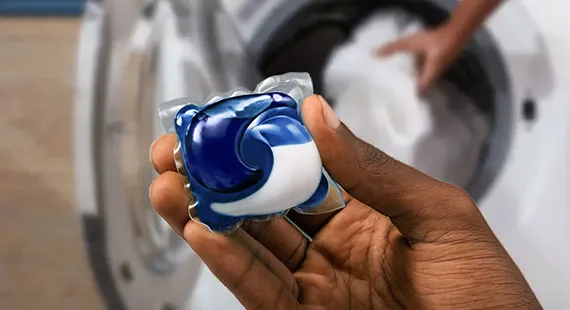
Efficient detergent pod manufacturing depends on more than machine speed. Consistent film handling, accurate dosing, reliable sealing, efficient changeovers, and well-planned maintenance all contribute to productive operation.
A Laundry Pod Machine can bring several packaging processes into one automated workflow. POLYVA supplies equipment for water-soluble film packaging applications, where coordinated machine operation can help manufacturers manage repetitive production tasks.
Automate Repetitive Packaging Processes
Manual film handling, filling, sealing, and pod separation can require significant operator involvement. Automation allows these repetitive activities to be coordinated through a controlled production cycle.
Reducing unnecessary manual intervention can also make production more consistent, particularly when the same pod format is manufactured for extended periods.
Maintain Consistent Film Feeding
Film movement has a direct effect on pouch formation and sealing. Uneven tension, poor alignment, or irregular feeding can create interruptions and reduce usable output.
Operators should monitor film guides, rollers, tension systems, and loading procedures. Keeping the film path clean and correctly adjusted helps support stable operation.
Improve Dosing Accuracy
Accurate dosing helps prevent underfilled or overfilled pods and reduces unnecessary product variation. The filling system should be matched to the detergent's viscosity, density, and flow characteristics.
Regular calibration can help maintain consistent filling performance. Product temperature and supply pressure may also need to remain within appropriate operating conditions.
Optimize Machine Settings
Production efficiency depends on finding a practical balance between speed and quality. Increasing the machine cycle rate without adjusting other parameters can create filling, forming, or sealing problems.
Important settings may include:
- Film feeding speed
- Filling volume
- Forming conditions
- Sealing temperature
- Sealing pressure
- Sealing time
- Cutting timing
- Overall cycle speed
Settings should be tested together because changing one parameter can influence another stage.
Reduce Unnecessary Changeover Time
Frequent format changes can reduce available production time. A standardized changeover process can help operators move efficiently between different pod sizes, products, or configurations.
Documented settings and clearly identified components can make setup more repeatable. First-piece inspections should still be performed before full-speed production begins.
Keep the Production Line Balanced
A pod packaging machine is often connected to upstream and downstream equipment. If product supply is inconsistent or finished pods cannot be transferred quickly enough, the packaging stage may have to stop.
Line balancing helps maintain a steady flow of materials. Conveyors, product feeding systems, inspection equipment, and secondary packaging should operate within compatible production ranges.
Monitor Production Performance
Production data can help identify where efficiency is being lost. Useful measurements may include:
- Total output
- Operating hours
- Unplanned stops
- Changeover duration
- Material waste
- Rejected pods
- Machine alarms
Reviewing these measurements over time can reveal recurring bottlenecks and maintenance issues.
Minimize Material Waste
Film and detergent waste can increase operating costs and reduce overall efficiency. Accurate film positioning and consistent dosing can help limit avoidable waste.
Quality problems should also be investigated at their source. For example, repeated seal failures may indicate an issue with film condition, sealing parameters, or machine alignment.
Use Preventive Maintenance
Unexpected mechanical failures can interrupt production and require additional troubleshooting time. Preventive maintenance helps identify worn or contaminated components before they cause larger problems.
Regular inspections may cover film guides, forming parts, filling equipment, sealing surfaces, sensors, drive components, and electrical connections.
Maintain Suitable Environmental Conditions
Water-soluble film can be sensitive to humidity and temperature. Unsuitable environmental conditions may affect film handling, forming, and sealing.
Maintaining conditions appropriate for the selected film can support more stable machine operation. Film should also be stored and handled according to its specified requirements.
Improve Operator Training
Automation does not eliminate the need for skilled operators. Employees should understand normal machine operation, film loading, product setup, alarm responses, cleaning, and basic troubleshooting.
Well-trained operators can often identify developing issues earlier, helping prevent minor deviations from becoming extended production interruptions.
Coordinate Quality Control
Quality checks should be integrated into the production workflow rather than treated only as a final inspection step.
Monitoring fill quantities, pod dimensions, seal integrity, film alignment, and appearance at appropriate stages can help identify problems while affected products are still limited.
Prepare for Stable Startups
Starting production at maximum speed immediately after a changeover may increase the risk of defects. A controlled startup allows operators to verify film alignment, filling accuracy, sealing, and pod formation.
Once the process is stable, production speed can be increased toward the established operating target.
Keep Machine Areas Organized
Efficient production also depends on the physical organization of the workspace. Film rolls, cleaning materials, tools, replacement parts, and product supplies should be positioned so that routine tasks can be completed without unnecessary movement.
A well-organized work area can make material replenishment, inspections, and maintenance more efficient.
Evaluate Efficiency as a Complete Process
Improving one machine setting does not necessarily improve overall production. Manufacturers should examine the entire workflow, from detergent supply and film loading to finished-pod collection and secondary packaging.
This broader approach can reveal bottlenecks that may otherwise be overlooked when only the packaging machine is evaluated.
Conclusion
Improving production efficiency in detergent pod manufacturing involves a combination of automation, accurate dosing, stable film handling, optimized settings, preventive maintenance, operator training, and balanced production flow.
Rather than focusing solely on maximum machine speed, manufacturers can achieve more consistent results by monitoring the complete process. Regular performance reviews and controlled adjustments can help improve productivity while maintaining the quality of finished laundry pods.